

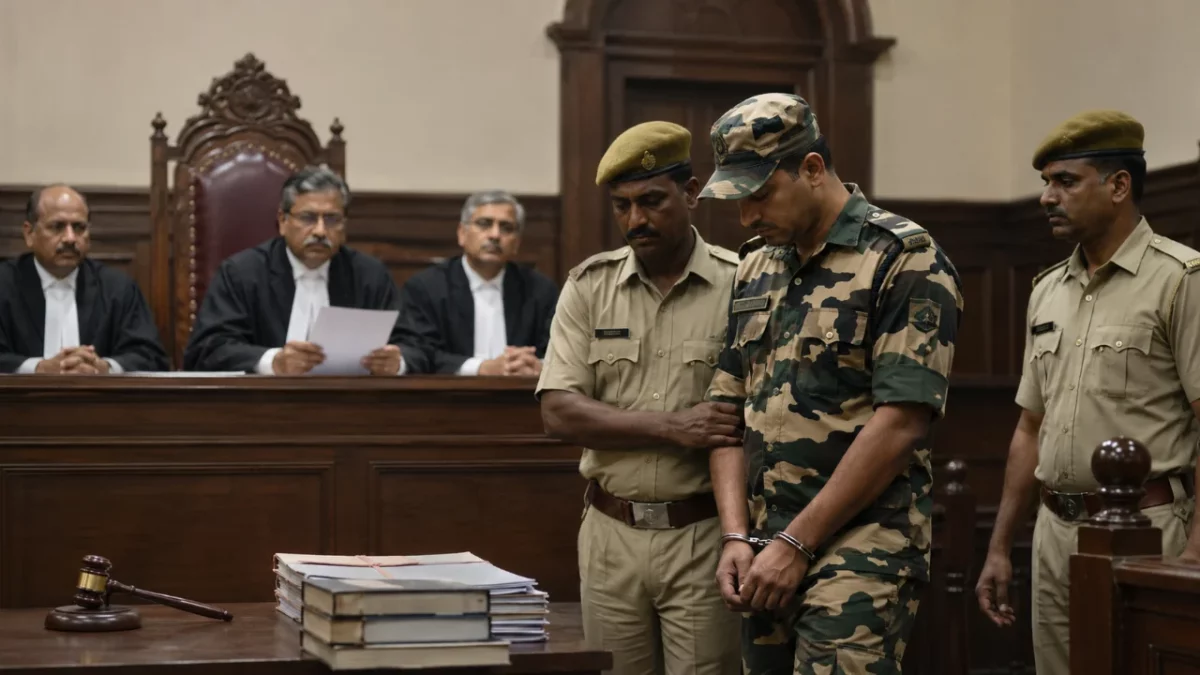
The Gauhati High Court has dismissed the appeal of a Central Reserve Police Force (CRPF) personnel and upheld his conviction and 10-year rigorous imprisonment sentence for the rape of a 21-year-old woman, holding that her testimony was credible and that her silence for several days after the incident was explained by mental trauma and the families’ close relationship.





Justice Mitali Thakuria, in an order dated August 28, 2026, rejected the accused’s challenge to the June 2022 trial court verdict under Section 376 of the Indian Penal Code. The trial court had sentenced him to 10 years’ rigorous imprisonment and a fine of Rs 10,000. The High Court found no reason to interfere.
The case arose from an incident in 2021. The woman had attended the birthday celebration of the accused’s son. Afterwards she travelled with him in his newly purchased car, along with her cousin (the accused’s daughter) and a driver. On the return journey the accused allegedly diverted the vehicle to an isolated spot. The driver left to make a purchase. The prosecution case is that the accused followed the woman out of the car and sexually assaulted her. The cousin, who remained inside the locked car with loud music playing, did not see the assault itself but later saw the woman crying. The court noted supporting circumstances, including the cousin’s account of the accused holding the woman and her distress afterwards.
The woman remained silent for about three or four days after returning home. She did not eat properly and appeared distressed. She then attempted to take her own life and was taken to hospital, where she disclosed the assault to her parents. The family first approached church and village authorities before lodging an FIR. The accused was arrested and charged. During the trial she deposed as a witness. After giving evidence she attempted suicide again and died.
The High Court treated this sequence as central to assessing delay and credibility. Justice Thakuria observed that the victim “was not even in a position to tell anything about the incident even to her parents, who had cordial relationship with the accused and she also used to address the accused as uncle and her mother also used to treat the accused as her son.” The court added that she “had undergone the mental trauma, and for which she was keeping silent for about 3/4 days and finally had to take such a step to end her life.”
The defence had pointed to inconsistencies in the woman’s account, the delay in the FIR, and the medical examination, which found no injuries or signs of recent sexual intercourse. The High Court held that the absence of medical injuries did not discredit a consistent account supported by surrounding circumstances and other witnesses, including the cousin and the parents. There was no evidence of prior enmity or motive to fabricate a case against a person treated as family. “There was nothing to disbelieve the woman’s testimony,” the court held.
Indian courts have repeatedly held that the sole testimony of a prosecutrix, if found trustworthy, can sustain a conviction for rape, and that delay in reporting is not fatal when it is reasonably explained by fear, shame, trauma, or social and family pressure. The present order applies that principle to a setting in which the accused occupied a position of trust as “uncle” and the families were on cordial terms. The court viewed the suicide attempts themselves as part of the evidence of the trauma the woman had undergone.
The accused’s name has not been published in reports of the judgment. No details of any separate departmental inquiry by the CRPF have been reported in coverage of the High Court order. The conviction and sentence as awarded by the trial court in June 2022 now stand affirmed.
The case is a reminder of two recurring features of sexual-violence litigation in India: first, that close personal or familial relationships can both enable the offence and suppress prompt reporting; and second, that the criminal process itself can impose a heavy additional burden on survivors. Here the survivor testified and did not live to see the appeal concluded. The High Court’s reasoning focuses on why her earlier silence and the lack of injury marks did not undermine the prosecution case, rather than on institutional consequences for the force to which the convict belonged.
The order leaves the 10-year rigorous imprisonment and Rs 10,000 fine intact. Period already undergone in custody would ordinarily be set off under the applicable criminal procedure provisions.