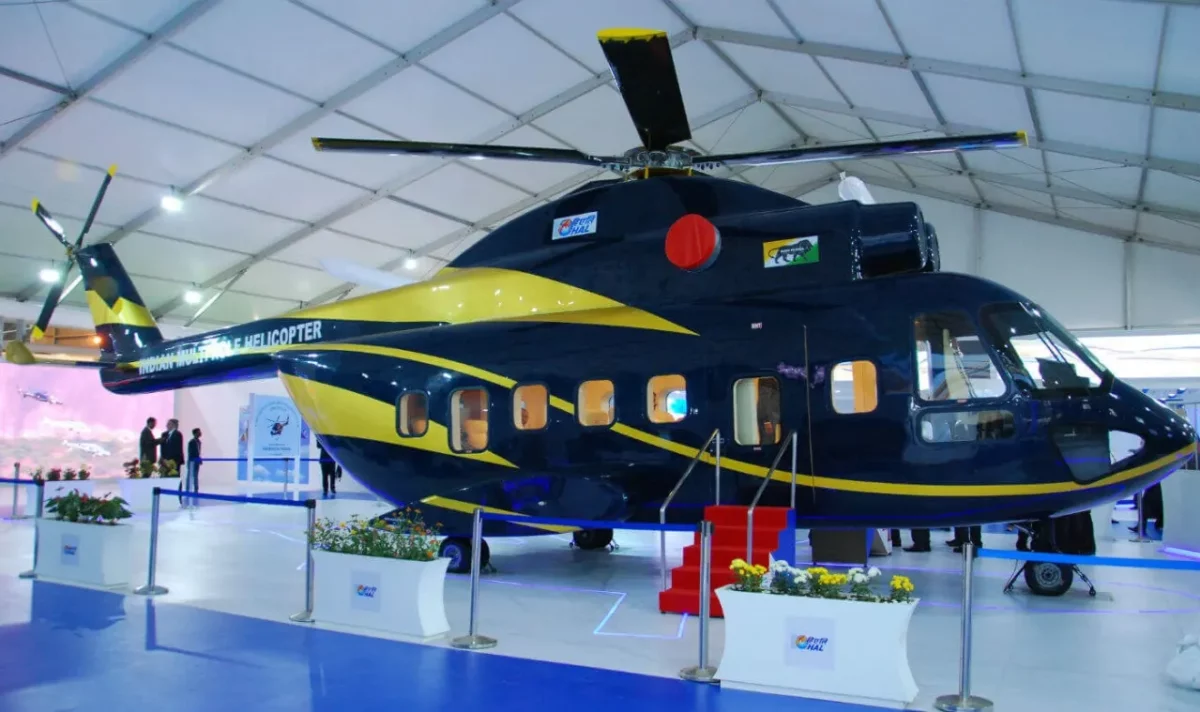
Bengaluru, August 26, 2026 — Hindustan Aeronautics Limited (HAL) and France’s Safran Helicopter Engines have signed the final contract with their joint venture, SAFHAL Helicopter Engines Pvt Ltd, launching full design, development, manufacture, supply and lifecycle support of a new-generation turboshaft engine named Aravalli. The 3,500–4,000 shaft horsepower-class powerplant has been selected to drive India’s forthcoming 13-tonne Indian Multi-Role Helicopter (IMRH) and its naval counterpart, the Deck-Based Multi-Role Helicopter (DBMRH).





The agreement, signed in Bengaluru by Ajay Kumar Shrivastava, HAL’s Director of Engineering, Research and Development, and Olivier Savin, Director of SAFHAL and Executive Vice President (Sales and Marketing) at Safran Helicopter Engines, was presided over by HAL Chairman and Managing Director Ravi K and Safran Helicopter Engines CEO Cédric Goubet. It converts years of preparatory work into a committed development-and-production programme covering the entire product cycle.
The engine takes its name from the Aravalli Range, one of the world’s oldest mountain systems. HAL has presented the choice as a symbol of India’s drive for Aatmanirbharta — self-reliance — in the most technically demanding layer of rotorcraft design: propulsion.
A powerplant built for two twin-engine platforms
Aravalli is a new-generation turboshaft designed specifically for medium-lift helicopters. Both the IMRH and DBMRH are twin-engine machines, so each aircraft will carry two engines in the 3,500–4,000 shp class. That output is a step-change from the Shakti family that currently powers HAL’s lighter platforms. The contract requires SAFHAL to work with both parent companies on advanced design methods, manufacturing processes, comprehensive testing and product support, aiming at high performance, reliability, maintainability and operational effectiveness under international aerospace standards.
The IMRH is HAL’s 13-tonne multi-role helicopter for the Indian Air Force and Army. It is intended, over time, to replace ageing Russian-origin Mi-17 transports. Design targets disclosed over successive Aero India presentations include a maximum take-off weight of about 13 tonnes, a five-bladed main rotor of roughly 21.2 metres diameter, capacity for 24 troops in a standard layout or 36 in high-density seating, a payload of around 4 tonnes at sea level (falling to about 1.5 tonnes at 4,000 metres), cruise speed in the region of 260 km/h, range of about 800 km, endurance of roughly three hours, and a service ceiling near 6,500–6,700 metres. High-altitude hover and lift performance — critical for Himalayan and high-desert operations — has been treated as a design priority rather than raw dash speed.
The DBMRH is the 12.5-tonne naval derivative for the Indian Navy, intended for deck-based operations. Engines for both types are being designed to work in the full range of Indian operating environments: hot deserts, high-altitude plateaus, humid coasts and ship decks.
HAL has indicated that early IMRH prototypes and ground-test vehicles may fly with existing Safran engines while Aravalli matures, so that airframe development is not frozen waiting for the new powerplant. Once certified and integrated, Aravalli is expected to deliver the power, efficiency and growth margin the 13-tonne class requires. Engine schedule will therefore have a direct bearing on when the helicopters can enter operational service.
Why the engine, not just the airframe, is the milestone
Aero-engines remain one of the hardest domains for any country seeking indigenous aerospace capability. India already designs and builds helicopters — the Advanced Light Helicopter (Dhruv), Light Combat Helicopter (Prachand) and Light Utility Helicopter — but has historically relied on licensed or jointly produced foreign cores for propulsion. Shakti, co-developed with Safran and produced in large numbers, closed that gap for the 5–6 tonne class. Aravalli is meant to do the same for the medium-lift band.
HAL CMD Ravi K described the contract as “a significant step forward in India’s pursuit of self-reliance in aero-engine technologies” and said the collaboration would create “a strong foundation for powering next-generation Indian helicopter platforms” while contributing to a broader domestic aerospace industrial ecosystem.
Safran Helicopter Engines CEO Cédric Goubet underlined a different first: this is the first time Safran HE has taken on co-development of an engine in this power class. “The Aravalli engine programme represents a new chapter in the strategic relationship between France and India, combining the expertise of our teams to develop propulsion systems for future Indian rotorcraft,” he said.
The programme is also expected to seed indigenous maintenance, repair and overhaul (MRO) capability for a higher-power class of engines — an area where India has historically remained dependent on original-equipment support. Beyond the two military types, HAL and Safran have flagged possible civil uses: offshore transport, utility missions and VVIP carriage.
A partnership that has grown for decades
The August 2026 contract is the latest step in a relationship that already spans most of HAL’s rotary-wing fleet.
- Safran’s Artouste engines powered the Cheetah and Chetak (Alouette-derived) light helicopters that remain in service in high-altitude and utility roles.
- The Shakti engine family, jointly developed and produced, powers the ALH Dhruv, the weaponised Rudra, the Prachand LCH and the LUH. Hundreds of Shakti engines have been built in India.
- A separate HAL–Safran MRO joint venture in Goa already supports TM333 and Shakti engines in Indian service.
The Aravalli path itself has been incremental:
- 8 July 2022 — MoU to create a joint venture for development, production, sale and support of helicopter engines, with IMRH/DBMRH as the first target.
- 15 February 2023 — workshare agreement for joint development (including HAL participation in core components, a first in the partnership).
- November 2023 — SAFHAL Helicopter Engines Pvt Ltd incorporated in India.
- 30 August 2024 — airframer contract between HAL and SAFHAL to begin joint design, development, manufacture, supply and support; the engine is named Aravalli.
- 26 August 2026 — final contract among HAL, Safran Helicopter Engines and SAFHAL launching development and production.
SAFHAL is described as dedicated to design, development, production, sales and support of new-generation helicopter engines in India. The parents will pool design, manufacturing, testing and product-support strengths rather than treating the JV as a simple licensed-assembly shop.
The Prachand Light Combat Helicopter, already in service and powered by the earlier HAL–Safran Shakti engine, illustrates the industrial base the new programme is meant to extend into a higher power class.
Strategic context: replacing Mi-17s and reducing import dependence
The IMRH sits at the centre of HAL’s medium-lift ambitions. The Indian Air Force’s large Mi-17 fleet is ageing; a domestic 13-tonne helicopter with high-altitude performance, indigenous content targets historically cited around 75 per cent for the airframe, and an engine developed and supported in India would cut long-term dependence on imported platforms and propulsion. Estimates of eventual Indian requirement have ranged from the low hundreds into the 300–400 class across services if the type succeeds, though those figures remain planning estimates rather than firm orders.
For France and Safran, the deal deepens a defence-industrial relationship that already includes Rafale fighters, earlier helicopter engines and MRO. Co-developing a 3,500–4,000 shp class engine is commercially and politically more significant than licensed production of an existing core: it shares design authority, workshare and future civil or export options.
There are caveats. Turboshaft development is long, expensive and technically risky. Integration, certification and high-altitude testing will take years. Early IMRH flying articles using interim engines will need a clean transition once Aravalli is ready. Naval folding-rotor and deck-environment requirements for the DBMRH add another layer of constraint. None of those realities disappear because a contract has been signed; the contract is the point at which they become a managed programme rather than a statement of intent.
Even so, the launch of Aravalli is one of the clearest recent signals that India is trying to move from “make the airframe, import the engine” to co-owning the propulsion stack for its next generation of military helicopters. Whether the engine arrives on a schedule that matches the IMRH and DBMRH — and whether the industrial ecosystem around design, manufacturing and MRO actually thickens — will decide if the mountain-range name becomes more than symbolism.