
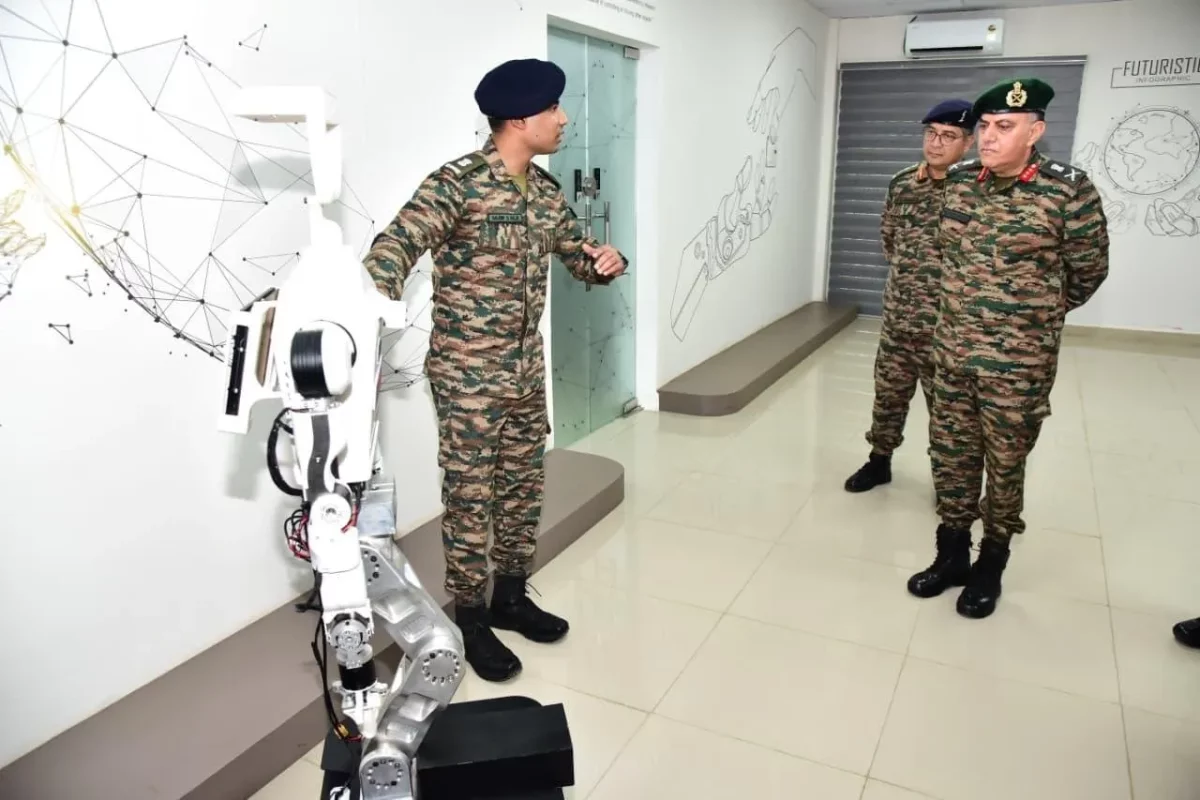
Lieutenant General Praveen Bakshi, VSM, Commandant of the Military College of Telecommunication Engineering (MCTE), Mhow, visited the Military College of Electronics and Mechanical Engineering (MCEME), Secunderabad, on 7 August 2026, as the two premier Indian Army training institutions explored deeper cooperation in emerging technologies and future warfare capabilities.





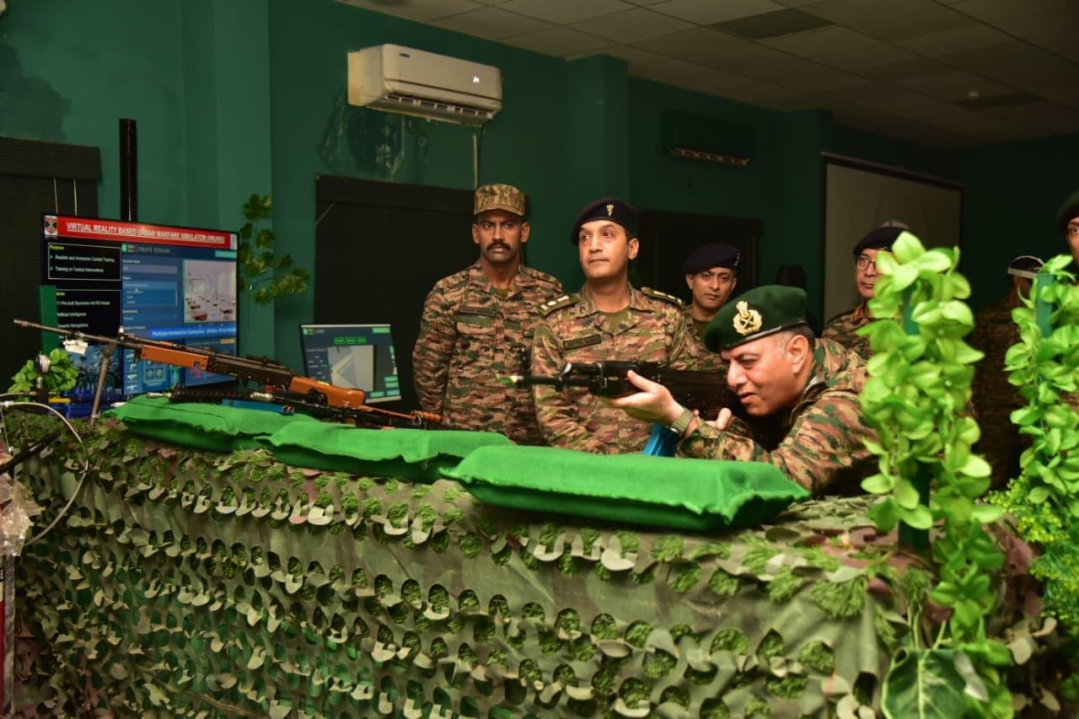
During the visit, Lt Gen Bakshi was given an overview of MCEME’s expanding role in advanced technical training, indigenous capability development, research and innovation. He toured several faculties, Centres of Excellence and state-of-the-art laboratories that are contributing to the technological transformation of the Indian Army.
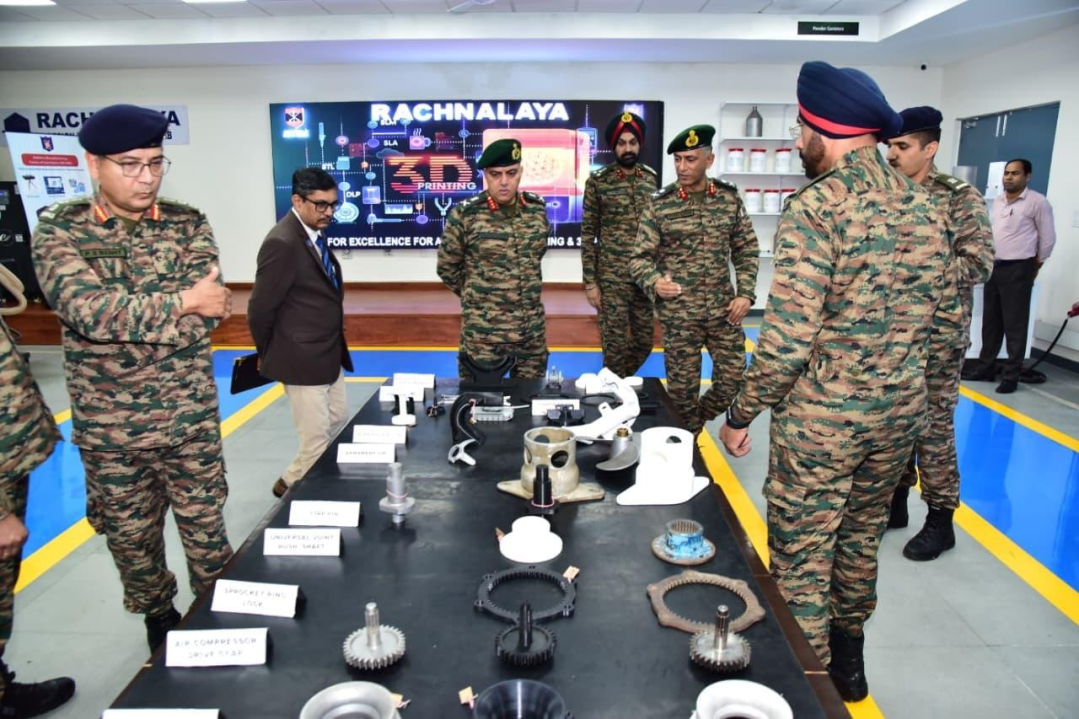
The Commandant of MCTE visited prominent facilities including Dronalaya, Yantralaya and Rachnalaya, where he was briefed on a range of emerging technologies being integrated into military training and capability development.
These facilities showcased work in areas such as drones, robotics, Artificial Intelligence, additive manufacturing, electronic warfare, aviation systems and advanced communication technologies. The exposure highlighted MCEME’s growing emphasis on providing officers and technical personnel with the skills required to operate, maintain and develop increasingly sophisticated military systems.
The visit also reflected the Indian Army’s broader focus on preparing for a battlefield that is becoming progressively more technology-driven. Future military operations are expected to involve extensive use of unmanned systems, autonomous platforms, artificial intelligence, secure communications, electronic warfare and networked command-and-control systems.
Institutions such as MCEME and MCTE therefore play a critical role in ensuring that personnel are not only trained to use emerging technologies but are also capable of adapting, innovating and developing indigenous solutions to operational challenges.
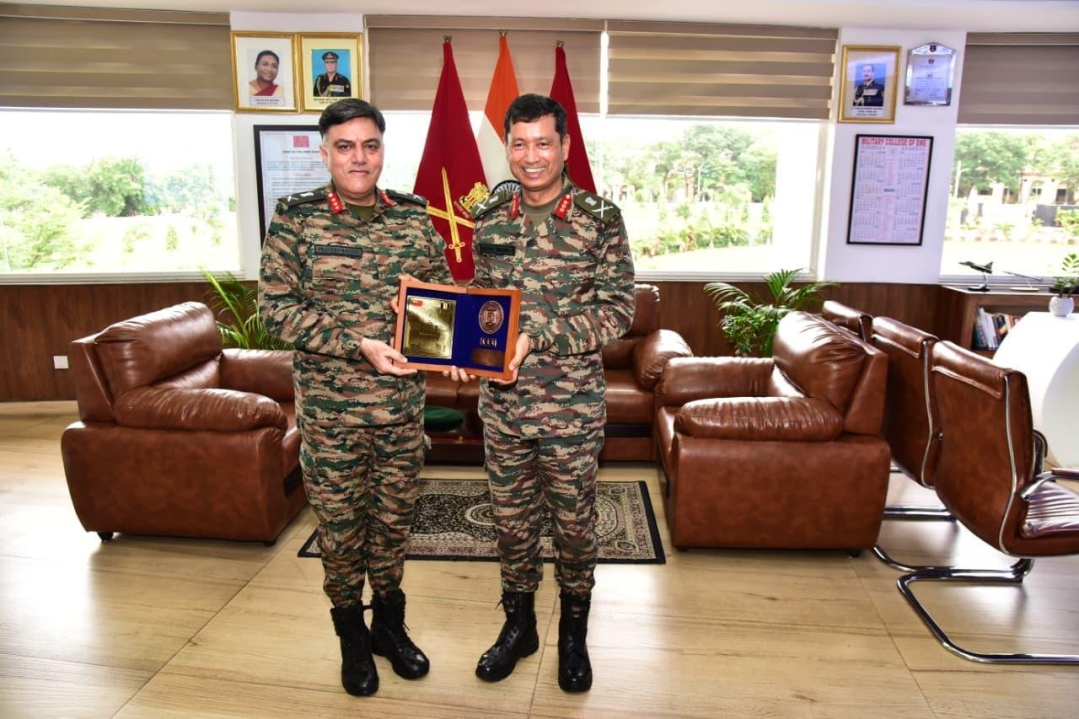
Lt Gen Bakshi interacted with Lieutenant General Neeraj Varshney, AVSM, VSM, Commandant, MCEME and Colonel Commandant of the Corps of Electronics and Mechanical Engineers.
Discussions between the two senior officers focused on further strengthening institutional cooperation between MCEME and MCTE in technical training, emerging technologies, network-centric warfare and overall capability enhancement.
The interaction assumes significance as modern warfare increasingly depends upon the seamless integration of communication networks, battlefield sensors, weapons, electronic systems and information-sharing platforms. Developing such capabilities requires close coordination between institutions specialising in communications, electronics, engineering and technology.
MCTE, based at Mhow in Madhya Pradesh, is one of the Indian Army’s premier institutions for training in telecommunications, information technology, cyber-related domains and advanced communication systems. Its expertise has become increasingly important as military operations transition towards highly connected and information-intensive environments.
MCEME, meanwhile, serves as a major centre for technical and professional military education, particularly in electronics, mechanical engineering, aviation-related systems and maintenance technologies. Its expanding network of specialised laboratories and innovation centres reflects a growing emphasis on indigenous research and technology-driven military capability.
Closer cooperation between the two establishments can therefore contribute to the development of integrated solutions for the future battlefield.
Network-centric warfare was among the important areas discussed during the visit. The concept involves connecting commanders, soldiers, sensors, surveillance assets and weapon systems through secure digital networks, enabling faster information sharing and more effective decision-making.
The effectiveness of such warfare depends heavily on resilient communications, advanced electronics, cybersecurity, artificial intelligence and reliable technical support. Collaboration between MCTE and MCEME could help bring together expertise across these interconnected domains.
The growing application of drones and robotics also formed part of the technological ecosystem showcased during the visit. Unmanned systems have become increasingly important in reconnaissance, surveillance, logistics, targeting and other military operations.
Artificial Intelligence is similarly expected to influence battlefield decision-making, data analysis, autonomous systems, predictive maintenance and surveillance. Training establishments are consequently required to familiarise future military leaders with both the operational opportunities and technical challenges associated with such technologies.
Additive manufacturing is another area with considerable potential for the Armed Forces. Technologies such as 3D printing can support rapid prototyping and, in certain circumstances, enable the production of specialised components closer to operational locations. This can contribute to reducing logistics dependence and improving equipment availability.
Electronic warfare remains equally important as modern forces depend heavily upon the electromagnetic spectrum for communications, surveillance, navigation and weapon employment. Developing personnel capable of operating effectively in contested electromagnetic environments will be essential for future operational effectiveness.
During his interaction, Lt Gen Bakshi appreciated MCEME’s commitment towards nurturing technologically proficient military leaders and strengthening the Indian Army’s operational readiness through innovation, research and advanced professional military education.
The visit highlighted MCEME’s continuing transformation into a centre of technological excellence where conventional military engineering knowledge is being combined with rapidly evolving technologies.
It also demonstrated the increasing importance the Indian Army is placing on institutional collaboration rather than developing technological capabilities in isolated domains. Future warfare will require communications, engineering, aviation, artificial intelligence, electronic warfare and autonomous systems to operate as part of an integrated ecosystem.
Stronger cooperation between MCEME and MCTE can allow the two institutions to exchange expertise, develop joint training initiatives and explore technology-based solutions addressing emerging operational requirements.
Such partnerships can also contribute to the Army’s wider objective of promoting indigenous capability development and reducing dependence on externally sourced technologies by encouraging research, experimentation and innovation within military institutions.
The 7 August visit therefore represented more than a routine interaction between two training establishments. It underlined the Indian Army’s evolving approach towards preparing technically competent leaders capable of understanding and exploiting disruptive technologies on the future battlefield.
As warfare becomes increasingly networked, autonomous and information-driven, collaboration between institutions such as MCEME and MCTE is expected to remain crucial in developing the technological knowledge, professional expertise and innovative mindset required to maintain the Indian Army’s operational edge.