

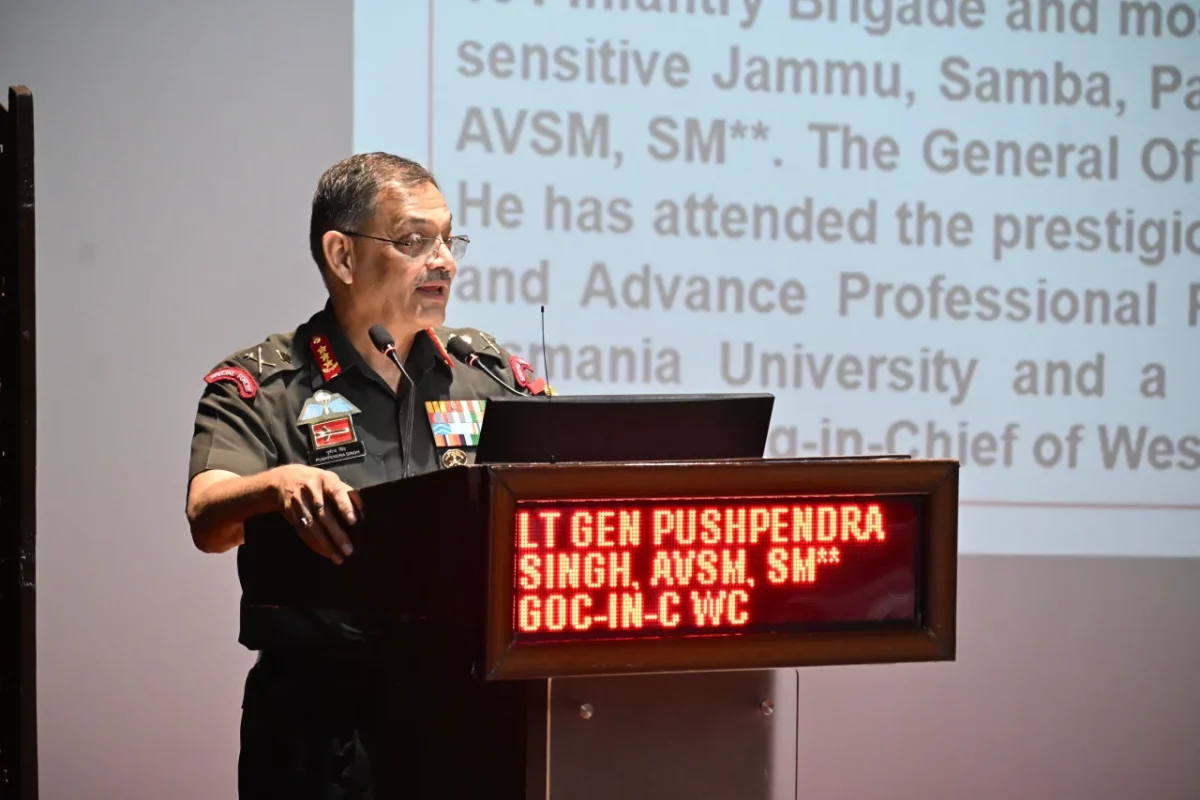
The 4th Gen SF Rodrigues Memorial Seminar 2026, themed “Asymmetric Capability through Networked Precision Fires by Artillery”, was organised by the Regiment of Artillery of the Indian Army in collaboration with the Centre for Land Warfare Studies (CLAWS) at Western Command, Chandimandir.





The seminar brought together senior military leaders, veterans, members of academia, defence industry representatives and domain experts for discussions on the evolving character of warfare and the changing role of artillery in future operations.
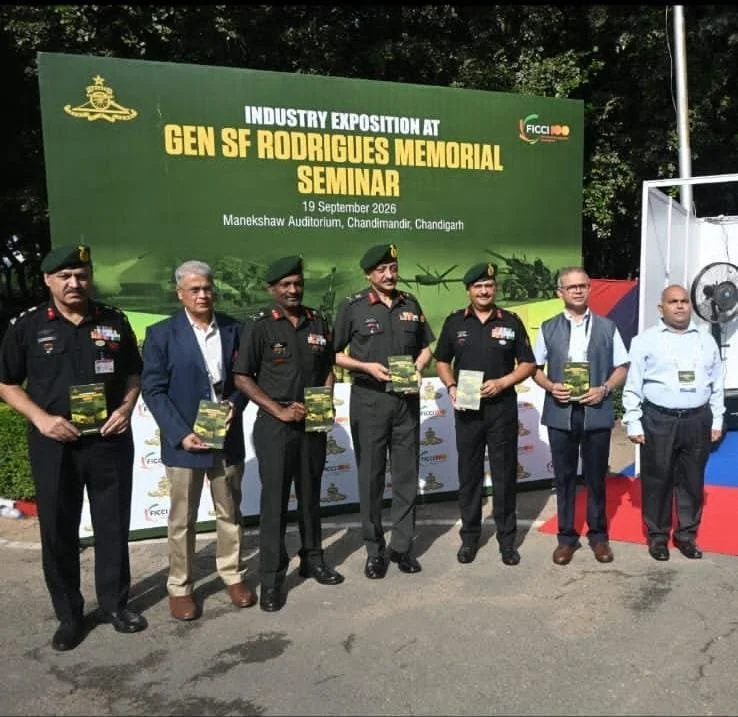
The event featured expert presentations, professional deliberations and a display of innovative technologies and contemporary solutions. Discussions drew attention to lessons from recent conflicts and emerging capabilities that are shaping the future employment of artillery and the conduct of Multi-Domain Operations.
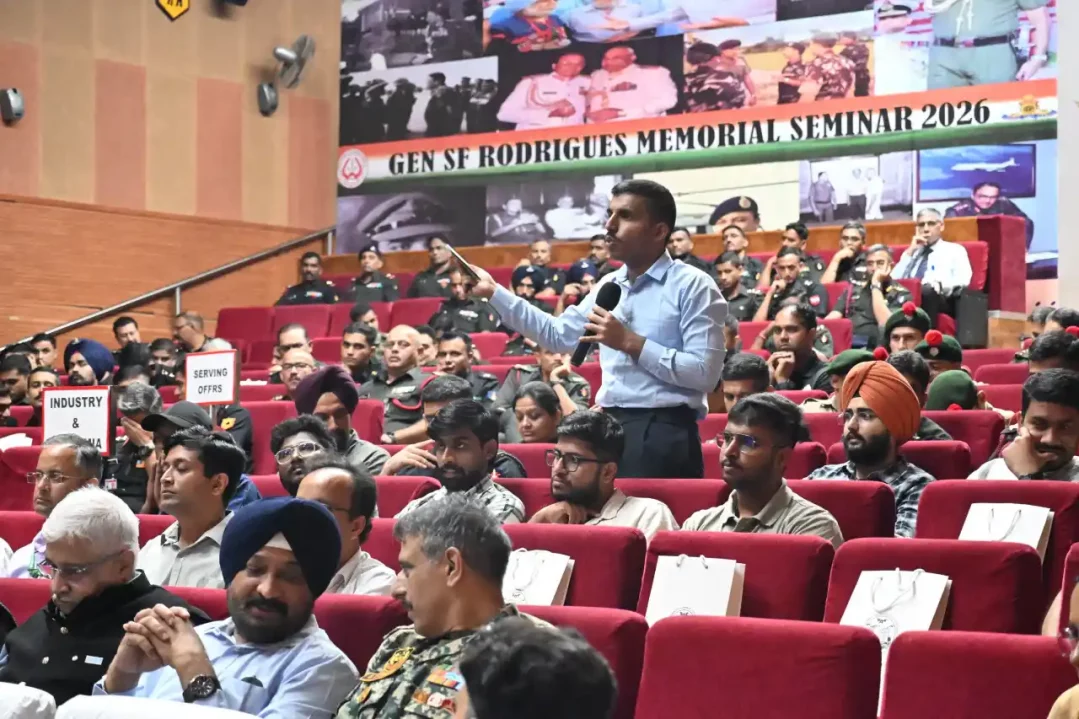
A central theme of the seminar was the development of asymmetric capabilities through networked precision fires. Participants examined how advances in sensors, communications, automation and precision weapon systems are changing the manner in which artillery can contribute to operations across increasingly complex battlefields.
Distinguished speakers deliberated on global trends in asymmetric warfare, networked precision fires, long-range engagements, automation and decision superiority. The discussions highlighted the growing convergence of artillery with Unmanned Aerial Systems, Artificial Intelligence, Electronic Warfare, surveillance capabilities and precision munitions.
The seminar emphasised the importance of connecting sensors, shooters and decision-makers into an integrated network. Such connectivity is intended to enable information to move rapidly across the battlespace, allowing commanders and weapon systems to respond with greater speed and accuracy.
The convergence of these capabilities is also reshaping the traditional understanding of artillery operations. Rather than functioning as an isolated firepower arm, artillery is increasingly being integrated with surveillance, intelligence, unmanned systems and digital networks to support effects across multiple domains.
Long-range engagements formed another important area of discussion. The ability to detect targets at greater distances, process information rapidly and deliver precision effects is becoming increasingly relevant as militaries adapt to technologically enabled battlefields.
Artificial Intelligence and automation were also highlighted as important components of future artillery capability. Their integration with surveillance and decision-making systems can support faster processing of battlefield information and improve the ability to respond to rapidly changing operational situations.
Electronic Warfare and UAS were discussed alongside these technologies, reflecting the increasingly interconnected nature of contemporary military operations. The integration of these systems can enable formations to combine sensing, targeting, communications and precision fires as part of a wider operational network.
In his concluding address, Lt Gen Pushpendra Singh, AVSM, SM**, Army Commander, Western Command, highlighted the ongoing transformation of artillery through enhanced ranges, precision, Artificial Intelligence, automation, persistent surveillance and networking.
He emphasised the need for continued evolution in doctrines, technologies, organisations and training to retain a decisive combat edge across the entire depth of the battlefield.
The emphasis on doctrinal and organisational adaptation reflects the changing requirements of modern warfare. As new technologies alter the speed and complexity of operations, military formations need corresponding changes in training, structures and methods of employment to make effective use of emerging capabilities.
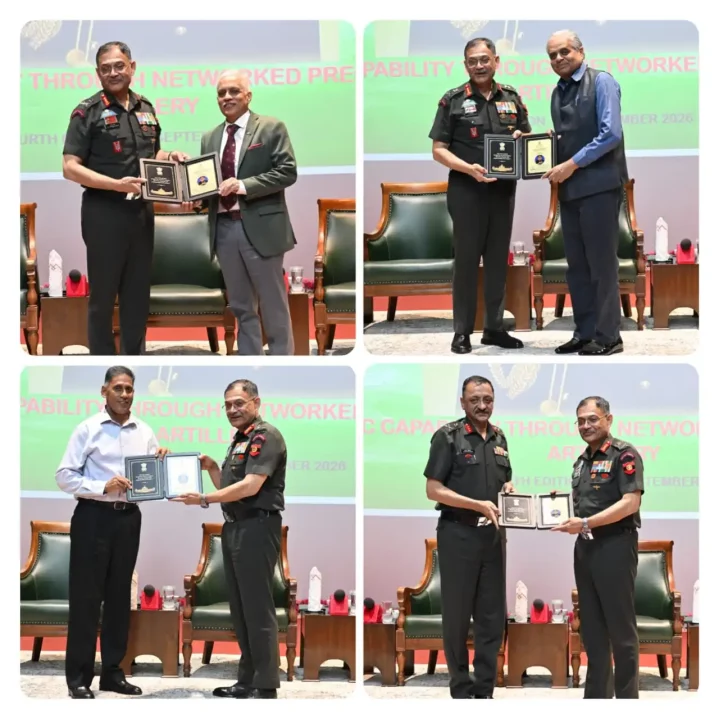
The seminar also provided an interface between the Armed Forces, veterans, academia and the defence industry. Such interaction allows operational requirements and technological developments to be discussed alongside lessons emerging from recent conflicts and contemporary military experience.
For the Regiment of Artillery, the discussions offered a platform to examine how precision, range, networking and technology can shape future firepower capabilities. The focus was not only on individual weapon systems but also on the larger network connecting surveillance assets, decision-makers and firing units.
The Indian Army’s emphasis on technology absorption, innovation and capability development is aimed at creating a more connected and agile force capable of responding to an increasingly complex battlespace.
The 4th Gen SF Rodrigues Memorial Seminar 2026 consequently brought together operational experience and emerging technological perspectives around a common theme: the evolution of artillery from traditional fire support towards increasingly networked, precise and information-enabled battlefield effects.
The deliberations at Chandimandir underscored the continuing requirement to see farther, process information faster and employ precision fires effectively across the depth of the battlefield.