
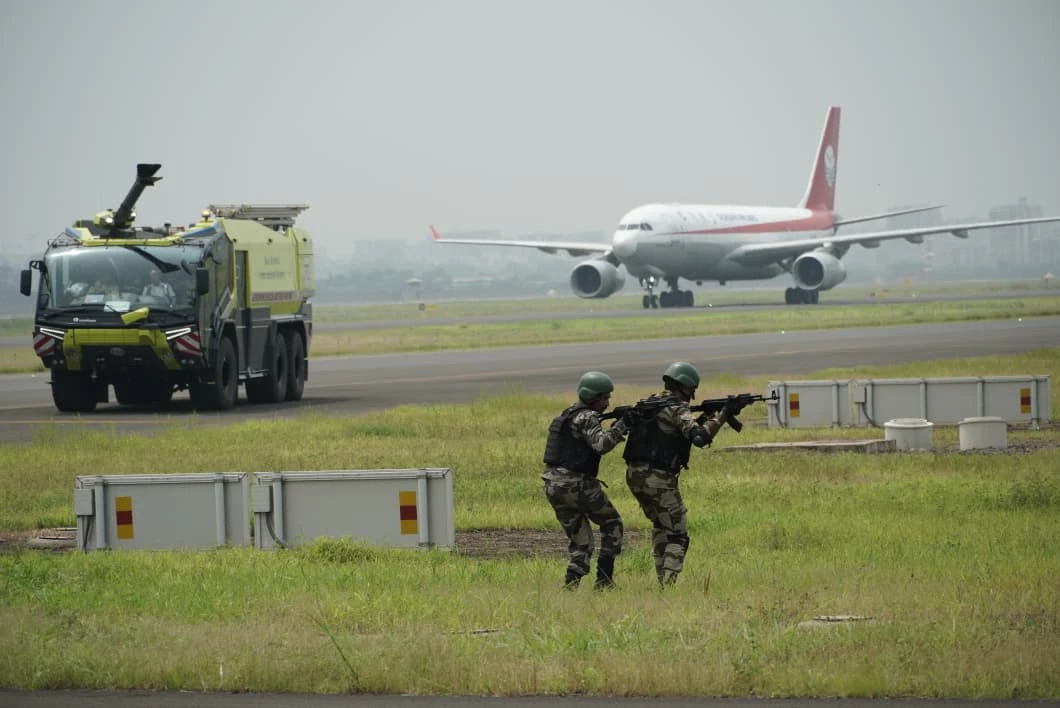
The Annual Anti-Hijacking Mock Exercise (AHME)–2026 was successfully conducted at the CISF ASG Navi Mumbai on September 22, 2026, in accordance with the approved contingency plan.



The exercise simulated a hijacking scenario involving an aircraft landing at Navi Mumbai Airport. The drill brought together multiple agencies and stakeholders involved in aviation security, emergency response, air traffic management and passenger safety to assess their coordinated preparedness for a potential hijacking contingency.
Personnel from the Central Industrial Security Force (CISF), Navi Mumbai International Airport Limited (NMIAL), local police, Airport Rescue and Fire Fighting (ARFF) services, Intelligence Bureau (IB), National Security Guard (NSG), airlines, medical services, Air Traffic Control (ATC), Krystal and Bureau of Immigration (BOI) participated in the exercise.
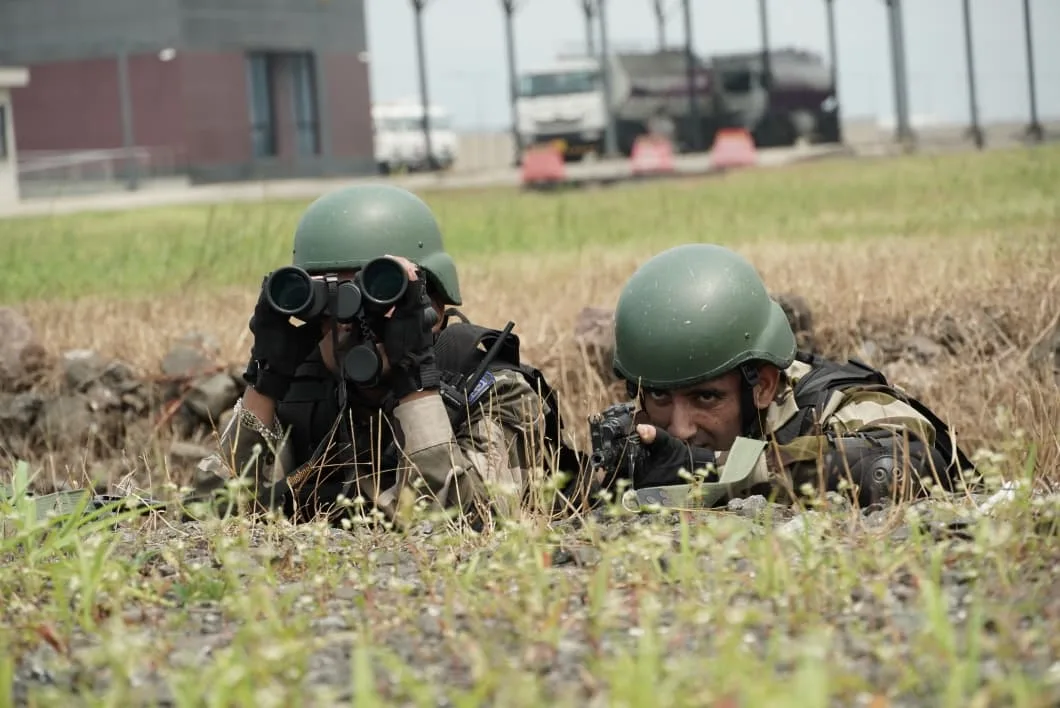
The participation of multiple agencies provided an opportunity to test coordination between the various stakeholders responsible for responding to an aviation security emergency. The simulated scenario required the participating agencies to operate within the framework of the approved contingency plan and demonstrate their preparedness for a hijacking-related incident.
As part of the exercise, the Aerodrome Committee was activated. The committee was attended by Milind Bharambe, IPS, Commissioner of Police, Navi Mumbai, along with Sunit Sharma, DIG/CASO, ASG Navi Mumbai.
All concerned members assembled at the Airport Command and Control Room (ACCR) of Navi Mumbai Airport as part of the exercise.
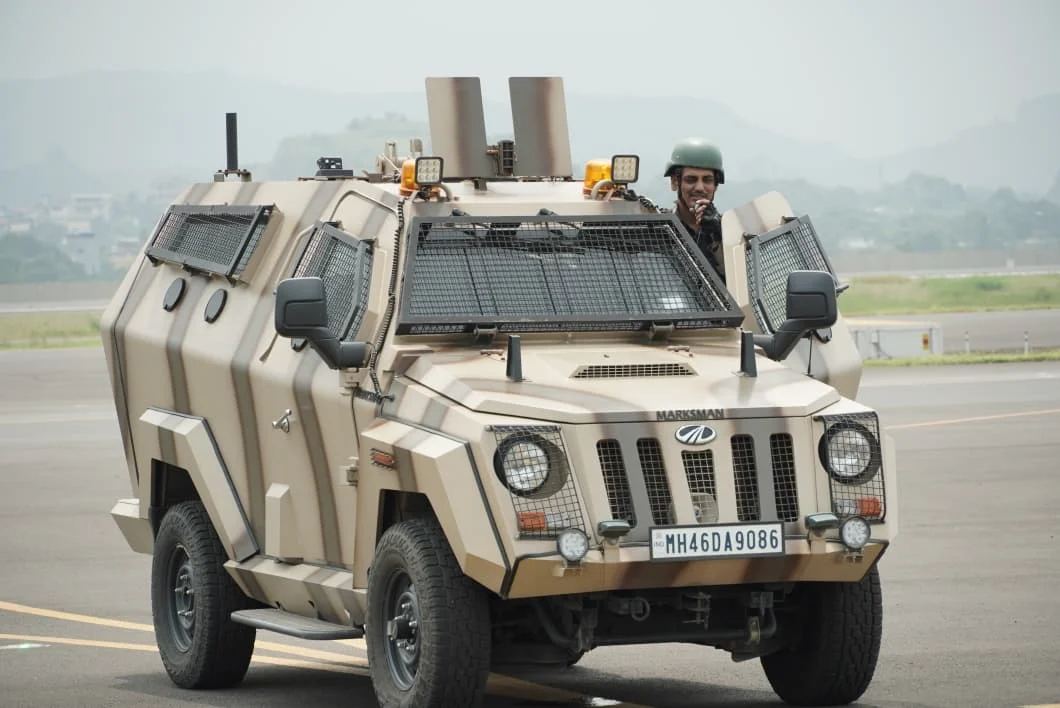
The activation of the Aerodrome Committee and assembly of concerned stakeholders at the ACCR provided a coordinated platform for managing the simulated contingency. Such exercises enable participating agencies to familiarise themselves with established response procedures and strengthen coordination during aviation security emergencies.
The annual nature of the Anti-Hijacking Mock Exercise also provides an institutional mechanism for periodically assessing preparedness against a simulated hijacking scenario. By involving agencies with different responsibilities, the exercise helps test the interaction between security, law enforcement, emergency response, medical and aviation stakeholders.
The exercise also highlighted the importance of effective communication and coordination during an aviation security contingency. A hijacking scenario can require simultaneous action by several agencies, making established procedures and inter-agency coordination essential to an effective response.
The participation of CISF personnel alongside airport authorities, police, intelligence agencies, emergency services, the NSG, airlines and other stakeholders reflected the multi-agency nature of aviation security preparedness.
The successful conduct of AHME–2026 demonstrated the collective preparedness of the participating agencies under the approved contingency framework. It also provided an opportunity to assess the effectiveness of existing coordination mechanisms and reinforce the roles of individual stakeholders.
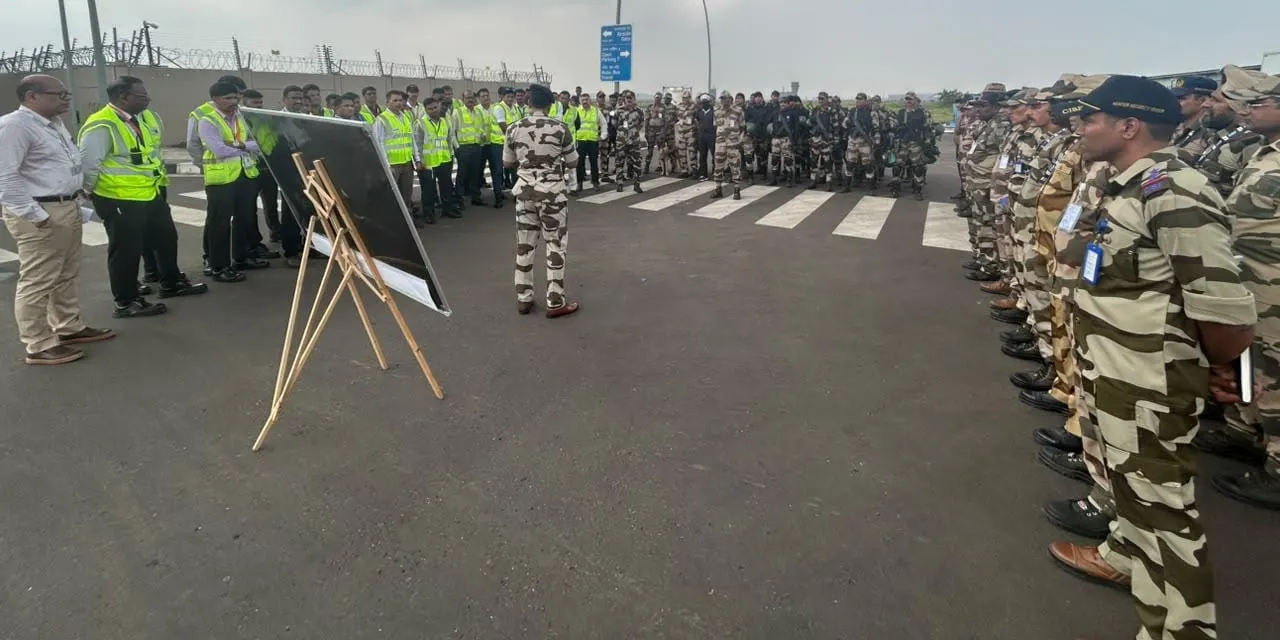
The exercise concluded successfully, reflecting the coordinated efforts of all participating agencies towards maintaining a high level of preparedness for aviation security contingencies at Navi Mumbai Airport.
The drill reaffirmed the importance of regular mock exercises in ensuring that agencies involved in aviation security remain prepared to respond collectively and effectively to potential emergencies.