
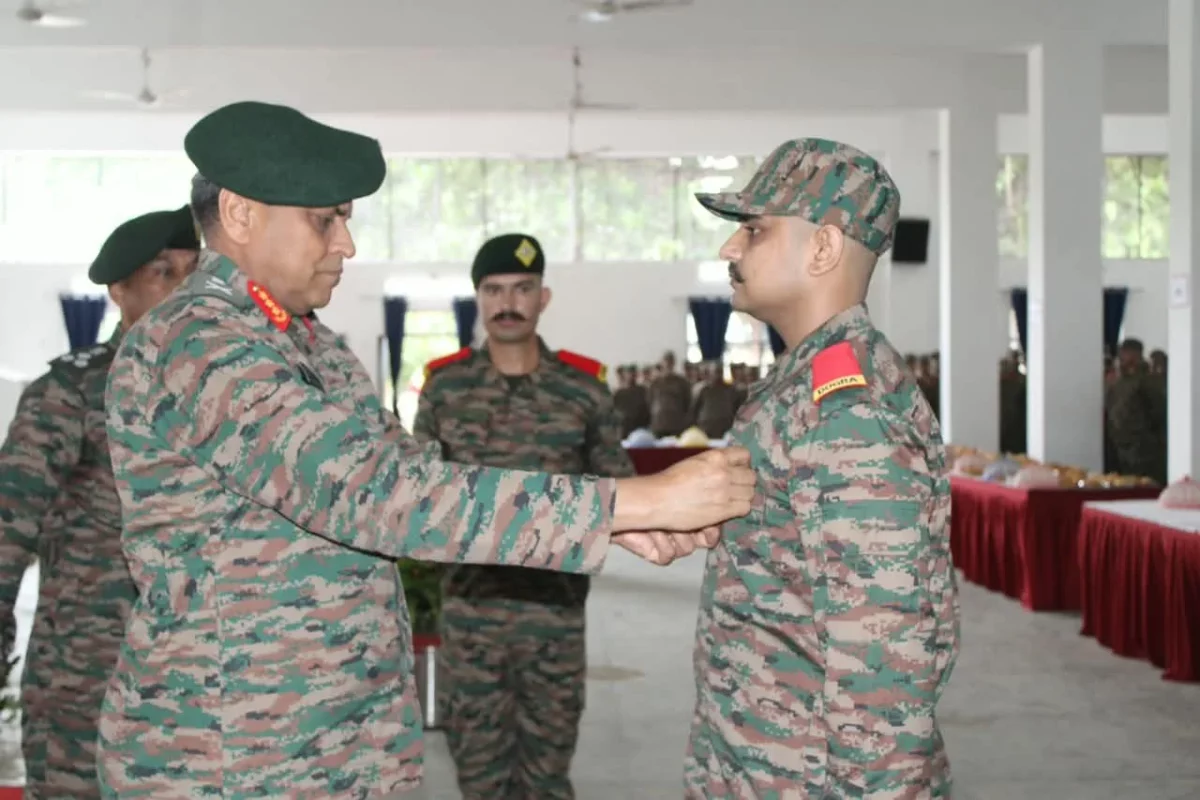
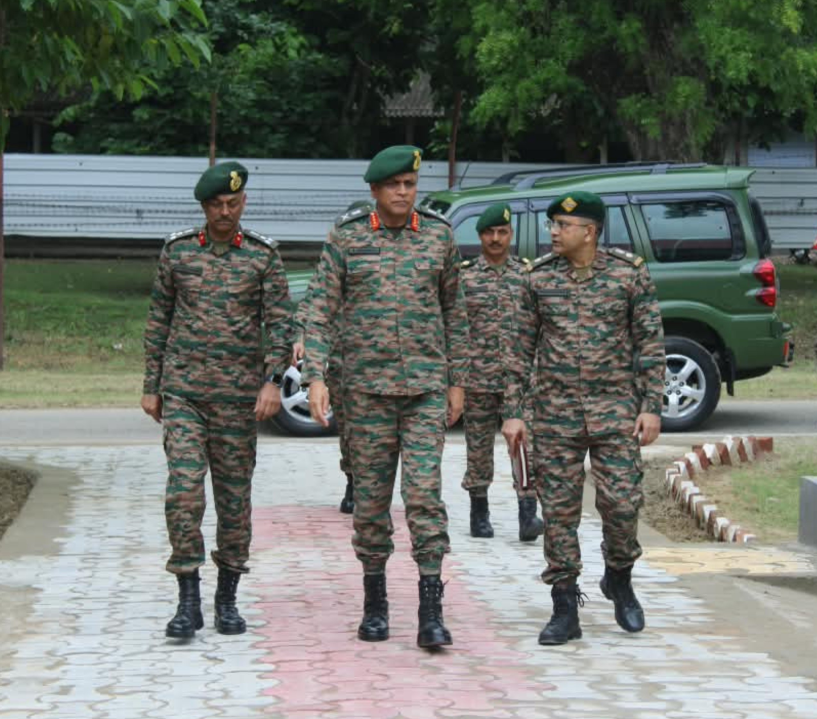
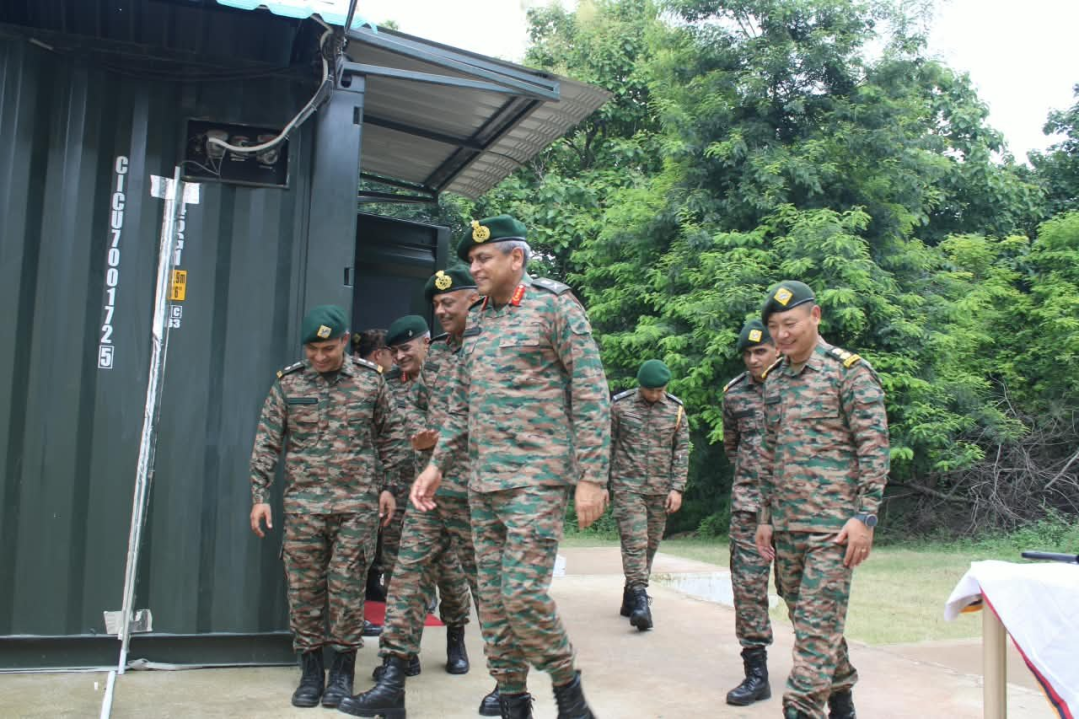
Lieutenant General Anindya Sengupta, General Officer Commanding-in-Chief (GOC-in-C), Central Command, visited Ayodhya Military Station and the Dogra Regimental Centre, where he reviewed ongoing infrastructure projects, training facilities and contemporary training methodologies aimed at preparing combat-ready soldiers for the evolving battlefield.





The Army Commander assessed various initiatives being undertaken to strengthen the training ecosystem and ensure that soldiers receive realistic and technologically relevant preparation for future operational challenges. The visit reflected Central Command’s emphasis on continuously adapting its training practices in response to changing warfare, emerging technologies and evolving operational requirements.
During his visit to the Dogra Regimental Centre, Lt Gen Anindya Sengupta reviewed the training infrastructure and interacted with personnel involved in transforming recruits into professionally competent soldiers.
A key focus of the visit was the training of Agniveers. Lt Gen Sengupta interacted with Agniveers undergoing training at the Centre and assessed their preparedness, motivation and understanding of essential military skills.
The Army Commander commended the Agniveers for their high level of josh, discipline and firm grasp of battle drills. Their performance highlighted the emphasis being placed on developing physical robustness, tactical awareness, discipline and confidence during the formative stages of military training.
The Dogra Regimental Centre plays a significant role in preparing soldiers for service with the Dogra Regiment, one of the Indian Army’s historic infantry regiments. Besides imparting military training, the Centre serves as an important institution for preserving and carrying forward the Regiment’s traditions, ethos and professional values.
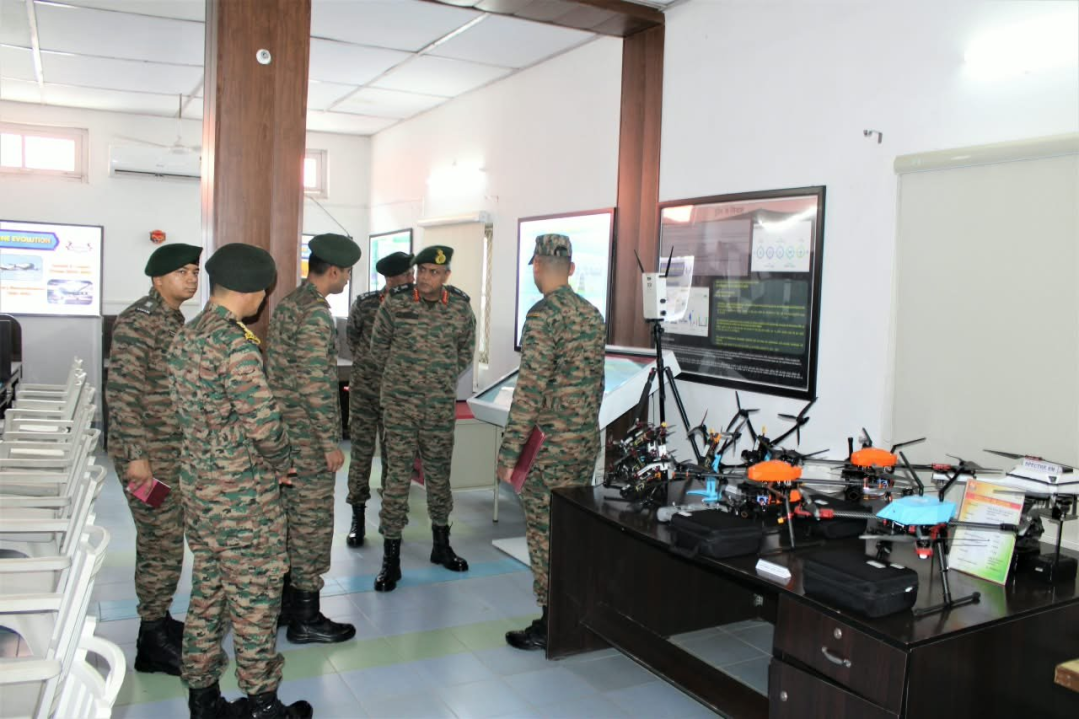
Lt Gen Sengupta appreciated the Centre’s pivotal role as a crucible for shaping technologically adept, professionally competent and mission-ready warriors. He also acknowledged its efforts to ensure that modern training requirements are integrated with the proud traditions and military heritage of the Dogra Regiment.
Modern battlefields are increasingly characterised by rapid technological developments, sophisticated surveillance systems, drones, electronic warfare, precision weapons and network-enabled operations. Consequently, training establishments across the Indian Army are placing greater emphasis on technological awareness alongside conventional soldiering skills.
The review at Ayodhya Military Station therefore focused not only on existing training facilities but also on contemporary methodologies intended to prepare soldiers for such emerging challenges. Realistic training environments and continuous adaptation are becoming increasingly important in ensuring that troops can respond effectively across a wide spectrum of operational scenarios.
The visit also provided the Army Commander an opportunity to review ongoing projects at the military station. Infrastructure development at military establishments plays an important role in supporting training, administration, troop welfare and overall operational preparedness.
Central Command, also known as Surya Command, has continued to emphasise realistic training, technological adaptation and sustained operational readiness across formations and establishments under its responsibility.
The interaction with Agniveers and review of the Dogra Regimental Centre highlighted the importance being placed on developing soldiers who are physically resilient, tactically proficient and comfortable operating in an increasingly technology-intensive combat environment.
Lt Gen Anindya Sengupta’s visit to Ayodhya Military Station underscored Central Command’s broader objective of ensuring that training remains closely aligned with contemporary and future battlefield requirements.
By combining modern infrastructure, evolving training methodologies, technological adaptation and the enduring regimental ethos of the Indian Army, training establishments such as the Dogra Regimental Centre continue to play a critical role in forging disciplined, competent and mission-ready soldiers capable of meeting the challenges of future warfare.