
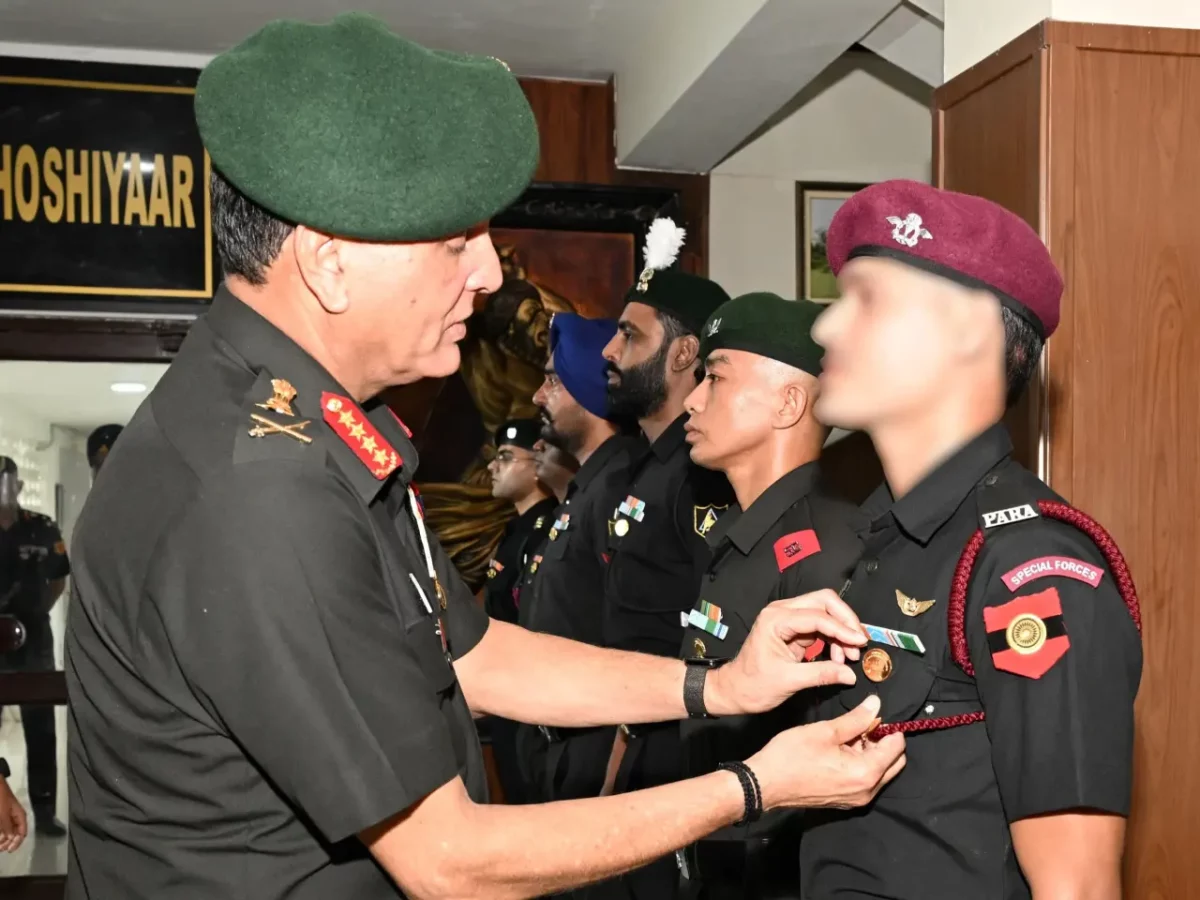
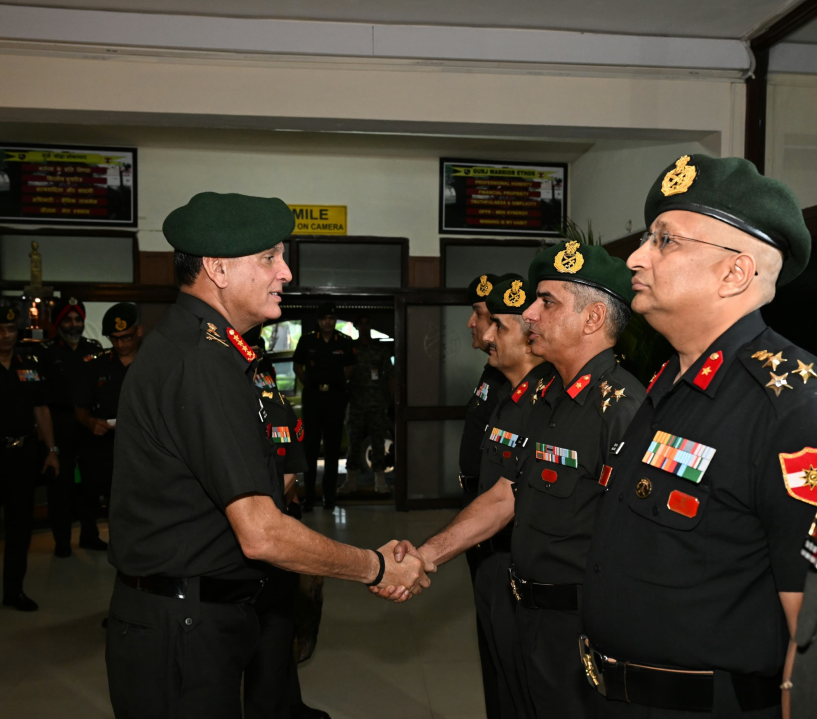
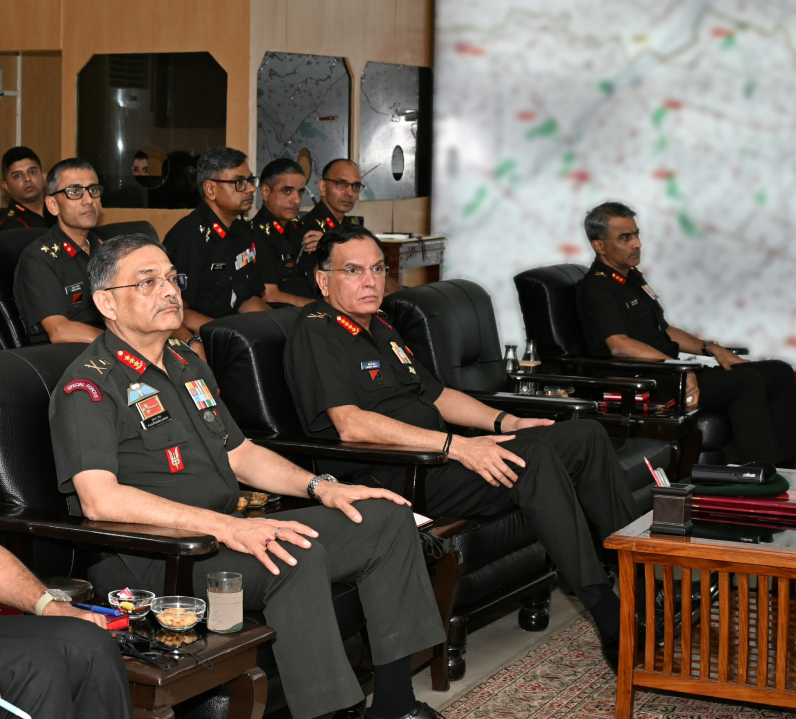
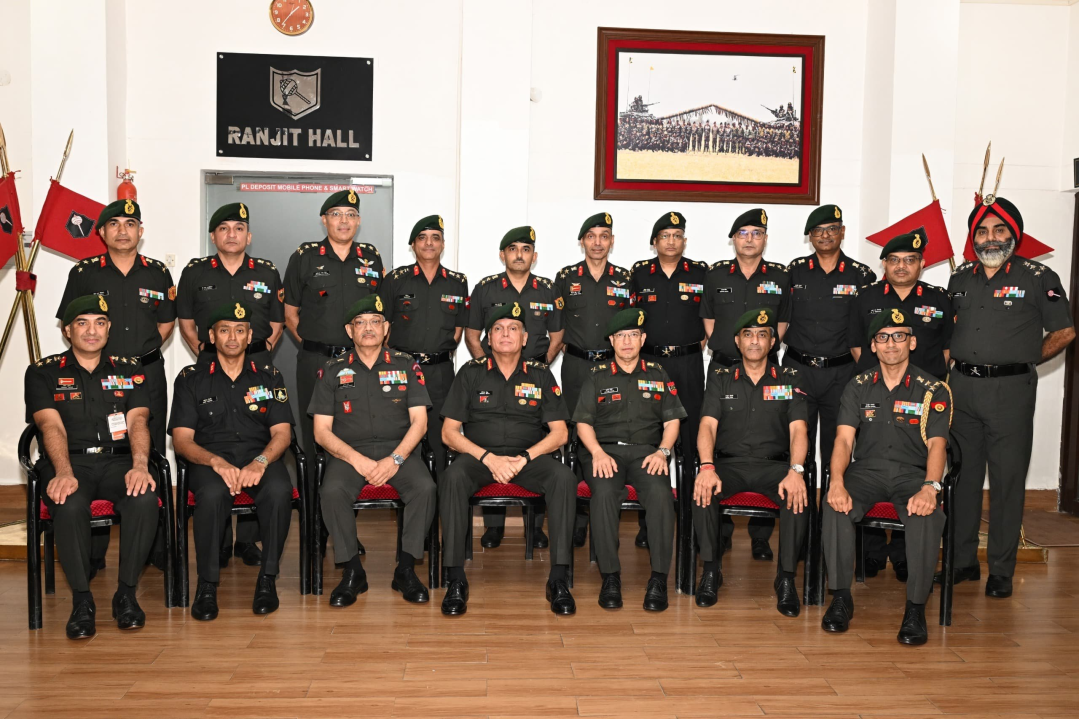
Chief of the Army Staff (COAS) General Dhiraj Seth reviewed the operational preparedness of the Indian Army’s Rising Star Corps on Tuesday, August 11, 2026, during his ongoing visit to the Western Command. The visit focused on the formation’s readiness to respond to emerging security challenges, its adoption of new technologies and ongoing efforts aimed at strengthening combat effectiveness.





During the interaction, General Seth was given a detailed briefing on the evolving security environment, operational requirements and measures being undertaken by the formation to maintain a high degree of preparedness. Particular attention was given to technology absorption initiatives designed to improve battlefield awareness, decision-making, responsiveness and the overall effectiveness of troops in contemporary operational scenarios.
The review forms part of the Army Chief’s broader assessment of formations under Western Command. Earlier during the visit, General Seth also visited the Headquarters of Western Command, where he reviewed the Command’s overall operational preparedness and ongoing capability-enhancement initiatives.
General Seth appreciated the high standards of operational readiness maintained by the Rising Star Corps and acknowledged the formation’s contribution to nation-building activities in addition to its primary military responsibilities. He stressed that formations deployed in strategically important areas must remain prepared to react rapidly to changes in the security environment.
Addressing commanders and troops, the COAS emphasised the importance of constant vigilance, battle readiness and maintaining a high state of operational preparedness at all times. His message underlined the Army’s continuing focus on ensuring that formations remain capable of responding effectively to both conventional and emerging security challenges.
The emphasis on technology absorption is particularly significant as the Indian Army continues to integrate advanced systems into its operational framework. Modern warfare increasingly involves a combination of conventional combat capabilities, unmanned systems, electronic warfare, surveillance assets, secure communications, artificial intelligence-assisted applications and networked command-and-control systems.
General Seth has consistently been associated with capability development and military modernisation during his career. Before taking over as the 31st Chief of the Army Staff on June 30, 2026, he held several senior appointments involving strategic planning, force management and capability development. The Ministry of Defence has highlighted his role in shaping the Army’s modernisation trajectory and aligning operational requirements with emerging technologies and future battlefield imperatives.
An alumnus of the National Defence Academy, General Seth was commissioned into the Armoured Corps in December 1986. His nearly four decades of military service have included extensive command experience across different operational environments. He has commanded an Armoured Regiment in the desert sector, an Armoured Brigade in the western theatre and a Counter-Insurgency Force in Jammu and Kashmir.
At the rank of Lieutenant General, he commanded the Sudarshan Chakra Corps, one of the Army’s major strike formations, before subsequently serving as General Officer Commanding, Delhi Area. He later commanded both South Western Command and Southern Command, giving him extensive experience of operational planning across major sectors of the country.
His focus on technology-enabled operations has also been visible in previous appointments. While relinquishing command of Southern Command in March 2026, General Seth had called upon troops to sustain their operational edge through technology absorption, refinement of warfighting competencies for multi-domain operations and continued development of a future-ready force.
The Rising Star Corps review therefore reflects a broader theme in the Army Chief’s approach: combining traditional military fundamentals such as vigilance, training and combat readiness with rapid technological adaptation.
For the Indian Army, technology absorption is increasingly being treated not merely as procurement of modern equipment but as the integration of technology into training, operational planning and battlefield procedures. The objective is to ensure that new systems translate into measurable improvements in situational awareness, precision, survivability and response times.
At the same time, General Seth’s emphasis on battle readiness indicates that technological modernisation must remain firmly connected to the Army’s fundamental ability to fight and successfully execute assigned operational tasks. Regular reviews by senior military leadership allow formations to assess preparedness, identify capability gaps and ensure that commanders and troops remain familiar with evolving operational requirements.
Western Command occupies an important position in the Indian Army’s operational architecture and oversees formations responsible for strategically sensitive areas along India’s western front. Maintaining a high level of preparedness across these formations remains essential given the rapidly changing nature of modern security threats.
The Rising Star Corps, as an important formation under the Command, therefore has a significant role in maintaining operational readiness while simultaneously incorporating new capabilities and technologies.
General Seth’s visit also highlighted the wider contribution of Army formations to nation-building. Apart from their primary operational responsibilities, Army units frequently contribute to humanitarian assistance, disaster relief, infrastructure support, environmental initiatives and assistance to civil authorities when required.
The Army Chief’s appreciation of these efforts recognised the ability of formations to contribute beyond purely military tasks while ensuring that operational responsibilities remain their foremost priority.
General Seth assumed charge as India’s 31st Chief of the Army Staff on June 30, 2026, succeeding General Upendra Dwivedi. His extensive background in operational command, strategic planning and capability development is expected to play an important role as the Army continues its transition towards a more technologically enabled and future-ready force.
The review of Rising Star Corps consequently sends a clear message across the force: despite rapid advances in technology and changes in the character of warfare, constant vigilance, realistic preparation and battle readiness remain fundamental to military effectiveness.
By combining these traditional soldiering principles with faster technology absorption and capability enhancement, the Indian Army is seeking to ensure that its formations remain prepared to operate effectively across the increasingly complex and multidomain battlefield of the future.