
New Delhi: A group of 50 retired officers of the Indian Army, Indian Air Force and Indian Navy — all members of the Delhi Gymkhana Club — have written to Prime Minister Narendra Modi seeking his personal intervention to prevent the closure of the more than century-old institution. In a letter dated July 8, 2026, the veterans have urged the Prime Minister to direct the concerned ministry to reconsider the proposed termination of the club’s perpetual lease, explore “constructive alternatives,” and preserve the club in a manner that balances public interest with the welfare of those who have served the nation.





The signatories, many of whom held key appointments during their service careers, described the club as an “invaluable support network” for veterans and retired public servants. They warned that its closure would have “profound human consequences” for a community that has already given its best years to the country.
The Letter and Key Appeals
The letter opens with deep respect for the Prime Minister’s leadership: “We, the undersigned retired officers of the armed forces of India, write to you with the deepest respect and utmost faith in your leadership.”
The veterans fully acknowledge the government’s authority to reclaim public land for genuine public purposes or national security. They clarify that their appeal is not against governmental authority or the ongoing judicial process. Instead, they request that the concerns and welfare of thousands of veterans and retired public servants be taken into account before an irreversible decision is implemented.
They portray the Delhi Gymkhana Club as a “unique part of India’s institutional heritage.” Over the decades since Independence, they note, it has evolved into an institution that has welcomed generations of soldiers, civil servants, diplomats, judges, academics, sportspersons and other distinguished citizens. Beyond recreation, the club provides physical well-being, emotional resilience and mental health support — particularly valuable for elderly members, many in their 70s and 80s, including those who have lost spouses or live alone after their children have moved away.
The group has also sought a short 15–20 minute meeting with the Prime Minister to personally present their concerns and possible alternatives.
One of the signatories, a retired Army officer who held key appointments, told news agencies that the club remains deeply personal for many veterans. He recalled choosing to celebrate his 75th birthday at the Gymkhana rather than a five-star hotel, citing its carefully preserved heritage, old buildings and manicured lawns.
Background to the Dispute
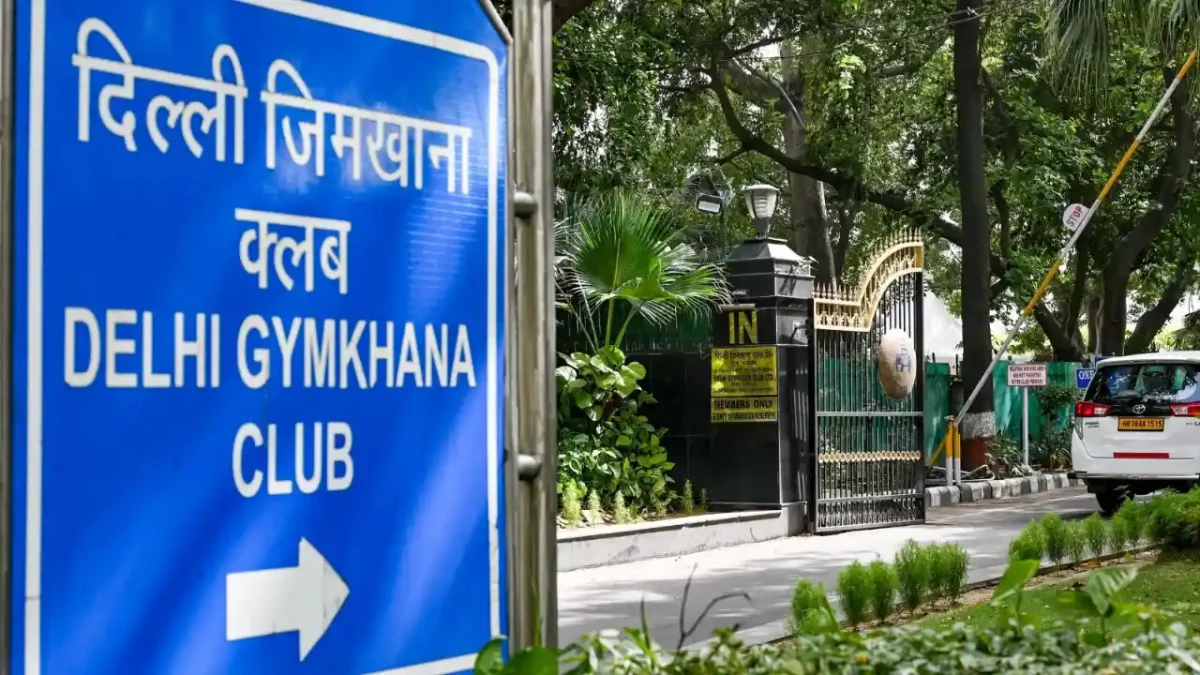
The controversy stems from a May 22, 2026 order by the Land and Development Office (L&DO) under the Ministry of Housing and Urban Affairs. The order terminated the club’s perpetual lease (dating back to 1928) and directed it to hand over vacant possession of its 27.3-acre property at 2, Safdarjung Road in Lutyens’ Delhi. The government cited the need for “strengthening and securing defence infrastructure” and other vital public security purposes, given the land’s strategic location near the Prime Minister’s official residence at 7, Lok Kalyan Marg.
Authorities have also pointed to alleged outstanding ground rent dues of approximately ₹47.58 crore after the nominal colonial-era rent was revised sharply upward in recent years. On June 29, the L&DO issued a show-cause notice under the Public Premises (Eviction of Unauthorised Occupants) Act, asking the club and its occupants to explain why an eviction order should not be passed.
The Delhi Gymkhana Club and some members, including Vijay Khurana, along with the staff welfare association, have challenged the termination and show-cause notice in the Delhi High Court. They contend that the action is arbitrary and that due process was not followed. The High Court has not granted a stay on the proceedings but has recorded the Centre’s assurance that possession would be taken only in accordance with law. The next hearing is scheduled for September 3, 2026. Parallel proceedings before the Estate Officer have also been adjourned in alignment with the High Court timeline.
Club’s History and Character
Founded on July 3, 1913, as the Imperial Delhi Gymkhana Club during British rule, the institution was originally meant primarily for colonial administrators and military officers. After Independence in 1947, the word “Imperial” was dropped. The white colonial-era building, set amid carefully maintained lawns and designed in part by architect Robert Tor Russell (also associated with Connaught Place and Teen Murti House), has long been a landmark of Lutyens’ Delhi.
Membership has traditionally been selective and time-consuming, with waiting periods often stretching 20–30 years. The club has long counted serving and retired armed forces officers, senior civil servants, diplomats and professionals among its members. It features extensive sporting facilities, including numerous grass and clay tennis courts (historically notable for events such as India’s 1966 Davis Cup victory), swimming pools, squash and other courts, a library, dining rooms and social spaces. For many long-time members, particularly elderly veterans, it functions less as an elite social venue and more as a familiar daily or weekly anchor — a place of routine, friendship and continuity after decades of service, frequent postings and, later, retirement.
Employee Concerns and Wider Debate
The uncertainty has also affected around 700 permanent and contractual employees, many from middle- and lower-middle-income families who have worked at the club for over a decade. The Delhi Gymkhana Workers’ Association has sought clarity on job security, possible compensation, severance or alternative employment, and has previously appealed for protection of livelihoods. Recent extensions of terms for certain government-appointed committee members have added to questions among staff about the status of eviction proceedings.
The episode has triggered broader public debate. Supporters of the government action frame it as a legitimate reclaiming of public land for national security and public purposes, and some critics have described exclusive colonial-era clubs as vestiges of privilege. Defenders, including the veterans, emphasise the club’s post-Independence evolution into an Indian institution serving those who have served the Republic, its role as a social and mental-health support system for elderly members, and its sporting and heritage value. They stress that their request is not for special treatment but for considered alternatives that do not disregard the human dimension for a community of veterans and retired public servants.
Current Status
As of mid-August 2026, there has been no public response from the Prime Minister’s Office or the Ministry of Housing and Urban Affairs specifically addressing the veterans’ July 8 letter. The legal process continues in the Delhi High Court, with the next substantive hearing set for early September. The veterans’ appeal underscores a recurring tension in the capital: how to balance strategic and public-interest claims on prime land with the institutional and personal value that long-standing spaces hold for those who have spent careers in public and military service.
The 50 officers have positioned their request as a measured plea rooted in respect for both national priorities and the lived experience of veterans. Whether it leads to a review of options, a structured dialogue, or continues solely through the courts remains to be seen.