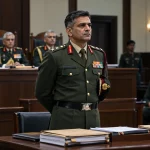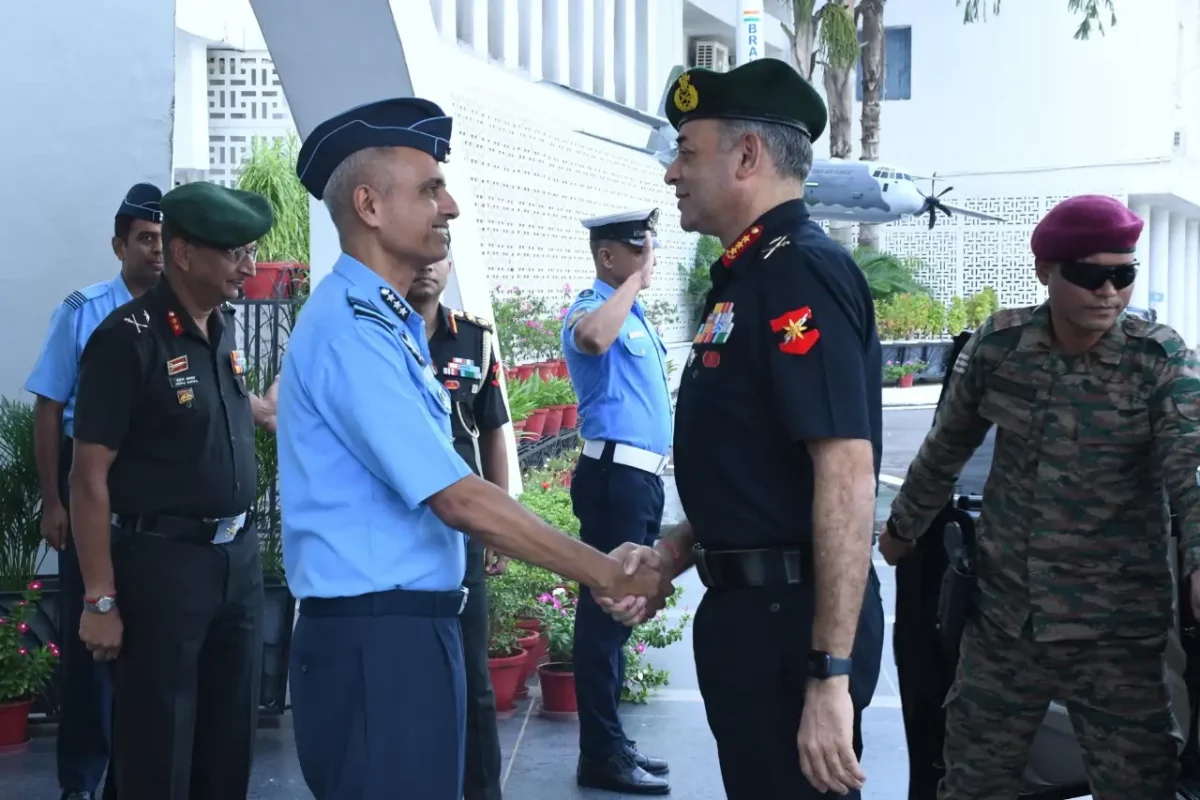
In a significant step towards strengthening jointmanship and enhancing combat readiness, Lieutenant General Mohit Malhotra, Army Commander of the Sapta Shakti Command, visited Headquarters Western Air Command (WAC) and held detailed discussions with Air Marshal George Thomas, Air Officer Commanding-in-Chief (AOC-in-C), Western Air Command.





The high-level interaction focused on operational and strategic issues of mutual importance, particularly those concerning the security and operational preparedness of India’s western frontiers. The meeting underscored the growing emphasis within the Indian Armed Forces on closer integration between the Indian Army and Indian Air Force to meet the demands of an increasingly complex and technology-driven battlefield.
During the discussions, the senior commanders deliberated on measures to further strengthen joint operational readiness and ensure seamless interoperability between land and air components. Effective coordination between the two services remains crucial for conducting integrated operations, particularly in rapidly evolving situations where air power, ground forces, surveillance assets and command-and-control systems must operate as part of a unified operational framework.
A major focus of the interaction was real-time coordination between the Indian Army and Indian Air Force. Modern military operations require commanders and formations to rapidly share information, develop a common operational picture and coordinate responses across multiple domains. Technology-enabled processes are therefore becoming increasingly important in reducing decision-making timelines and enabling forces to respond swiftly to emerging threats.
The discussions also highlighted the importance of leveraging technology to enhance operational effectiveness along the Western Borders. Integration of surveillance, communications, intelligence and command-and-control capabilities can significantly improve situational awareness while enabling commanders to employ available resources more effectively during both peacetime contingencies and combat operations.
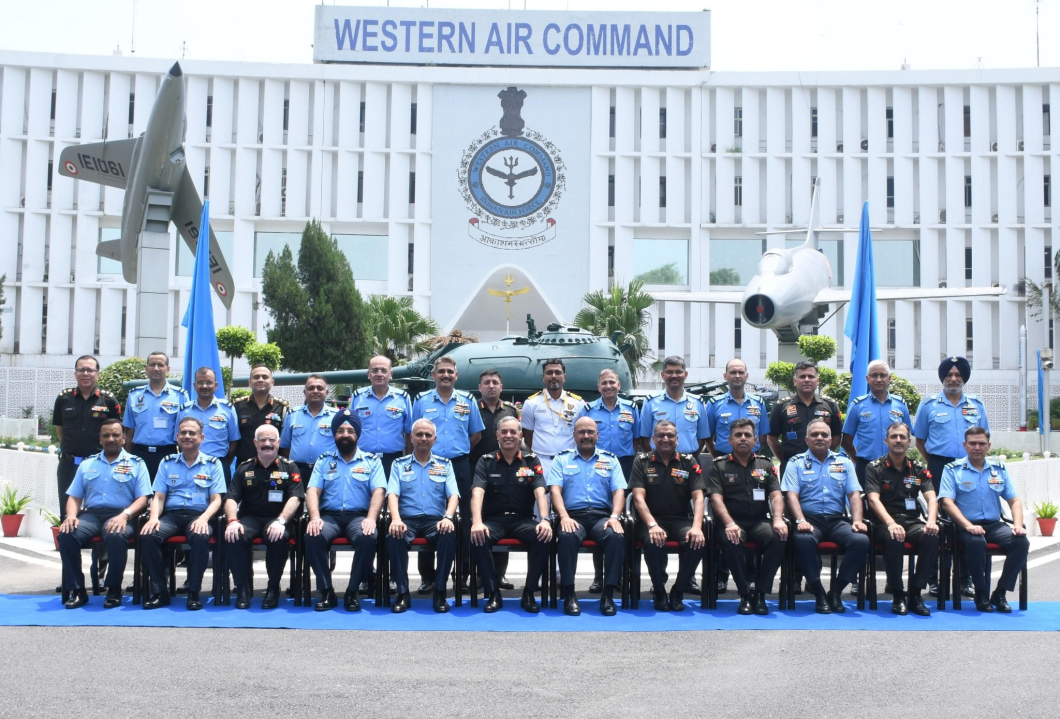
The visit comes amid the Indian Armed Forces’ sustained push towards greater jointness and integration among the Army, Navy and Air Force. Joint planning, interoperable communication systems, integrated exercises and greater coordination between operational commands are increasingly being emphasised to ensure that the three services can operate as a cohesive force during future conflicts.
For formations deployed along India’s western front, close Army-Air Force coordination assumes particular significance. Ground operations can be considerably strengthened through timely air support, reconnaissance, surveillance, air mobility and rapid movement of personnel and equipment. Similarly, close coordination with Army formations provides the Air Force with an improved understanding of the evolving ground situation and operational requirements.
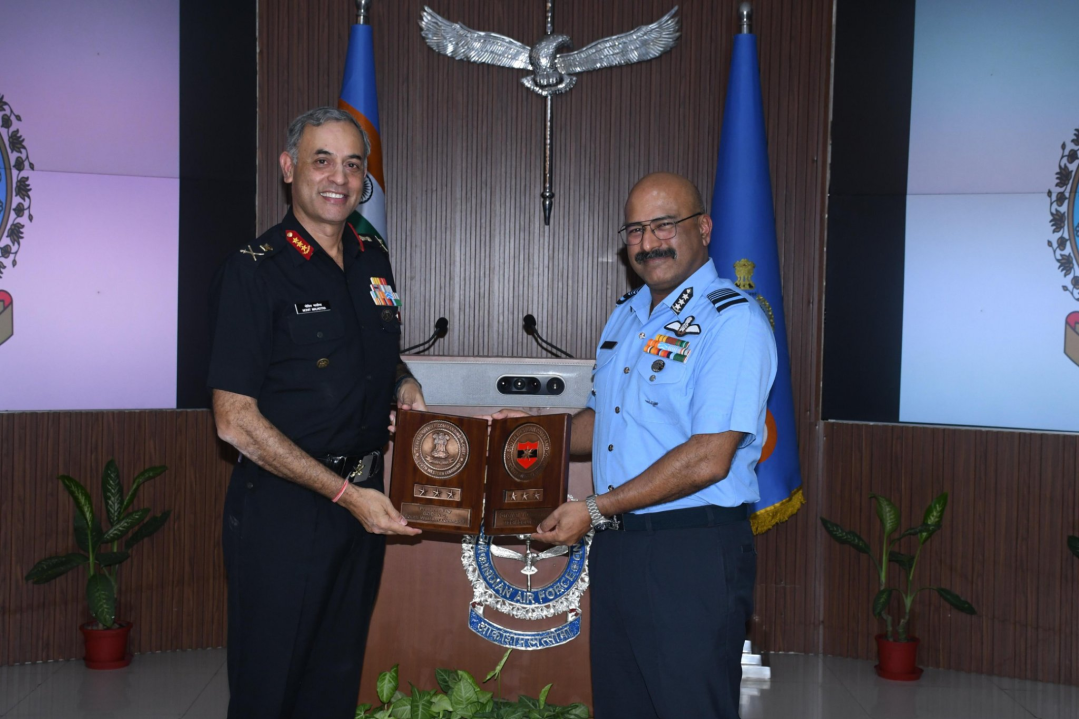
The interaction between Lt Gen Mohit Malhotra and Air Marshal George Thomas also reflected the emphasis being placed on developing mechanisms capable of functioning effectively in compressed operational timelines. Future battlefields are expected to demand rapid information processing, decentralised decision-making and the ability to coordinate multiple capabilities simultaneously.
Sapta Shakti Command has been actively focusing on operational preparedness, technology absorption and the development of future-ready combat capabilities. Lt Gen Mohit Malhotra’s visit to Western Air Command further reinforces this approach by placing joint operations and inter-service coordination at the centre of combat preparedness.
Western Air Command, meanwhile, remains one of the Indian Air Force’s strategically important operational commands, with responsibility for air operations across a crucial part of India’s western and northern sectors. Close coordination between WAC and Army formations operating in these areas is therefore essential for maintaining a credible and responsive defence posture.
The meeting between the two senior commanders sends a clear message about the direction of India’s evolving military preparedness: greater integration, faster coordination and effective exploitation of technology across service boundaries.
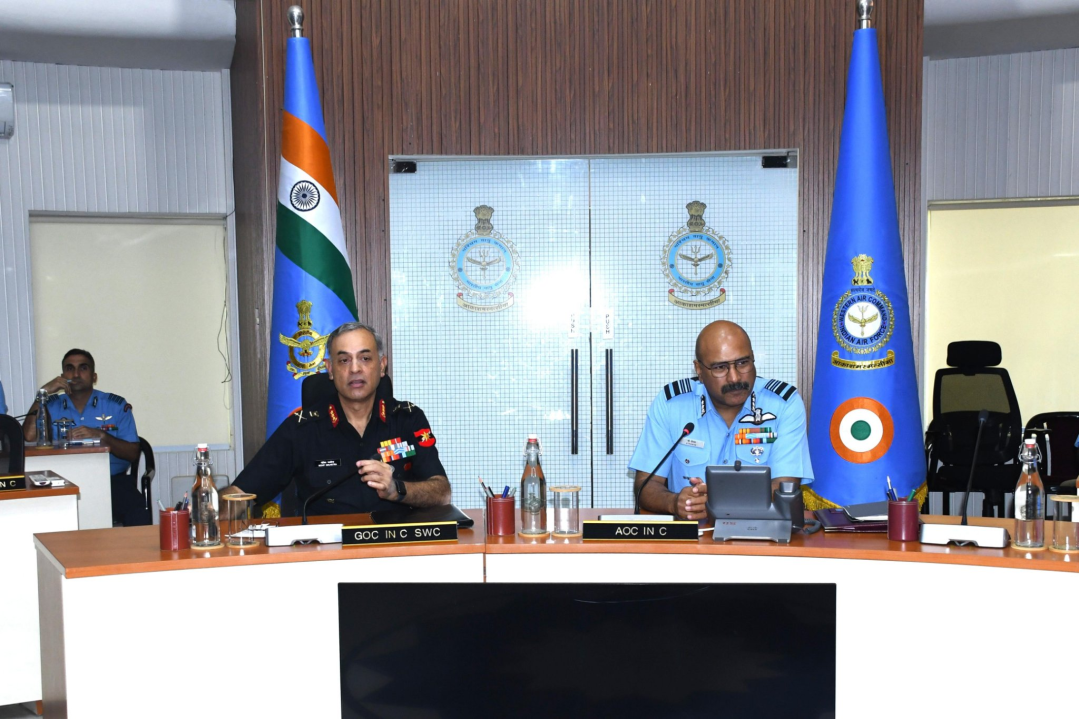
By strengthening interoperability and establishing mechanisms for real-time coordination, the Indian Army and Indian Air Force are working towards ensuring that their respective capabilities can be employed collectively and decisively whenever required.
The interaction at Headquarters Western Air Command thus represents another step in the broader effort to transform jointmanship from a concept into an operational capability, ultimately enhancing combat effectiveness and maintaining a high state of readiness along India’s strategically sensitive Western Borders.