
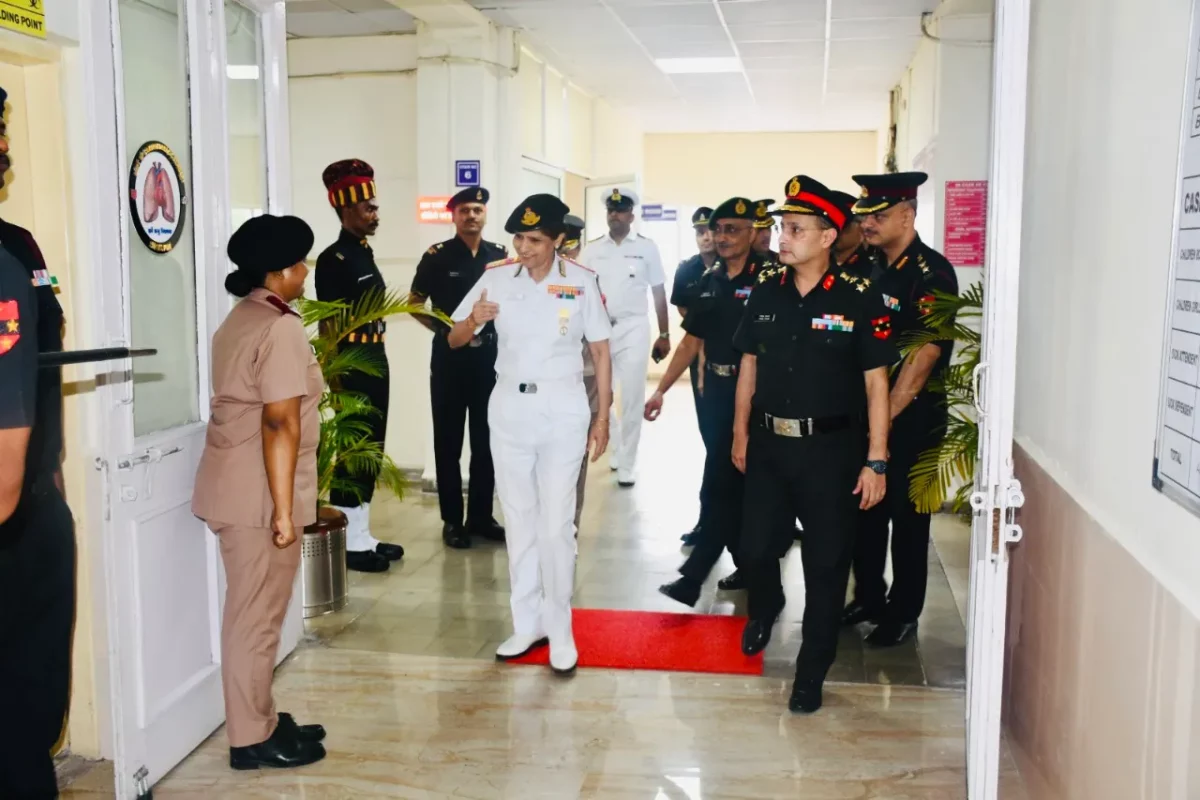
Surgeon Vice Admiral Arti Sarin, Director General Armed Forces Medical Services (DGAFMS), visited the Army Institute of Cardio-Thoracic Sciences (AICTS), Pune, on August 11, 2026, where she reviewed the institute’s advanced cardiac and pulmonary healthcare capabilities and interacted with medical professionals and patients.


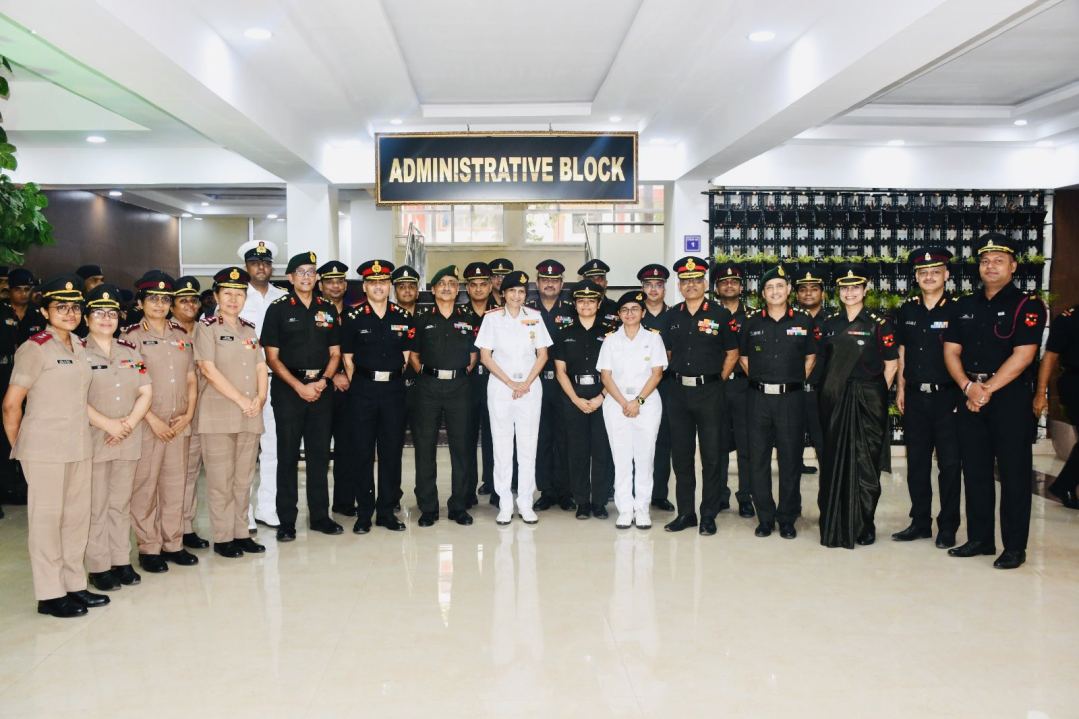
During the visit, the DGAFMS commended the exemplary commitment, professional excellence and dedication demonstrated by the AICTS team in delivering specialised cardiac and pulmonary care. She appreciated the efforts of doctors, nursing personnel, technicians and supporting staff who work together to provide comprehensive treatment for patients requiring complex cardiothoracic interventions.
AICTS is a premier medical establishment of the Armed Forces specialising in the diagnosis and treatment of cardiovascular and thoracic conditions. The institute provides advanced medical and surgical care while also contributing to training, research and the adoption of emerging technologies in military medicine.
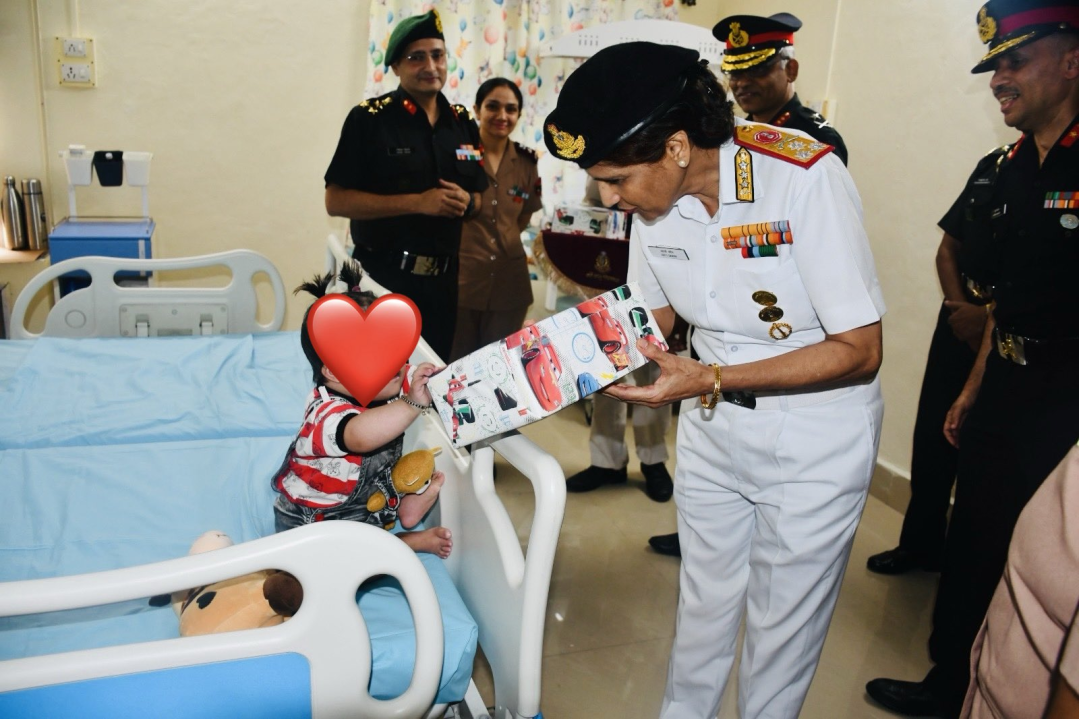
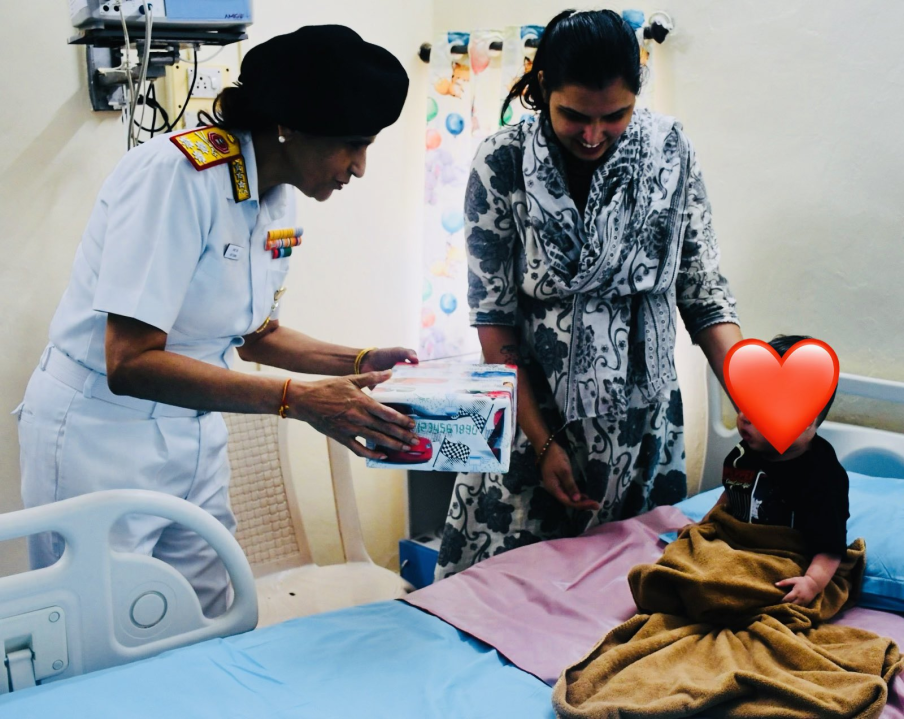
A particularly significant part of Surg Vice Admiral Arti Sarin’s visit was her interaction with children who had successfully undergone complex cardiac surgeries at the institute. She lauded the young patients for their courage, resilience and spirit while undergoing demanding medical procedures and recovery.
The interaction also highlighted the specialised paediatric cardiac capabilities available at AICTS. Treating congenital and complex heart conditions in children can require extensive planning because of the small size of cardiac structures and the unique anatomy involved in individual cases. Advanced imaging and planning technologies can therefore provide surgeons with a better understanding of a patient’s anatomy before an operation.
AICTS has incorporated technologies such as 3D printing and Virtual Reality into the planning of complex paediatric cardiac surgeries. These tools allow medical teams to study intricate anatomical structures in greater detail and prepare surgical strategies before entering the operating theatre.
With 3D printing, anatomical information obtained through medical imaging can be used to create physical models representing complex cardiac structures. Such models can assist specialists in visualising abnormalities and understanding spatial relationships that may be difficult to fully appreciate through conventional two-dimensional imaging alone.
Virtual Reality provides another dimension to pre-operative planning by allowing medical teams to examine three-dimensional representations of cardiac anatomy in an immersive environment. For particularly complicated cases, such technology can assist surgeons in evaluating different approaches and gaining greater familiarity with the anatomy before undertaking the actual procedure.
The adoption of these technologies at AICTS reflects the Armed Forces Medical Services’ growing emphasis on innovation and the utilisation of advanced medical technology to improve patient outcomes. It also demonstrates how specialised military hospitals are integrating contemporary healthcare solutions into routine clinical practice.
The DGAFMS appreciated the institute’s efforts to combine medical expertise with technological innovation, particularly in areas where detailed pre-operative planning can play an important role in managing complicated cases.
The visit also drew attention to the wider role played by AICTS in maintaining a highly specialised healthcare ecosystem for Armed Forces personnel, their families and other authorised beneficiaries. Cardiac and pulmonary diseases frequently require multidisciplinary treatment involving cardiologists, cardiothoracic surgeons, anaesthesiologists, intensivists, radiologists, nursing teams and rehabilitation specialists.
By bringing these capabilities together within a specialised institution, AICTS is able to provide coordinated care covering diagnosis, surgical intervention, critical care and post-operative recovery.
Surg Vice Admiral Arti Sarin’s interaction with the medical teams provided an opportunity to recognise the personnel working behind these advanced treatments. Successful management of complicated cardiac and thoracic cases depends not only on surgical expertise but also on the coordinated efforts of numerous specialists and support personnel throughout the patient’s treatment journey.
Her interaction with children recovering from complex cardiac surgeries also highlighted the human dimension of advanced military healthcare. Beyond sophisticated equipment and surgical techniques, successful treatment requires sustained patient care, rehabilitation and emotional support for patients and their families.
As DGAFMS, Surg Vice Admiral Arti Sarin heads the Armed Forces Medical Services and oversees the medical support system serving the Indian Army, Indian Navy and Indian Air Force. Her visit to AICTS forms part of the continuing emphasis on maintaining high standards of specialised healthcare, encouraging medical innovation and recognising the contribution of healthcare professionals across the Armed Forces.
The visit to AICTS came on the same day as her engagement with the Artificial Limb Centre in Pune, where she reviewed rehabilitation facilities and indigenous innovations in orthotics and prosthetics. Together, the visits highlighted the broad spectrum of specialised healthcare capabilities available within the Armed Forces Medical Services, ranging from advanced cardiothoracic surgery to rehabilitation and assistive technologies.
The integration of 3D printing and Virtual Reality into complex paediatric cardiac surgery planning at AICTS is also representative of a wider transformation taking place in modern military medicine. Technologies that enable greater precision, improved visualisation and personalised treatment planning are increasingly becoming important tools for managing difficult clinical cases.
By combining experienced medical professionals with advanced technologies and specialised infrastructure, AICTS continues to strengthen its position as an important centre for cardiac and pulmonary healthcare within the Armed Forces.
Surg Vice Admiral Arti Sarin’s appreciation of the institute’s personnel and her interaction with young cardiac surgery patients underscored both dimensions of this mission: the pursuit of clinical and technological excellence and an unwavering commitment to compassionate patient care.
The visit ultimately reaffirmed the Armed Forces Medical Services’ focus on innovation, professional excellence and patient-centred healthcare, while recognising the medical personnel whose expertise and dedication make complex and life-changing treatments possible.