
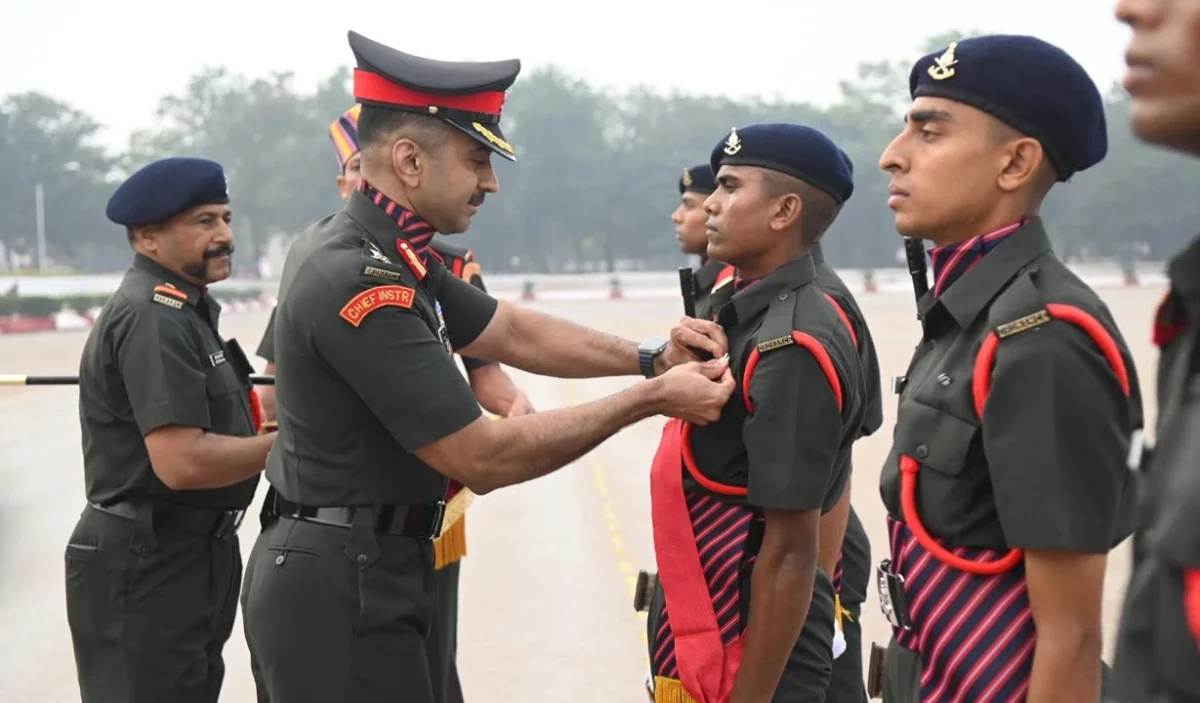
Kolkata, August 24, 2026: West Bengal Chief Minister Suvendu Adhikari on Sunday announced a 20 per cent reservation for retired Agniveers in recruitment to the state police, fire brigade (Fire and Emergency Services), forest department, and civil defence (disaster management) departments. The decision aims to leverage the military training, discipline, and operational experience of personnel who complete their four-year tenure under the Centre’s Agnipath scheme.





The announcement was made after a programme in Garden Reach where Defence Minister Rajnath Singh laid the foundation stone for five brownfield expansion projects of Garden Reach Shipbuilders and Engineers (GRSE). Adhikari informed the Defence Minister of the quota, noting that Singh “was pleased to hear that 20% posts have been reserved for Agniveers in police, fire brigade, forest and civil defence.”
Key Features of the Reservation
The 20% quota applies specifically to posts in four critical departments responsible for law and order, emergency response, forest protection, and disaster management. The Chief Minister emphasised that the rigorous training Agniveers receive in the Army, Navy, and Air Force would prove valuable in maintaining public order, handling emergencies, and responding to disasters.
This move aligns West Bengal with several other states and Union Territories that have already introduced similar horizontal reservations for ex-Agniveers, primarily in police and uniformed services. States such as Uttar Pradesh, Haryana, Delhi, Gujarat, and others have announced 20% reservations in comparable posts, while some states offer 10%. In West Bengal’s own 2026 budget, a 10% reservation for Agniveers “wherever applicable” had earlier been indicated as part of plans to fill one lakh government vacancies.
‘Arjun Bahini’: New Disaster Response Force
Alongside the reservation, the state government is raising a specialised 200-member disaster management and civil defence force named ‘Arjun Bahini’ (also referred to as Arjun Vahini). Modelled on the National Disaster Response Force (NDRF), the unit will be equipped with modern technology, vehicles, and equipment to enable rapid response and rescue operations.
The force is scheduled to become operational in September 2026, with the Chief Minister set to inaugurate it. Because the first batch of Agniveers will only complete their four-year service and become available around January 2027, the initial contingent comprises 200 ex-servicemen selected through the Sainik Board. Deployment has been planned according to regional risk profiles:
- 100 personnel in Kolkata (for urban emergencies and structural collapses)
- 50 personnel in the hills (primarily Darjeeling area, for landslides)
- 50 personnel in the Sagar-Kakdwip coastal region (for cyclone and flood response)
Adhikari linked the creation of Arjun Bahini directly to lessons from the Taratala warehouse collapse in June 2026. The roof of an under-construction warehouse in Kolkata’s Taratala area collapsed on June 24, trapping workers under debris. The death toll rose to 16, with multiple injured. Rescue operations involved the NDRF, Indian Army, Kolkata Police, fire services, and other agencies. The Chief Minister noted that the incident, along with experiences from Cyclone Amphan in 2020, underscored the need for a better-equipped, quicker-response state-level disaster force in a large city with extensive construction activity.
Agniveers will be inducted into the force once available. The government has also initiated broader collaboration with the Sainik Board on the employment of ex-servicemen.
Reintroduction of NCC in Schools and Colleges
In a related announcement, Adhikari indicated plans to reintroduce and expand the National Cadet Corps (NCC) in schools and colleges across the state. This reverses the earlier approach under the previous Trinamool Congress government, which had discontinued NCC enrolment in many institutions and introduced the ‘Jai Hind Bahini’ instead.
The Chief Minister said students had been missing out on NCC training that builds discipline and patriotism. He discussed the matter with Defence Minister Rajnath Singh, who noted that schools and colleges can apply under existing protocol. Adhikari stated he would write to the Defence Ministry on the issue. NCC certification is also expected to serve as an additional qualification for recruitment into the state police, fire services, and other uniformed roles, while helping aspirants prepare for the armed forces and paramilitary services.
Background on the Agnipath Scheme
Under the Agnipath scheme, launched in 2022, youth are recruited as Agniveers into the Army, Navy, and Air Force for a fixed four-year tenure. Up to 25% of each batch may be retained in the regular cadre. The remaining personnel exit with a Seva Nidhi package and are expected to seek civilian opportunities. Several state governments and Central Armed Police Forces have introduced quotas, age relaxations, and exemptions from certain physical or written tests to facilitate their absorption into police, fire, forest, jail, and other security-related roles. Central forces such as the BSF and SSB have gone further, reserving 50% of constable vacancies for ex-Agniveers in some cases.
Implications and Context
The West Bengal announcement provides a clear pathway for the first cohort of Agniveers (expected to become available from early 2027) into state government jobs that value their training. It also strengthens the state’s disaster-response capacity in urban, hilly, and coastal zones. The simultaneous push to restore NCC aims to rebuild a pipeline of disciplined youth for both military and civil security roles.
Previously, then-Chief Minister Mamata Banerjee had been critical of the Agnipath scheme and the Centre’s suggestion that states prioritise recruitment of retiring Agniveers. The current BJP-led government in the state has taken a different approach, framing the reservation and Arjun Bahini as practical steps that utilise trained manpower while addressing local emergency-response gaps.
Official notifications detailing the exact implementation of the 20% reservation (including whether it is horizontal, applicable categories of posts, age relaxations, or exemptions from tests) are expected to follow the announcement. The Arjun Bahini is positioned as an immediate operational step, with Agniveer induction planned for subsequent phases.