

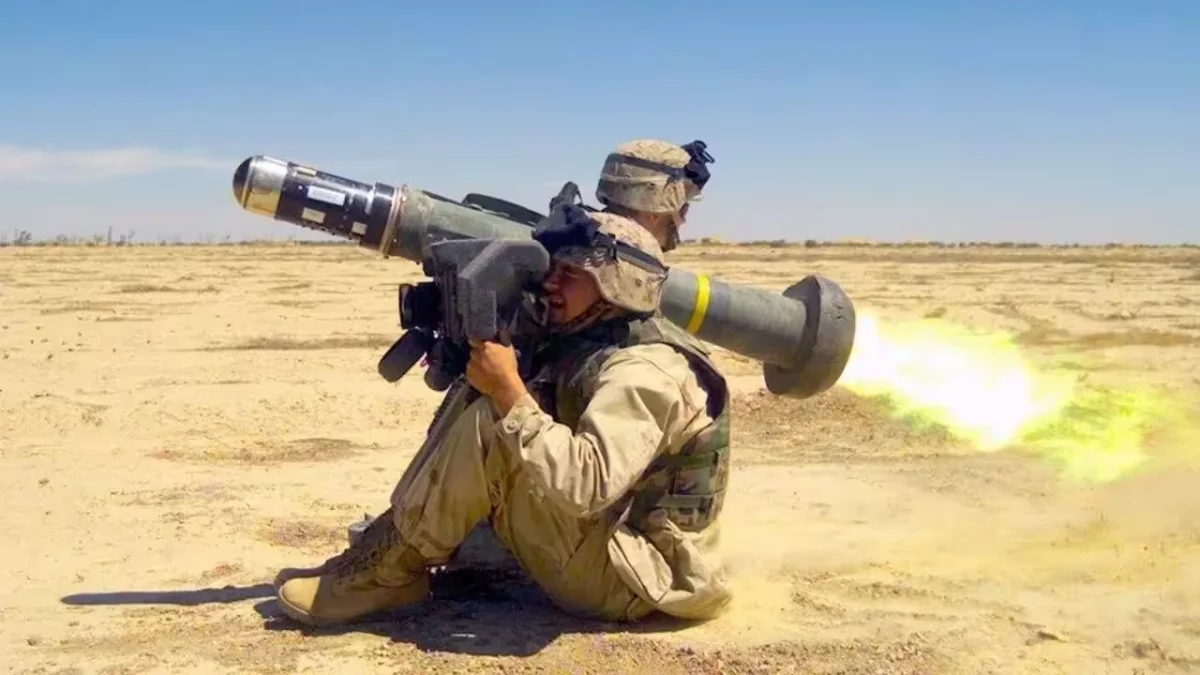
India and the United States have signed an agreement for the acquisition of Javelin anti-tank guided missile systems for the Indian Army, formally making India a customer of the American shoulder-fired weapon while both countries continue discussions on its eventual co-production in India.





The US Embassy in India confirmed that the Indian Army had signed a Letter of Offer and Acceptance (LOA) for the purchase of the Javelin system. The agreement marks an important step forward in bilateral defence cooperation and is expected to create further opportunities for collaboration between Indian and US defence industries.
The signing of the LOA moves the procurement from the earlier stage of a possible US Foreign Military Sale to a formally contracted acquisition. The immediate requirement is being addressed through an emergency procurement, while discussions continue on establishing a manufacturing capability for the Javelin system in India.
The US Defence Security Cooperation Agency had earlier notified the US Congress of a possible Foreign Military Sale to India valued at approximately $45.7 million. The proposed package included Javelin missiles, Lightweight Command Launch Units and associated equipment, training and logistical support.
According to the reported details of the contracted purchase, India is understood to have ordered around 60 Javelin missiles and fewer launchers than the numbers originally proposed. The present agreement is reportedly valued at approximately Rs 294 crore.
The Javelin is a medium-range, fire-and-forget anti-tank guided missile designed to be operated by individual soldiers. The system can engage armoured vehicles as well as fortified positions and has been widely used by the US military and several international operators.
The procurement is particularly significant for the Indian Army as the Javelin would add another advanced man-portable anti-armour capability to its inventory. Its fire-and-forget architecture allows the operator to engage a target without continuously guiding the missile after launch.
The immediate acquisition, however, is viewed as only one part of India’s larger objective. New Delhi and Washington are continuing discussions on the possibility of manufacturing Javelin missiles in India, which could eventually establish a domestic production ecosystem around the weapon.
The groundwork for such cooperation was laid in February 2025 when Bharat Dynamics Limited signed an agreement with the Javelin Joint Venture, owned by Raytheon and Lockheed Martin, to explore opportunities for manufacturing the missile in India.
The proposed co-production arrangement could significantly deepen defence industrial cooperation between India and the United States. Instead of relying solely on imported systems, domestic manufacturing could provide India with greater control over production, sustainment and future requirements.
The Javelin acquisition has also been the culmination of a long-running Indian search for an advanced third-generation anti-tank guided missile. India had first publicly announced plans to acquire the system in 2010, with the proposed procurement originally envisaged through the US Foreign Military Sales route.
The earlier effort subsequently faced difficulties over issues including technology transfer and field trials. India later pursued the Israeli Spike anti-tank missile and also explored indigenous solutions, but discussions on Javelin have continued over the years.
The latest agreement therefore represents a significant development after more than a decade of negotiations and changing procurement priorities. The immediate purchase provides the Indian Army with access to the Javelin system, while the larger co-production proposal could have a more enduring impact on India’s defence manufacturing capabilities.
If the manufacturing proposal is finalised, the partnership could contribute to India’s broader Aatmanirbhar Bharat objectives by bringing advanced anti-armour technology, industrial participation and potential supply-chain opportunities into the domestic defence ecosystem.
The development also highlights the expanding strategic and defence-industrial relationship between India and the United States, with both countries increasingly seeking opportunities for joint production, technology cooperation and greater integration of their defence industries.