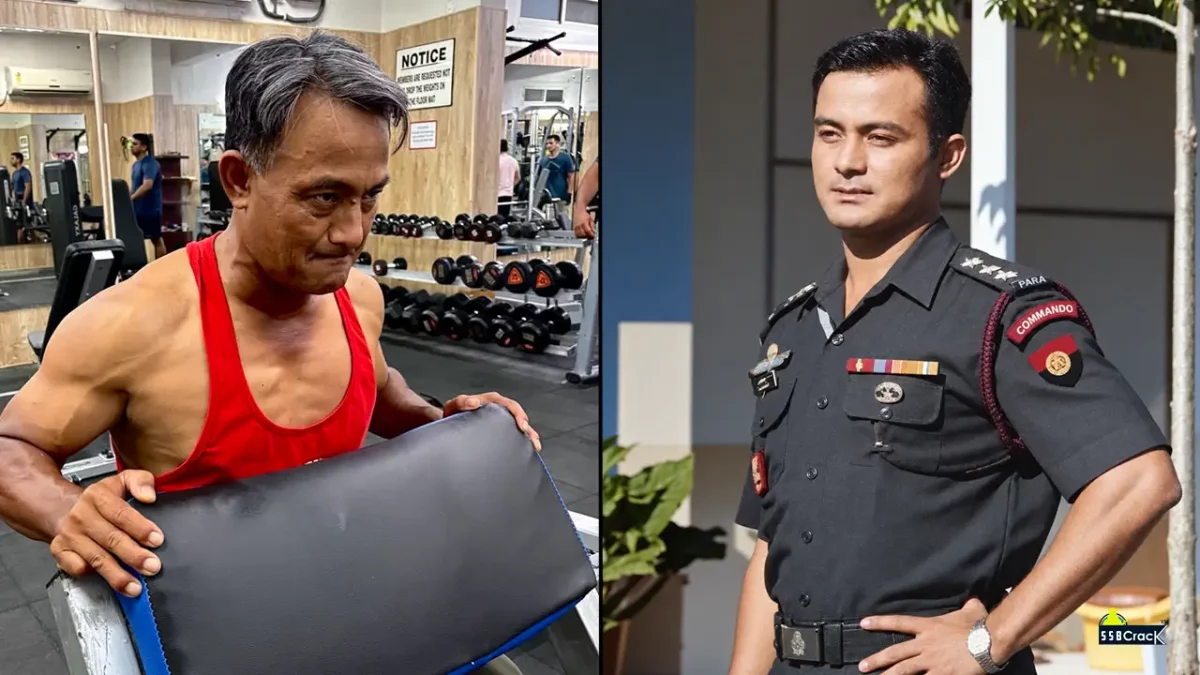
Colonel Hemonto Panging, SM & Bar (Retd.), is a decorated former Indian Army officer whose years with 9 Para (Special Forces) placed him at the heart of some of the most demanding counter-insurgency operations in Assam and Jammu & Kashmir. Known among military circles as the “Genghis Khan” or “Chengiz Khan of the Indian Army,” Panging built a formidable reputation through aggressive pursuit, night operations, close-quarter engagements and missions deep inside hostile territory.





The nickname reflected the reputation he developed during years of operational service rather than a title formally bestowed by the Army. Speaking about the image associated with him, Panging has summed up his outlook by saying that only terrorists had reason to fear him, while for his country he carried his “heart on his sleeve.” Decades after many of these operations took place, interviews and accounts from fellow servicemen have gradually brought his largely little-known military career into the public domain.
Colonel Panging hails from Namsing village near Pasighat in Arunachal Pradesh’s East Siang district. He grew up in a family with a tradition of service and studied at Sainik School Imphal, an institution that has produced numerous officers for the Armed Forces. He subsequently joined the National Defence Academy, initially as an Air Force cadet, before opting for the Army. At the Indian Military Academy, Dehradun, he also distinguished himself in boxing.
Panging was commissioned into the 10th Battalion of the Jammu and Kashmir Rifles in 1991. His early operational exposure came in Assam during the turbulent years of Operation Bajrang and Operation Rhino, when security forces were conducting intensive operations against the United Liberation Front of Asom. As a young officer, Panging became known for operating with small teams and, on occasions, pursuing militants with minimal support.
Accounts from this period describe him travelling deep into militant-dominated areas and conducting operations at extremely close range. In one widely recounted episode, he reportedly captured ULFA militants and brought one of them back tied to a bicycle. He has also recalled walking nearly 25 kilometres into a militant-infested area armed with a pistol before making contact and pursuing his target over several more kilometres.
His career took a decisive turn when he volunteered for 9 Para (Special Forces), one of the Indian Army’s most experienced Special Forces battalions. After completing the demanding probation required to earn the maroon beret, Panging began a phase of his career dominated by counter-terrorism operations in Jammu & Kashmir.
He served multiple tenures in the Kashmir Valley and adjoining areas, including Doda, during some of the most violent years of militancy. His contemporaries included several distinguished Special Forces officers, among them Major Sudhir Kumar Walia, Ashoka Chakra, Sena Medal & Bar, who would later become one of the most celebrated soldiers of 9 Para SF.
Among the operations associated with Panging was a major engagement in the Doda region involving a sizeable group of terrorists positioned in difficult mountainous terrain above the Chenab. While the main force approached from one direction, Panging and a small team reportedly infiltrated behind the group, opening another axis of attack. Several terrorists were killed during the initial engagement, while others attempted to escape through a gorge. Panging’s team pursued them through the difficult terrain and continued the engagement. His gallantry during operations in this period contributed to him being awarded the Sena Medal.
Another significant operation came in the Bafliaz sector in 1997, when his team recovered a shoulder-fired surface-to-air missile from terrorists. The weapon represented a serious threat to military aviation in the region. During the operation, five militants were reportedly killed, while Panging’s team suffered one fatal casualty and two personnel were wounded. He subsequently received a Chief of Army Staff Commendation.
One of the most remarkable operations associated with Colonel Panging reportedly took place across the Line of Control in 1997. As a Major with 9 Para SF, he led a team several kilometres across the LoC during a night mission targeting a terrorist launch pad. The team infiltrated into hostile territory, struck the target and returned after an engagement lasting roughly an hour. Accounts of the mission state that around 20 terrorists were neutralised. Operations of this nature were rarely discussed publicly at the time, particularly when they involved Special Forces operating across the LoC.
Panging has also spoken about numerous other missions, including night contacts, ambushes, operations in dense terrain and the recovery of fallen soldiers under hostile fire. One operation he has referred to as the Shahji mission remains particularly significant to him because of how close he came to losing his life.
By the late 1990s, Indian forces in Jammu & Kashmir were increasingly confronting better-trained and more heavily armed militants. Panging has recalled the changing nature of the threat, including militants receiving increasingly sophisticated training and support from across the border. For Special Forces units such as 9 Para SF, this meant adapting tactics continuously while conducting prolonged counter-terrorism operations in extremely challenging terrain.
Over roughly a decade of operations in Jammu & Kashmir, Panging became associated with the elimination of a significant number of terrorists. Precise operational tallies have not been officially published in the public domain, and many details surrounding Special Forces missions from that period remain classified or available only through personal accounts.
His service eventually earned him the Sena Medal twice, giving him the distinction of SM & Bar. He later commanded 1 Assam Rifles, taking his years of operational experience back to the Northeast, where his military career had begun.
One of the most important relationships of Panging’s Special Forces career was with Major Sudhir Kumar Walia. Walia, an officer of 9 Para SF, was killed in action in Kupwara in August 1999 and was posthumously awarded the Ashoka Chakra. Panging has described Walia as one of the finest soldiers he ever served alongside and has spoken about his extraordinary patience, fieldcraft and mastery of weapons.
According to Panging, Walia could remain concealed for extraordinarily long periods while waiting for militants to reveal themselves, displaying the patience and discipline demanded by Special Forces operations. Panging has also reportedly been working on a book about Walia, preserving the story of an officer whose courage remains deeply respected within the Indian Army.
The “Genghis Khan” nickname attached to Panging was ultimately rooted in his operational style. He favoured infiltration, relentless pursuit and decisive engagement, even when the terrain or tactical situation made continuation difficult. His reputation became such that his name reportedly became shorthand among colleagues for an uncompromising approach to counter-terrorism operations.
For Panging, however, Special Forces service was about far more than aggression. He has repeatedly emphasised mental conditioning, initiative, physical endurance and the ability to make decisions independently under extreme pressure. He believes Special Forces training fundamentally changes the way a soldier approaches a problem, producing what he describes as a different kind of mental mobility.
Even after decades of demanding service, his attachment to 9 Para SF remains unmistakable. Panging has said that if he were given another life, he would once again choose the Indian Army and once again volunteer for 9 Para Special Forces.
Following retirement from the Army, Colonel Hemonto Panging turned his attention to another demanding pursuit: golf. He has competed at the senior amateur level and represented India at an international tournament in Haiphong, Vietnam, in 2024. The former Special Forces officer has also begun appearing in long-form interviews and public interactions where he discusses military life, leadership, counter-insurgency and the mindset required of a Special Forces soldier.
He has maintained a particularly strong connection with Arunachal Pradesh and has encouraged young people from the Northeast to consider careers in the Armed Forces. In March 2025, he interacted with cadets at Sainik School East Siang, returning to the region where his own journey towards military service had begun decades earlier.
For much of Colonel Panging’s career, details of his operations remained largely confined to the Special Forces fraternity and military circles in the Northeast. Accounts published by fellow servicemen and relatives, followed by a series of interviews in recent years, have gradually provided a broader picture of the officer behind the nickname.
From Sainik School Imphal and the National Defence Academy to 10 JAK Rifles, counter-insurgency operations in Assam and the maroon beret of 9 Para SF, Colonel Hemonto Panging’s career was shaped by some of the Indian Army’s toughest operational environments. Two Sena Medals, years of counter-terrorism operations and a reputation built among both comrades and adversaries made him one of the distinctive Special Forces personalities of his generation.
Today, the soldier once known for pursuing terrorists through mountains and across hostile territory can often be found on a golf course or speaking to younger generations. Yet the identity forged during his years with 9 Para SF remains central to his story — that of an officer from a small village in Arunachal Pradesh who earned the maroon beret and became known in military circles by an unforgettable name: the “Genghis Khan of the Indian Army.”