
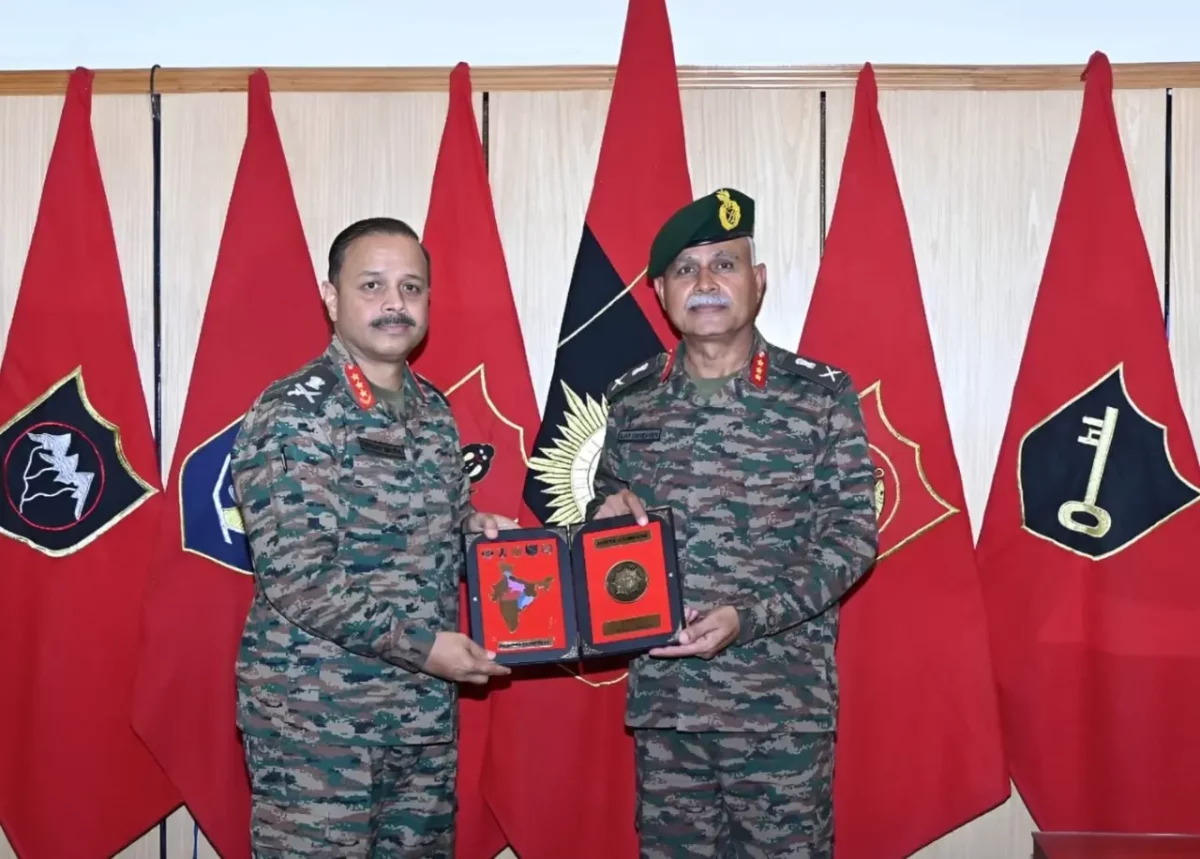
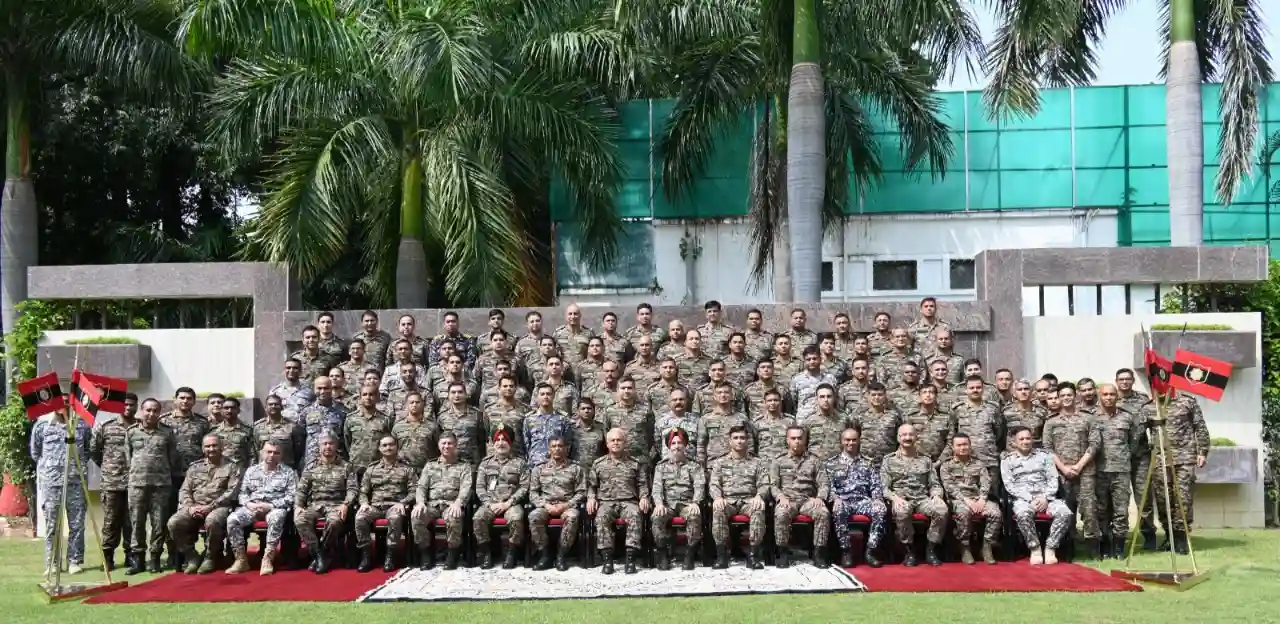
A delegation comprising 106 officers and Directing Staff of the Higher Command Course from the Army War College visited Headquarters Central Command in Lucknow as part of their professional military exposure, gaining insights into the evolving operational environment, logistics preparedness and emerging approaches to modern warfare.



The visit provided the delegation with an opportunity to understand key operational and strategic considerations shaping the Army’s preparedness in a dynamic security environment. The engagements covered the evolving operational environment along the Middle Sector, logistics preparedness, the integrated employment of multi-domain capabilities, technology-enabled warfighting and emerging security challenges.
Lieutenant General Sanjay Mitra, General Officer Commanding-in-Chief, Central Command, interacted with the delegation and shared his perspectives on operational priorities, strategic leadership and the importance of effective decision-making in a changing security environment.
The interaction focused on the considerations that influence operational planning and military leadership amid evolving security challenges. The Army Commander’s engagement offered the participating officers an opportunity to gain insights into the priorities of Central Command and the leadership imperatives associated with addressing emerging operational requirements.
A key area of the professional engagement was the evolving operational environment along the Middle Sector. Understanding this environment, alongside logistics preparedness, forms an important part of assessing the requirements of military operations. The discussions also addressed the integrated employment of multi-domain capabilities and the growing relevance of technology-enabled warfighting in contemporary operational settings.
The emphasis on multi-domain capabilities highlighted the importance of considering different operational domains in an integrated manner. Similarly, the focus on technology-enabled warfighting reflected the relevance of technological capabilities in shaping military preparedness and operational approaches.
The visit also provided an opportunity to examine the broader security challenges confronting military planners and commanders. The interaction with the Army Commander enabled the delegation to engage with perspectives on operational priorities and the decision-making responsibilities associated with leadership in a dynamic security environment.
The participation of 106 officers and Directing Staff from the Army War College underscored the professional military learning component of the engagement. Such visits provide course participants with exposure to operational formations and command-level perspectives, complementing their professional education with insights into the challenges and priorities associated with military leadership.
The engagement at Headquarters Central Command reinforced the importance of connecting professional military learning with operational understanding. The discussions on logistics preparedness, multi-domain integration, technology-enabled warfighting and the Middle Sector’s evolving operational environment formed the central elements of the delegation’s exposure.
The visit concluded with an emphasis on developing forward-looking military leaders equipped to understand emerging operational challenges, make effective decisions and respond to the demands of a dynamic security environment. It reaffirmed the importance of professional military education, strategic perspective and operational awareness in preparing officers for higher command responsibilities.