

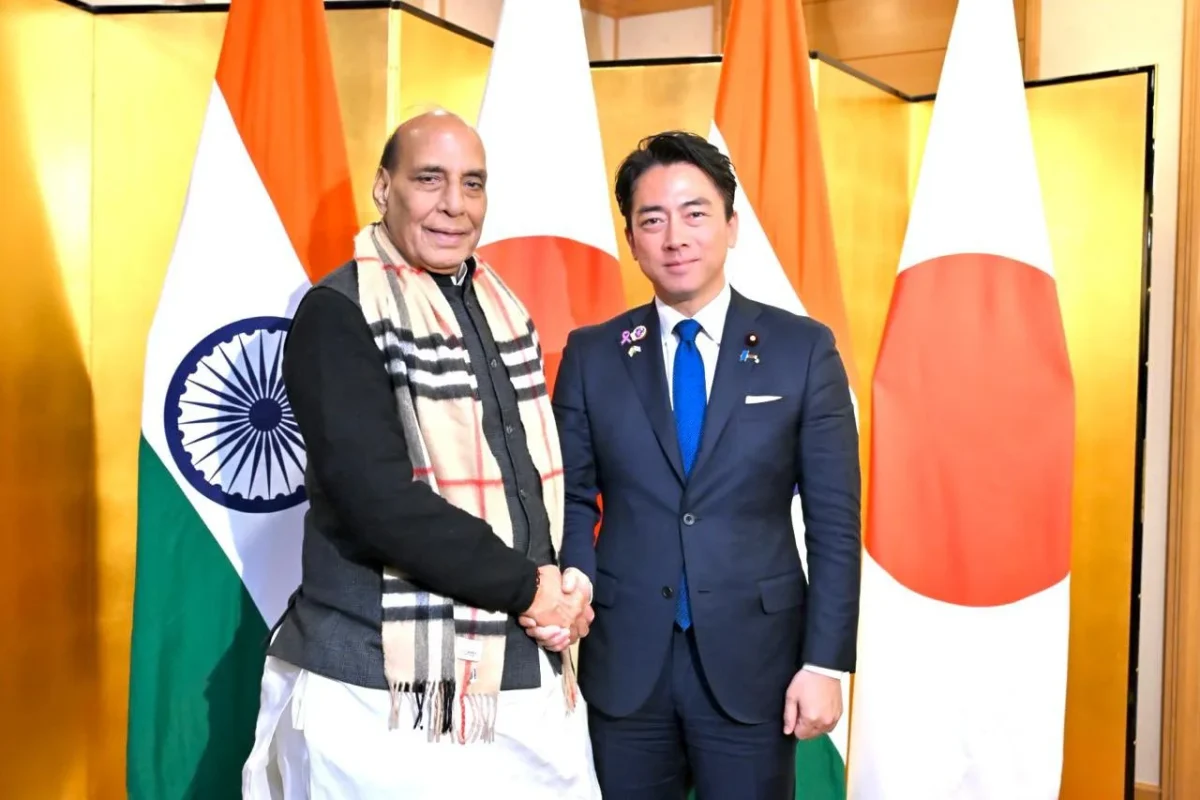
India and Japan are expected to finalise an arrangement allowing Japanese forces to use Indian missile test ranges for weapons trials, marking a significant step in the expansion of defence cooperation between the two countries. The proposed understanding is expected to be taken forward during Defence Minister Rajnath Singh’s ongoing visit to Tokyo, following the India–Japan 2+2 Foreign and Defence Ministers’ Dialogue.





The arrangement would provide Japan access to suitable Indian testing facilities for trials of its long-range weapons, including the Type 25 surface-to-ship missile, which has a reported range of approximately 1,000 kilometres, as well as smaller attack drones. The proposed agreement reflects the growing defence engagement between the two countries amid their shared interest in strengthening security cooperation in the Indo-Pacific region.
The development follows an assessment visit by Japanese officials to India in October. General Masayoshi Arai, Chief of Staff of the Japan Ground Self-Defence Force, had confirmed towards the end of October that Japanese officials had been dispatched to India to inspect potential locations for the proposed trials. Japanese media reports indicated that the assessment focused on identifying facilities suitable for testing the Type 25 missile and smaller attack drones.
Defence Minister Rajnath Singh arrived in Tokyo on November 18, 2026, for the official visit, while External Affairs Minister S. Jaishankar joined him from Manila. The two Indian ministers co-chaired the 2+2 dialogue with their Japanese counterparts, Defence Minister Shinjiro Koizumi and Foreign Minister Toshimitsu Motegi, on November 19.
The proposed missile-testing arrangement is among the key developments expected to emerge from the ongoing defence engagements. If finalised, it would create an additional avenue for practical military cooperation by enabling Japanese forces to utilise India’s testing infrastructure for selected weapons trials.
On the first day of the visit, Rajnath Singh and Shinjiro Koizumi visited the Japan Maritime Self-Defence Force base at Yokosuka. The two defence ministers also inspected the Mogami-class frigate JS Natori, reflecting the maritime dimension of the expanding India–Japan defence partnership.
The latest round of engagements marks the third meeting between the two defence ministers in four months. They had previously met in New Delhi in August and on the sidelines of the ASEAN Defence Ministers’ Meeting-Plus in Cebu in October. The repeated high-level interactions underline the momentum in bilateral defence relations and the emphasis both countries are placing on sustained strategic engagement.
The discussions cover a broad range of areas, including defence equipment and technology collaboration, maritime security, joint military exercises involving all three services, and defence industrial partnerships. Both sides have also reaffirmed their commitment to a free, open and rules-based Indo-Pacific.
Japan’s interest in accessing Indian missile ranges is linked to its expanding standoff-strike capabilities and the need for suitable facilities to conduct weapons trials. India’s coastal testing ranges, particularly those facing the Bay of Bengal, offer extensive safety zones and tracking infrastructure that are already used for the country’s own missile testing programmes.
The proposed arrangement would build upon an existing framework of defence cooperation between the two countries. India and Japan regularly participate in military engagements and exercises, including the Malabar naval exercise, while continuing discussions on defence technology, maritime security and industrial collaboration.
The potential access to Indian testing facilities would add a practical operational dimension to this partnership, extending cooperation beyond diplomatic exchanges and joint exercises. It would also provide an opportunity for closer interaction between the defence establishments of the two countries in areas related to weapons testing and military technology.
As India and Japan continue to expand their strategic partnership, the proposed agreement on missile testing is expected to be an important element of the ongoing discussions in Tokyo. Its finalisation would further strengthen defence cooperation and reinforce the two countries’ commitment to closer engagement in support of regional security and stability.