

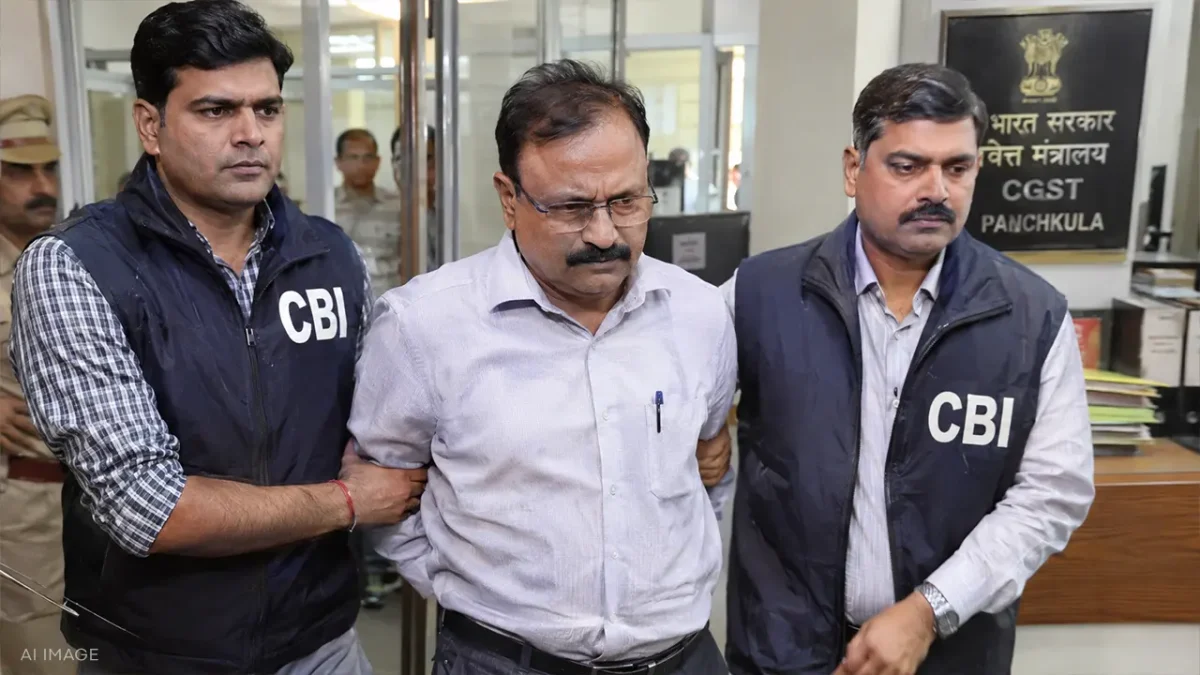
Panchkula, November 19, 2026: The Central Bureau of Investigation (CBI) has arrested Luvkush Kumar, a Superintendent posted with the Central Goods and Services Tax (CGST) department in Panchkula, Haryana, for allegedly accepting a bribe of ₹10 lakh from a complainant.




The arrest took place on Thursday, November 19, during a trap operation conducted by the CBI. According to reports, Kumar was caught red-handed while allegedly receiving ₹10 lakh, which was to be the first instalment of a larger bribe demand.
The case came to light after the complainant approached the investigating agency with allegations of corruption involving the CGST official. The alleged bribe demand was reportedly negotiated down to ₹20 lakh, of which ₹10 lakh was to be paid initially.
Acting on the complaint, the CBI organised a trap operation to catch the official while accepting the alleged illegal gratification. The operation resulted in Kumar’s arrest.
According to the CBI, Kumar had initially demanded ₹50 lakh from a partner of a private firm in exchange for extending undue favours in ongoing GST proceedings. The alleged favours included avoiding heavy penalties and further demand notices against the company.
During negotiations, the demand was reduced to ₹20 lakh. However, the CBI’s subsequent verification revealed that Kumar had allegedly raised the demand to ₹25 lakh while agreeing to accept ₹10 lakh as the first instalment.
CBI spokesperson Beena Yadav said the agency had registered a case based on the complaint and conducted verification that prima facie established the alleged demand for illegal gratification.
The agency subsequently laid a trap in Panchkula and arrested Kumar while he was allegedly accepting the money. Investigators also recovered the entire ₹10 lakh bribe amount from his possession.
The arrest has brought the alleged misuse of official authority in GST proceedings under investigation. The CBI is continuing its investigation into the circumstances surrounding the bribery allegations and the official’s dealings with the complainant’s firm.