

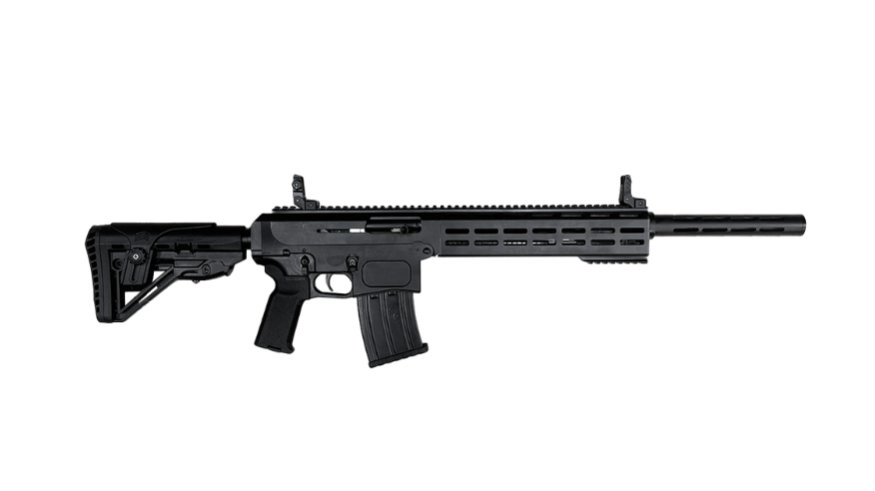
Bengaluru-based defence manufacturer SSS Defence has emerged as the lowest (L-1) bidder in an Indian Army procurement process for 84 indigenous T-12 semi-automatic shotguns, along with associated ammunition and accessories. The development marks another step in the Army’s efforts to strengthen its close-range counter-drone capabilities using domestically manufactured weapons.



The procurement, reportedly linked to Army requirements at Gwalior, comes months after SSS Defence began supplying its T-12 shotguns to Indian Army formations in 2026. The weapon has been developed to counter low-flying unmanned aerial vehicles (UAVs), particularly first-person-view (FPV) drones that have emerged as a significant threat on modern battlefields.
The T-12 is a 12-gauge, gas-operated semi-automatic shotgun designed for rapid engagements against small aerial targets at relatively short distances. Reports suggest that the weapon can engage low-flying drones at ranges of approximately 50 to 100 metres, with earlier field evaluations reportedly demonstrating successful engagements at around 90 metres.
Unlike conventional shotguns primarily intended for close-quarters combat, the T-12 has been developed with counter-drone operations as a key requirement. It can fire specialised ammunition, including hardened steel pellets, to increase the probability of striking small and fast-moving aerial targets.
The indigenous weapon features a 20-inch nitride-treated barrel designed to improve durability and corrosion resistance. It is equipped with a full-length Picatinny rail for mounting optical sights and other accessories, ambidextrous controls, an adjustable buttstock with cheek support, and detachable magazines available in five-round and ten-round configurations.
Weighing approximately 3.8 kilograms, the shotgun uses high-strength 7075-T6 aluminium receivers to balance durability with portability. Its semi-automatic operating mechanism allows soldiers to fire successive shots without manually cycling the action, an important capability when engaging drones that may remain within effective firing range for only a few seconds.
SSS Defence had previously delivered initial batches of the T-12 to Indian Army units, including formations under Northern Command. The earlier induction followed trials intended to assess the weapon’s effectiveness against emerging aerial threats, particularly small drones operating at low altitudes.
The growing importance of such weapons reflects lessons from the Russia-Ukraine conflict, where inexpensive FPV drones have been extensively employed against infantry positions, armoured vehicles and military installations. Their small size, speed and low-altitude flight profiles can make them difficult to detect and intercept using conventional air-defence systems.
Shotguns equipped with suitable ammunition offer a comparatively inexpensive last-line defensive option against drones approaching soldiers or sensitive military installations. However, their limited engagement range means they are intended to complement rather than replace electronic warfare equipment, jamming systems and dedicated counter-UAV weapons.
SSS Defence CEO Vivek Krishnan has previously highlighted the company’s emphasis on developing the T-12 as a purpose-built military platform rather than simply adapting a commercial shotgun. Beyond counter-drone operations, the weapon can also support close-quarters combat, perimeter security and other specialised military requirements.
The latest procurement has also generated discussion among defence enthusiasts on social media, particularly over the relatively small quantity of 84 shotguns.
While several observers welcomed the selection of an indigenous private-sector manufacturer, others questioned whether such a limited order would be sufficient given the rapidly expanding threat posed by small drones along India’s borders and in operational areas.
Some commentators suggested that the quantity could reflect a specific operational requirement or an incremental procurement approach, with the possibility of additional orders following further operational experience. However, no official confirmation has emerged regarding the purpose of the limited quantity or any planned expansion of the procurement.
The selection of SSS Defence as the L-1 bidder does not itself constitute confirmation of a finalised contract. Further details regarding contract award, delivery schedules and possible follow-on orders are awaited.
The development nevertheless highlights the growing role of Indian private-sector defence manufacturers in addressing emerging battlefield requirements. With indigenous systems such as the T-12 entering military service, the Indian Army is expanding its options for countering inexpensive aerial threats while supporting the government’s Atmanirbhar Bharat initiative in defence production.
If finalised, the latest procurement would further strengthen the T-12’s presence within the Indian Army and contribute to the development of a layered counter-drone defence capability combining conventional firearms, electronic countermeasures and advanced air-defence technologies.