
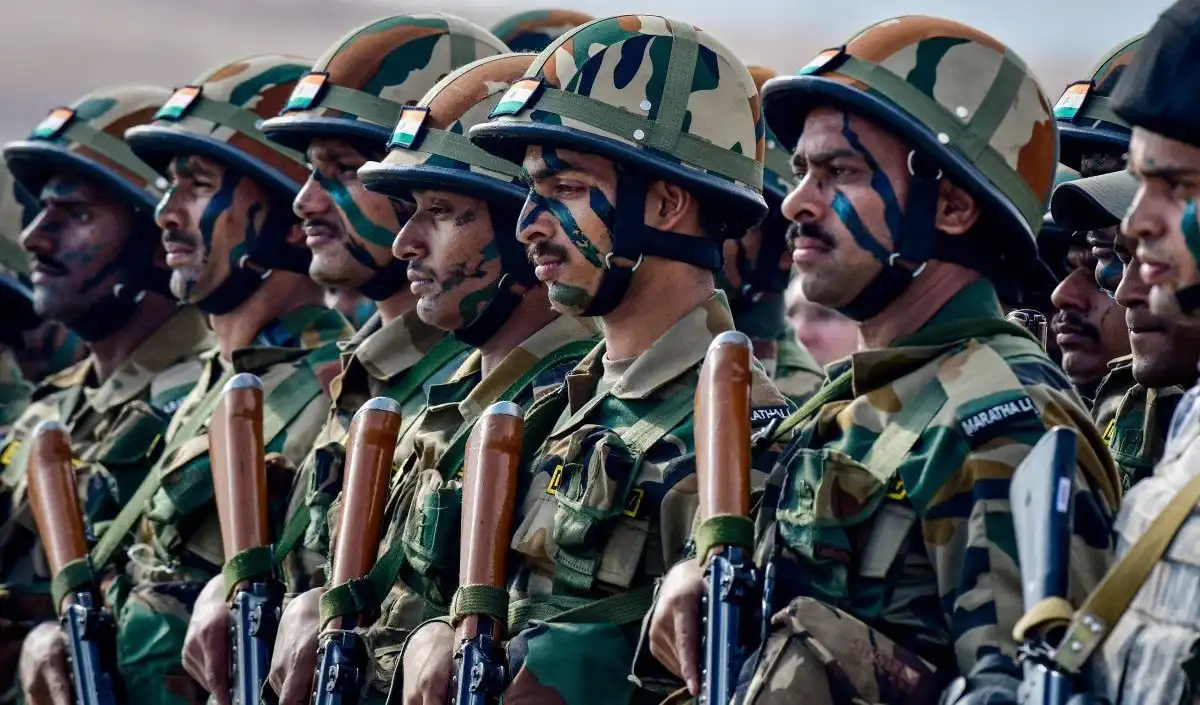
The Indian Army continues to face a shortage of 8,443 officers against its authorised strength of 50,538, with its present officer strength standing at approximately 42,095. The shortfall represents around 16.7 per cent of the sanctioned strength, highlighting a persistent manpower challenge despite efforts over the past two decades to address the deficit.




The shortage has remained unresolved since 2008, when the Army’s senior leadership was reportedly informed that a deficit of approximately 11,000 officers, then accounting for 26 per cent of the authorised strength, would be eliminated within 20 years. With 2028 approaching, the gap continues to affect the Army’s leadership structure, particularly at the levels of Captains and Majors, who command companies and batteries and play a central role in translating operational plans into action.
The shortage places additional responsibilities on serving officers, many of whom are required to handle the duties of multiple appointments. This can affect supervision, training, leave arrangements and family life, while increasing professional stress. The shortage is particularly significant at the unit level, where officers are responsible for mentoring soldiers, supervising junior leaders and maintaining operational effectiveness.
The challenge has also acquired greater importance following the introduction of the Agnipath scheme. With Agniveers serving for limited tenures after a compressed training period, the role of experienced officers in mentoring and supervising young personnel becomes particularly important. However, when Captains and Majors are assigned multiple responsibilities, the time available for close supervision of platoon commanders, Junior Commissioned Officers and Non-Commissioned Officers can be reduced.
The article also highlights the wider human consequences of an overstretched chain of command. Research by the Defence Institute of Psychological Research on suicides and fratricides has identified domestic pressures, including land disputes, marital discord, financial difficulties and family illness, alongside denied or delayed leave, as significant stress factors. It also points to differences in how officers and personnel below officer rank perceive the causes of stress, with the latter identifying workload, prolonged tenures and harsh reprimands among their concerns.
Among the measures recommended by the research are lighter workloads, better leave management, stronger buddy systems and counselling at the unit level. Addressing the officer shortage, therefore, is linked not only to recruitment but also to retaining serving personnel through more predictable postings, manageable workloads and improved service conditions.
Structural Factors Behind the Shortage
Several institutional and organisational factors have contributed to the persistence of the deficit. The Officers Training Academy at Gaya, established in 2011 to expand pre-commissioning training capacity, did not produce the expected reduction in the shortage. The article points to the need for training intake, instructor availability, infrastructure and the Army’s capacity to absorb newly commissioned officers to be expanded together.
It also identifies the Army Cadet College, Special Commissioned Officers and Permanent Commission (Special List) routes as potential sources of additional officers from within the ranks. These pathways provide serving personnel with opportunities to become commissioned officers, but their contribution is constrained by limited intake, uneven preparation, age restrictions and vacancy-related rules.
The article further argues that specialist human-resource management has not received the same institutional attention as other aspects of military modernisation. Following changes introduced in 2011, key personnel-related appointments reportedly moved towards the generalist command stream, affecting institutional expertise in cadre management, pay and promotions.
Delays in approvals for recruitment, cadre sanctions and funding also remain significant concerns. These decisions involve the Ministry of Defence and the Ministry of Finance, in addition to Army Headquarters. The article argues that prolonged administrative processes and short tenures in decision-making appointments can impede reforms that require sustained implementation over several years.
The Ajay Vikram Singh Committee had recommended changes to the officer cadre, career progression and the age profile of commanders. However, the article notes that several recommendations, particularly those relating to service conditions, lateral absorption and resettlement opportunities for Short Service Commission officers, remain only partly implemented.
Proposed Measures to Address the Deficit
One of the principal recommendations is to make Short Service Commission a more attractive career option. The proposal envisages a five-year initial service period, extendable to seven or ten years, allowing young men and women to serve during their early professional years and subsequently transition into civilian careers.
For this to work, the proposal calls for structured career counselling, recognised qualifications, education support and assured opportunities for lateral absorption into Central Armed Police Forces, public-sector undertakings and Group-A civil services. Such arrangements would provide greater career certainty to Short Service Commission officers and potentially make the entry route more attractive to graduates.
The article also proposes expanding the Short Service Commission intake alongside a comparatively leaner Permanent Commission cadre. It suggests moving towards a regular-to-support cadre ratio of approximately 1:1.5 or 1:2, with a larger short-service component and a smaller permanent cadre. The proposed model is intended to maintain a younger command structure while limiting long-term pension liabilities.
Another recommendation concerns increasing training capacity without compromising professional standards. The article suggests that simulation, AI-assisted learning and higher entry qualifications could help reduce training timelines at the Indian Military Academy and Officers Training Academy. It also proposes reducing the National Defence Academy course from three years to two-and-a-half years and introducing a compulsory three-month tri-service foundational term to strengthen jointness from the beginning of an officer’s training.
The emphasis, however, remains on preserving standards in tactics, physical fitness and military ethos while modernising training methods.
Greater Opportunities for Personnel from the Ranks
Expanding commissioning opportunities for serving soldiers is another key element of the proposed reform package. The article recommends predictable intake through the Army Cadet College, Special Commissioned Officers and Permanent Commission (Special List) schemes.
It also proposes pre-Services Selection Board coaching facilities in every Army Command, higher age limits for deserving Junior Commissioned Officers and senior Non-Commissioned Officers, and the integration of Army Cadet College training with the Indian Military Academy and Officers Training Academy.
The proposal further suggests allowing Army Cadet College-qualified personnel who do not secure Permanent Commission through the merit route to be considered for Short Service Commission. Flexible pro-rata pension arrangements or portable National Pension System contributions have also been suggested to address the financial disadvantages associated with rigid service thresholds.
Changes in Recruitment and Human-Resource Management
The article recommends changing the officer intake pattern once the proposed Short Service Commission reforms receive approval from the Ministry of Defence. It suggests an annual intake of approximately 900 regular officers, including in-service candidates, alongside around 1,200 Short Service Commission officers.
It also calls for restoring specialist human-resource expertise at Army Headquarters and the Ministry of Defence. This would include assigning specialised officers to personnel and cadre management roles, involving experienced veterans in advisory positions and posting Army officers to relevant sections within the Ministry of Defence.
A procurement-style system for processing human-resource proposals has also been proposed. Under this approach, files would have fixed clearance timelines, designated officials responsible for decisions and joint reviews to identify delays. A joint manpower review could track officer strength by rank, vacancies, training throughput, attrition, medical downgrading and the time taken to fill sanctioned posts.
Implementation Remains the Key Challenge
The article argues that the Army’s officer shortage cannot be addressed through recruitment alone. It requires coordinated action by Army Headquarters and the Ministry of Defence, sustained investment in training capacity, improved career pathways for Short Service Commission officers and greater opportunities for serving personnel to earn commissions.
It also proposes measuring progress through specific outcomes, including halving the shortage among Captains and Majors within five years. Such a target would place greater emphasis on filling the ranks that directly influence unit-level leadership and supervision.
After years of relying on the resilience of serving officers to manage the shortfall, the central challenge is to convert proposed reforms into sustained institutional action. The Army’s ability to maintain operational readiness depends not only on modern equipment and technology but also on ensuring that its units have sufficient trained officers to lead, mentor and command soldiers.