

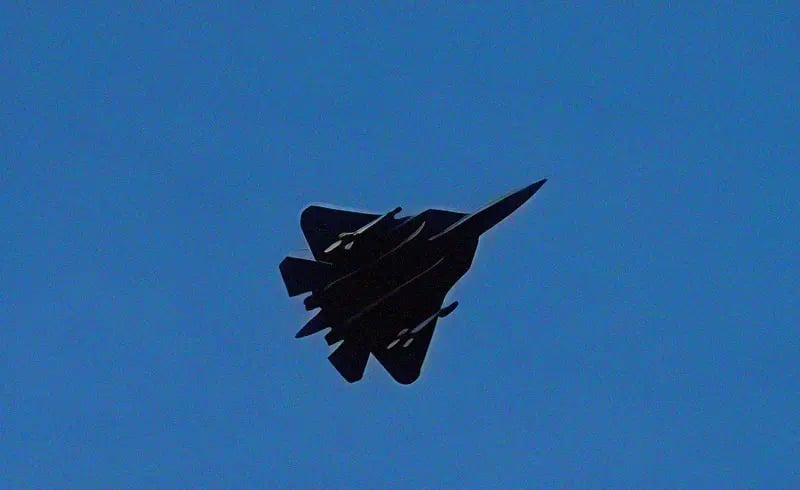
Russia has renewed its offer to supply fifth-generation Su-57 stealth fighter jets to India, presenting a compelling case that emphasizes advancements in stealth technology, avionics, and combat capabilities. The proposal highlights the integration of hypersonic weapons, a significant upgrade that could enhance the aircraft’s operational effectiveness. In a bid to make the offering more appealing, Russia has reportedly reduced the cost of the jets and is open to a unique payment mechanism that would allow transactions in Indian rupees.


As India evaluates this offer among other options, there remains a cautious approach, driven by concerns regarding potential production delays, the reliability of technology, and the broader geopolitical implications of increasing defense ties with Russia. India’s pressing need for modern fifth-generation fighter aircraft stems from a rapidly evolving security environment and the desire to upgrade an aging fleet, especially in light of potential simultaneous conflicts with neighboring nations like China and Pakistan. The Chinese J-20 stealth fighter and Pakistan’s growing air capabilities, aided potentially by Chinese or Turkish support, intensify the urgency for India to enhance its technological capacities.
Key aircraft in India’s legacy fleet, such as the Jaguar, Mirage 2000s, and Mig-29s, are approaching the end of their operational lifespan. Consequently, India is compelled to seek replacements that offer superior capabilities. The Advanced Medium Combat Aircraft (AMCA) project, intended to develop an indigenous fifth-generation fighter, represents a long-term vision for self-reliance in defense technology. However, given the project’s extended timeline, India may require interim solutions to address its immediate security needs.
The Su-57 boasts a design that prioritizes stealth, featuring composite materials and an angular structure, along with internal weapon bays that minimize radar visibility. Despite these enhancements, there are concerns that other fifth-generation aircraft may possess superior radar evasion capabilities, crucial for undetected operations in high-threat environments. The Su-57 also incorporates advanced avionics, including an AESA (Active Electronically Scanned Array) radar and electronic warfare systems, aimed at improving survivability and situational awareness. The aircraft currently utilizes the AL-41F1 engines, with a future transition to the Izdeliye 30 engines expected to enhance its performance, enabling supercruise capabilities and improved thrust. However, ongoing delays with the Izdeliye 30 engines raise doubts about the Su-57’s operational readiness, a critical point of concern for India if it pursues this procurement.
The defense ties between India and Russia have a long-standing history, blossoming since the early 1960s when the Soviet Union emerged as a primary arms supplier to India during the Cold War. Over decades, the partnership has been primarily driven by shared strategic interests and goals regarding regional and global security. Russia has historically supplied a variety of military aircraft to India, underscoring this enduring cooperation.
In 2007, India and Russia initiated the Fifth-Generation Fighter Aircraft (FGFA) program, designed to co-develop a customized version of the Su-57. India’s involvement included financial investment and the integration of indigenous systems. However, by 2018, India withdrew from the FGFA project, citing concerns about technology transfer, software access, performance issues, cost overruns, and disagreements over production terms, prompting a search for alternative solutions, including domestic development.
The potential acquisition of the Su-57 could simultaneously impact the development of India’s AMCA program. While such procurement might provide valuable insights into fifth-generation fighter design and technology, it could also divert resources and focus away from the AMCA, conflicting with India’s goal of achieving self-reliance in defense capabilities.
Moreover, procuring the Su-57 could strengthen India’s defense partnership with Russia while potentially limiting strategic autonomy. Restrictions on customizing the aircraft to meet specific Indian requirements could impede operational flexibility. Additionally, reliance on Russia for software updates and maintenance could compromise India’s control over its defense assets, factoring heavily into the decision-making process.
Geopolitically, acquiring the Su-57 would reaffirm India’s commitment to its long-standing relationship with Russia while also balancing its growing ties with Western defense suppliers like France and the United States. The potential for U.S. sanctions under the Countering America’s Adversaries Through Sanctions Act (CAATSA) further complicates the landscape for India’s defense procurement decisions.
Evaluating the Su-57 involves multiple layers of complexity, including technical assessments, strategic considerations, and geopolitical dynamics. While the aircraft presents significant capabilities that could enhance India’s air force, concerns about stealth performance, engine reliability, and technology transfer remain significant obstacles. Ultimately, India’s decision will reflect a larger defense strategy, weighing the urgency of immediate security needs against long-term aspirations for technological autonomy and influence in the region.