
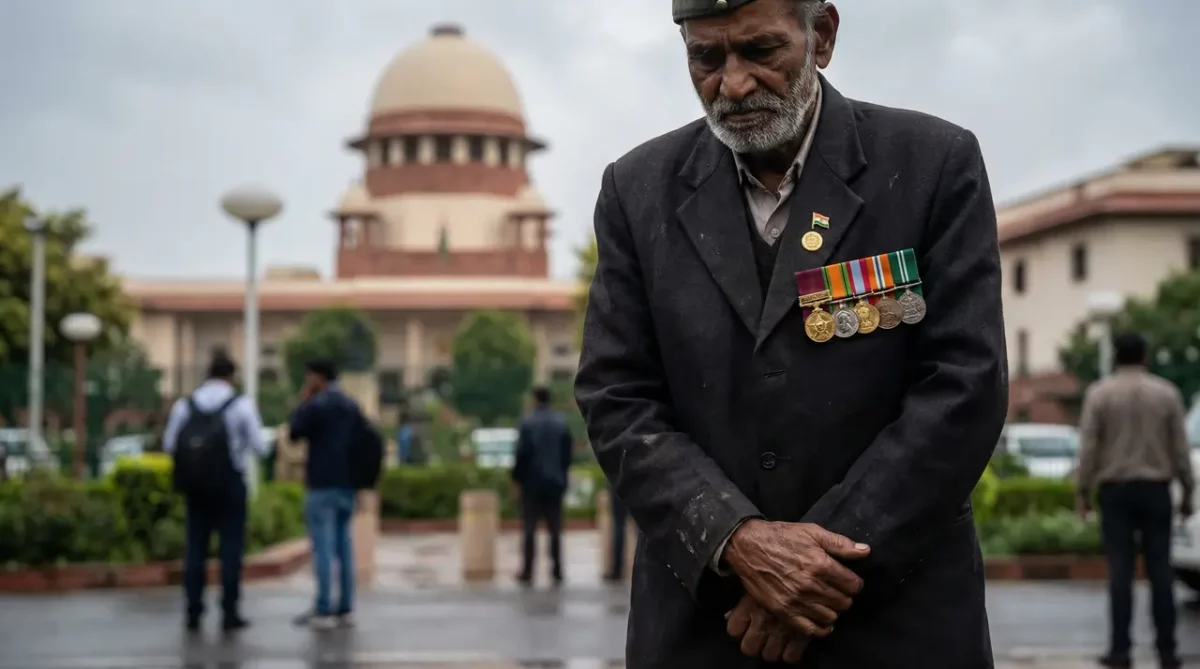
The Supreme Court has dismissed an appeal filed by a former Army personnel seeking disability pension for an ischemic stroke, ruling that the condition was caused by lifestyle factors rather than military service.
A Bench comprising Justices Aravind Kumar and PB Varale upheld the earlier decision of the Armed Forces Tribunal (AFT) in the case of Sarvesh Kumar vs Union of India. The tribunal had rejected the plea on the grounds that the illness was neither attributable to nor aggravated by service conditions.
The appellant had suffered a stroke medically described as “Stroke Ischemic RT MCA Territory” and contended that the disability should qualify for pension benefits under Army regulations. However, the Supreme Court examined the First Medical Report, along with the findings of the Medical Board and Medical Review Board, which recorded that the ex-soldier had a long-standing habit of smoking approximately 10 bidis daily.
Referring to Regulation 173 of the Pension Regulations for the Army, 1961, and provisions of the Guide to Medical Officers, 2002, the Court observed that disability pension cannot be granted for conditions arising from factors within an individual’s control, including tobacco use. The judges noted that smoking is a well-established risk factor for ischemic strokes, which occur due to blockage of blood flow to the brain.
The medical boards had consistently concluded that continuous smoking was a likely contributing factor and found no causal link between the stroke and military service. Accepting these findings, the Supreme Court declined to interfere with the tribunal’s order.
The ruling reiterates that for disability pension claims, a clear and direct connection between the medical condition and service circumstances must be established. It also underscores that illnesses stemming from personal habits fall outside the scope of compensation under existing Army pension regulations.