

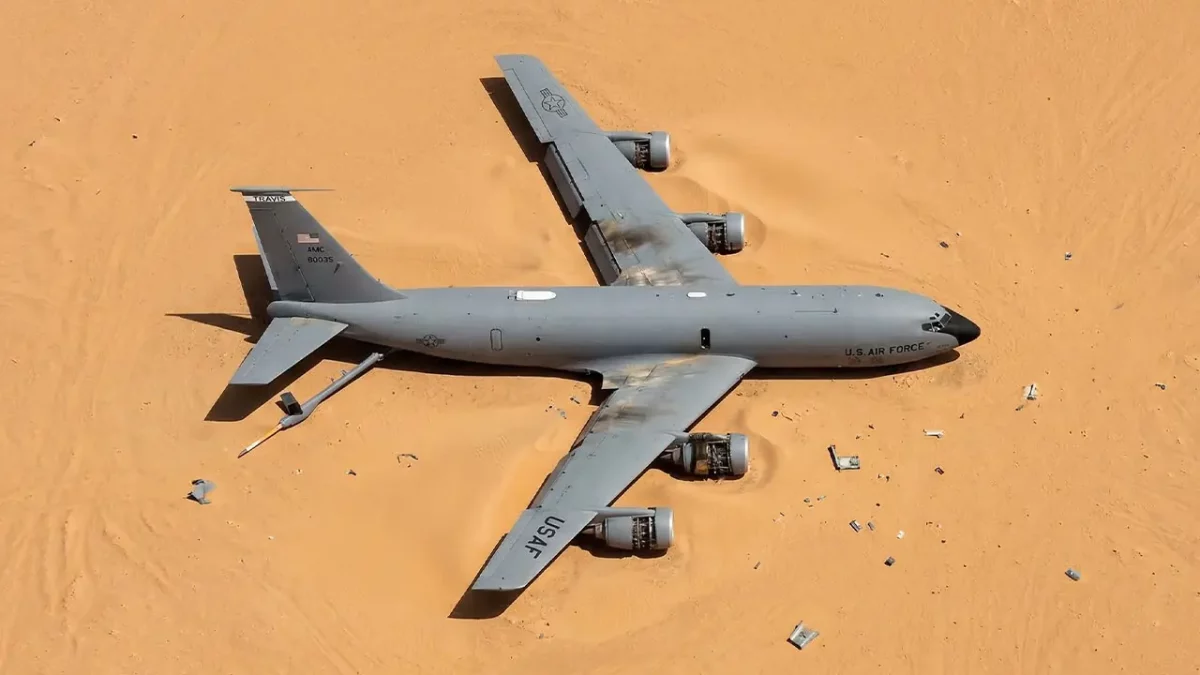
Washington, D.C. – March 13, 2026 – A U.S. Air Force Boeing KC-135 Stratotanker refueling aircraft crashed in western Iraq on March 12, 2026, during aerial operations supporting Operation Epic Fury, the Pentagon’s designation for military actions against Iran. U.S. Central Command (CENTCOM) confirmed the loss in an official statement, emphasizing that the incident occurred in friendly airspace and was not attributable to hostile fire or friendly fire.




According to CENTCOM, two KC-135 aircraft were involved in the mishap. One tanker went down in western Iraq, while the second aircraft sustained damage—including the loss of a significant portion of its vertical stabilizer—but landed safely at Ben Gurion International Airport in Israel after declaring an in-flight emergency. The damaged aircraft has been identified in aviation tracking reports as tail number 63-8017.
Rescue and recovery operations remain active at the crash site, with CENTCOM stating that “more information will be made available as the situation develops.” No official details have been released regarding the precise cause of the incident, though preliminary indications from military sources point to an apparent mid-air accident or refueling-related malfunction between the two tankers. This marks the first confirmed loss of a KC-135 Stratotanker since 2013 and the fourth U.S. aircraft lost since the onset of Operation Epic Fury.
The KC-135 involved in the crash carried six crew members, according to multiple U.S. officials speaking on condition of anonymity. The standard crew complement for the aircraft consists of a pilot, co-pilot, and boom operator, with additional personnel possibly aboard for mission-specific requirements. As of early March 13, 2026, the status of these service members has not been disclosed. Family notifications have not yet occurred, and the Department of Defense has urged patience while search-and-rescue teams continue their work. No confirmed reports of casualties or survivors have been issued by U.S. authorities.
Notably, the KC-135 Stratotanker is not equipped with parachutes, ejection seats, or any other in-flight bailout systems. The U.S. Air Force removed parachutes from the fleet in 2008 as a cost-saving measure, citing the aircraft’s strong safety record and the impracticality of emergency egress in most scenarios. Accident analyses, including prior incidents, have consistently noted that crew members are trained to remain with the aircraft during emergencies, as rapid bailout is rarely feasible. This factor has led to speculation among observers about the challenges faced by the crew, though official updates continue to withhold specifics pending investigation.
Iran-backed groups, including the Islamic Resistance in Iraq, have claimed responsibility for downing the aircraft with a missile, asserting that all crew members were killed. U.S. officials have categorically rejected these claims, reiterating that the incident was accidental and occurred without enemy involvement.
The KC-135 Stratotanker, a Boeing 707-derived platform that has been the backbone of U.S. aerial refueling since the 1950s, was supporting extended combat air patrols and strike missions as part of the broader U.S.-Israeli campaign against Iran. The loss underscores the operational demands of the ongoing conflict, which has already seen retaliatory actions across the Middle East.
CENTCOM has described the situation as fluid and has pledged transparency for the families of the service members involved. Further details, including the identities of the crew and the results of the accident investigation, are expected in the coming days as recovery efforts progress and the inquiry advances.
This article is based on official statements and verified reporting available as of March 13, 2026. Developments are ongoing, and additional information may emerge rapidly.