
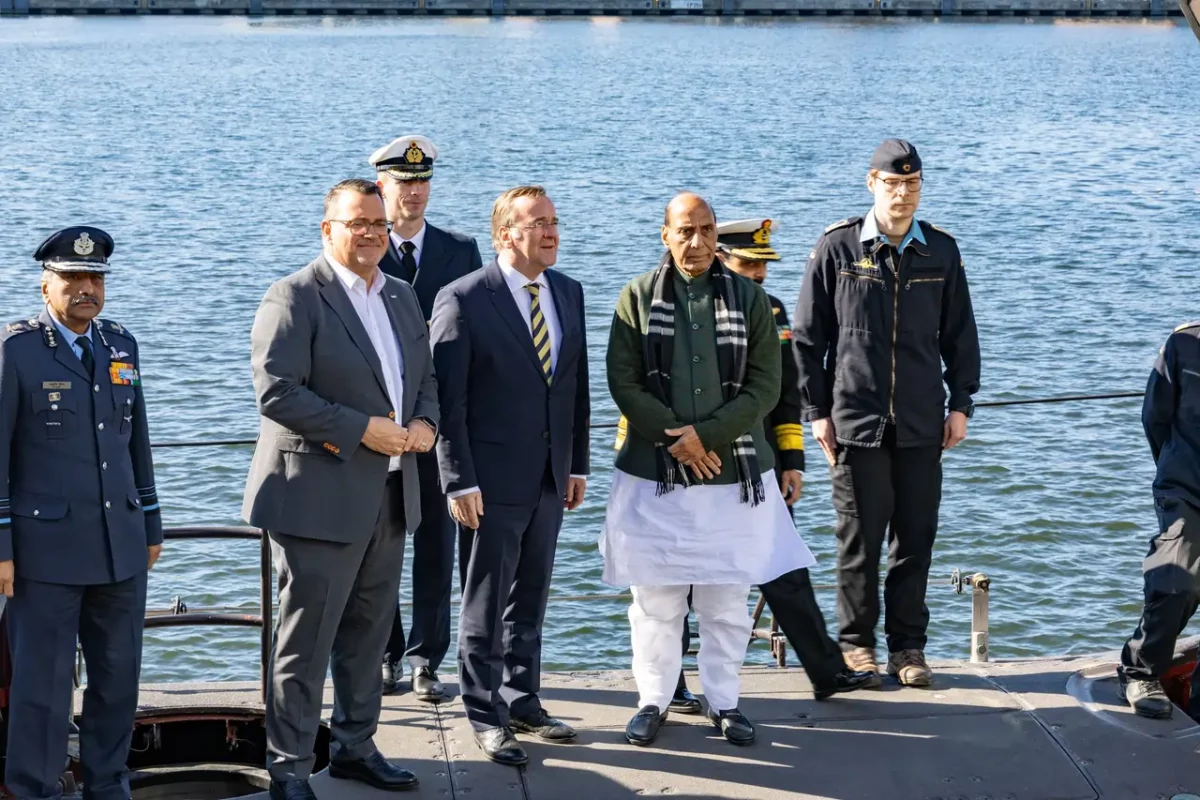
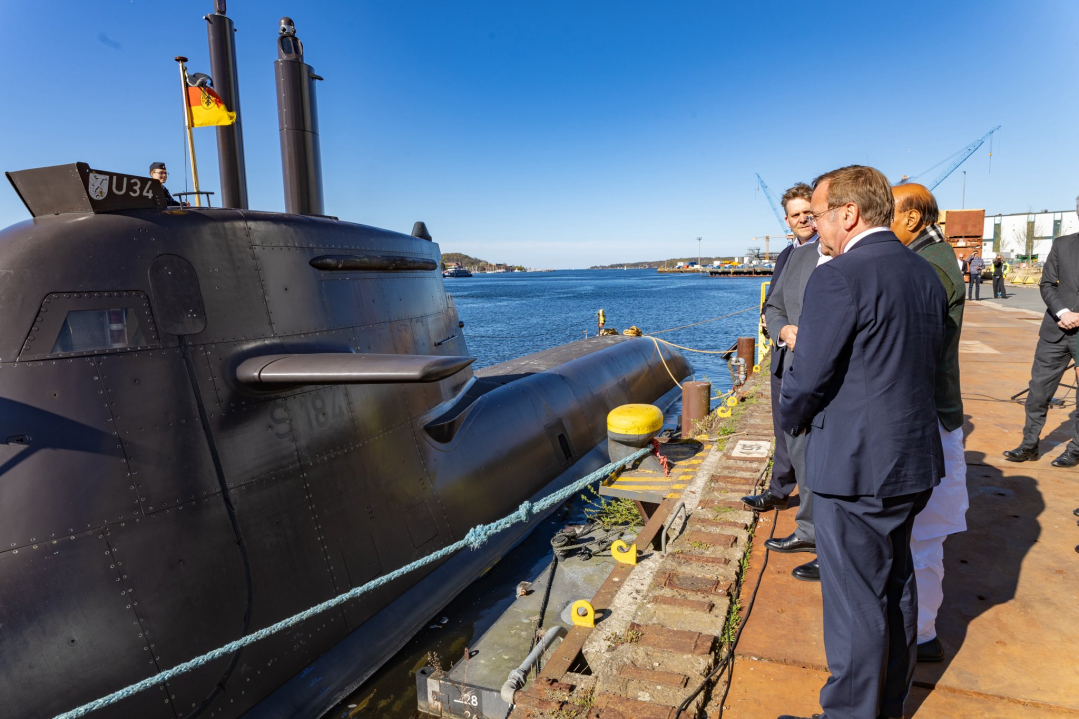
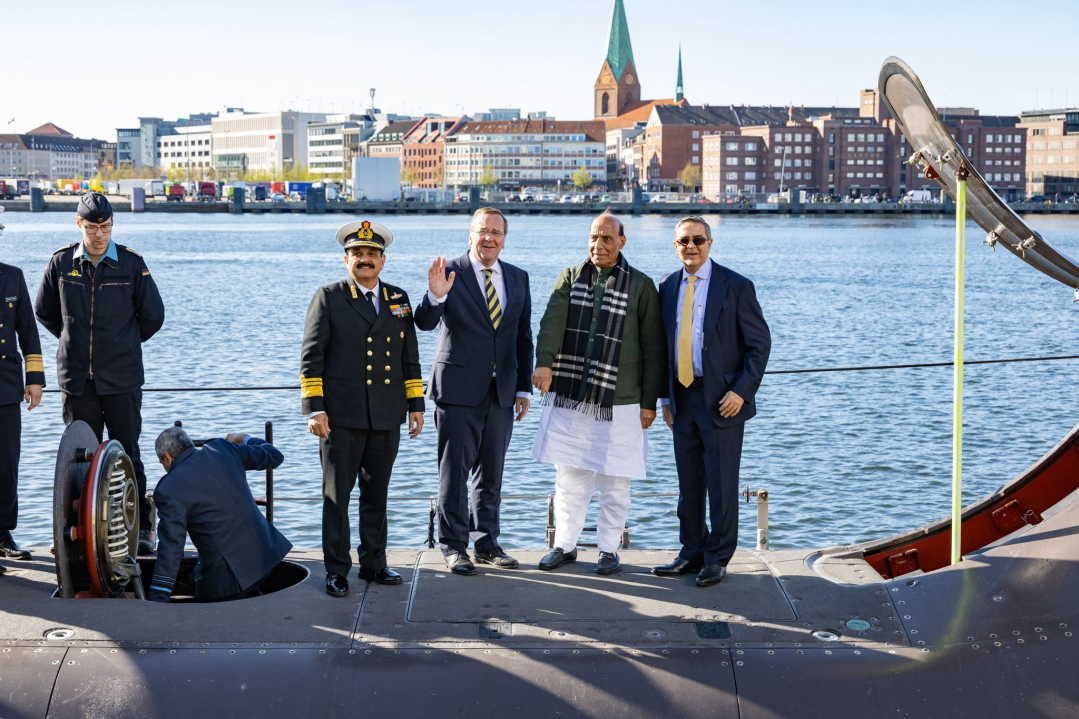
Kiel, Germany — Defence Minister Rajnath Singh toured the Thyssenkrupp Marine Systems (TKMS) submarine building facility in Kiel on April 22, 2026, accompanied by German Defence Minister Boris Pistorius. The visit highlighted cutting-edge submarine technologies and advanced naval capabilities, advancing bilateral maritime defence cooperation.

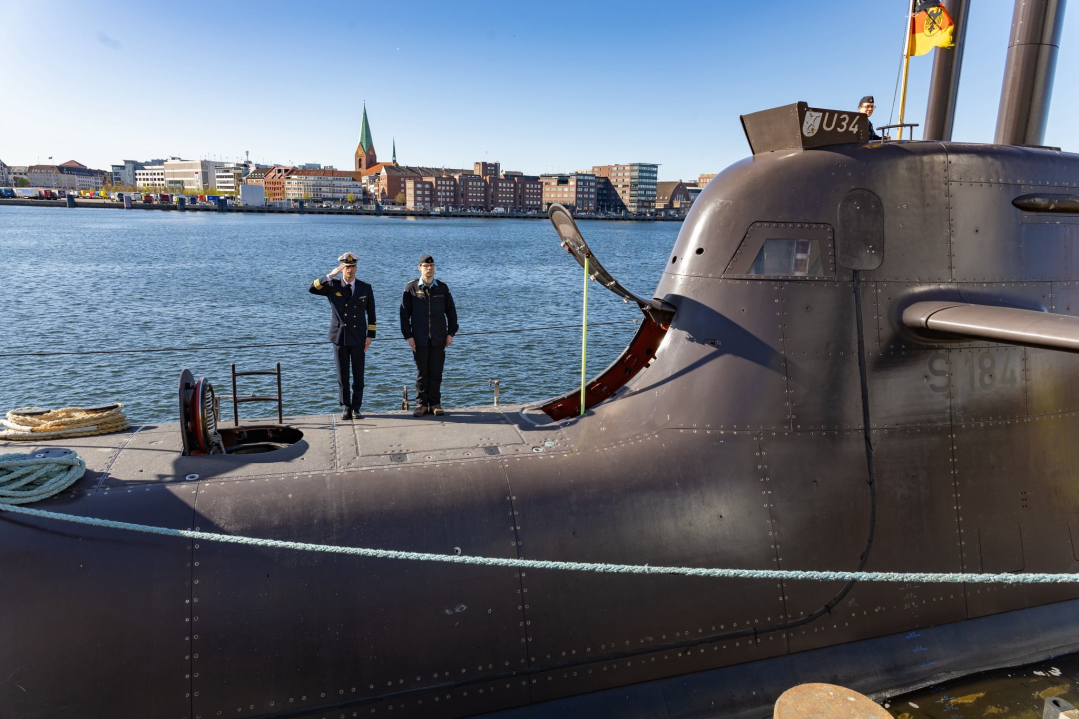
Rajnath Singh, on a three-day official visit to Germany from April 21-23, inspected the facility and boarded a Type 212 submarine. Photos from the visit show the Indian and German delegations standing on the submarine in Kiel harbour, underscoring the strategic partnership between the two nations.
The tour focused on TKMS’s expertise in diesel-electric submarines equipped with Air-Independent Propulsion (AIP) systems, which allow vessels to remain submerged for extended periods with enhanced stealth. This technology aligns closely with India’s requirements under Project 75I, a long-pending programme to indigenously build six advanced diesel-electric attack submarines.
Project 75I, valued at approximately ₹90,000 crore ($8 billion), aims to partner with an international firm like TKMS for technology transfer and local construction, primarily at Mazagon Dock Shipbuilders Limited in India. The programme, first conceptualised nearly two decades ago, is now in advanced stages of negotiation, with expectations of a final agreement soon.
German Defence Minister Pistorius expressed strong confidence in finalising the deal within the next three months, describing it as a key pillar of India-Germany defence ties.
The visit comes amid broader efforts to strengthen India-Germany strategic relations, including a recently signed defence roadmap. It also addresses the Indian Navy’s need to modernise its submarine fleet amid growing maritime challenges in the Indo-Pacific region.
This engagement builds on ongoing defence industrial collaboration, with potential spillovers into areas such as heavyweight torpedoes and other naval systems. Officials described the tour as “insightful” and mutually beneficial for cooperation in the maritime domain.