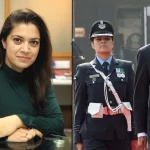


The portrayal of Indian military personnel in cinema, television, web series, and advertisements has long been a staple of Indian entertainment, often evoking themes of patriotism, sacrifice, and national pride. Films such as Border, Uri: The Surgical Strike, Lakshya, and Shershaah frequently feature actors in authentic or replica military uniforms. This raises a pertinent legal question: Is it permissible under Indian law for actors to don Indian Army, Navy, or Air Force uniforms on screen? The answer is nuanced. While there is no absolute statutory prohibition on such depictions in performative contexts, the practice is governed by specific legal provisions, regulatory advisories, and established industry protocols designed to uphold the dignity of the armed forces and prevent misuse.

Legal Framework Governing the Use of Military Uniforms
Indian law addresses the wearing of military uniforms primarily through provisions aimed at preventing impersonation, deception, or actions prejudicial to national security. These statutes do not impose a blanket ban on cinematic or theatrical use but impose clear conditions based on intent and context.
Under Section 140 of the Indian Penal Code, 1860 (now corresponding to Section 168 of the Bharatiya Nyaya Sanhita, 2023), any person who, not being a member of the armed forces, wears any garb or carries any token resembling those used by soldiers, sailors, or airmen with the intention that it may be believed they are such a person, is liable to punishment. The key element is intent to deceive. In the context of films, television, or stage performances, actors wear uniforms as part of a fictional narrative, with no intent to impersonate or mislead the public in real-life scenarios. Audiences are fully aware that the portrayal is artistic, rendering this provision inapplicable to on-screen depictions.
Complementing this is Section 6 of the Official Secrets Act, 1923, which prohibits any person from using or wearing, without lawful authority, any naval, military, air force, police, or other official uniform (or a close resemblance thereof) in a manner calculated to deceive, particularly if done to gain admission to a prohibited place or for any purpose prejudicial to the safety of the State. Penalties may extend to imprisonment for up to three years. Once again, theatrical or cinematic performances fall outside this scope, as there is no intent to deceive or compromise security; the uniform is a prop within a controlled, non-deceptive environment. Actors remain on set or screen and do not wear such attire in public as civilians.
The Emblems and Names (Prevention of Improper Use) Act, 1950 further regulates the use of government emblems, insignia, coats-of-arms, medals, badges, and similar items for trade, business, or professional purposes. While it does not explicitly target film costumes, it prohibits the improper commercial exploitation of military-related symbols. Productions must therefore exercise caution with exact replicas of insignia or badges, often requiring permissions to avoid violations.
In summary, these laws target real-world misuse or deceptive impersonation rather than regulated artistic expression. Cinematic use is generally lawful provided it does not cross into prohibited territory.
Regulatory Requirements and Ministry of Defence Guidelines
Beyond statutory law, practical compliance is essential, particularly for content themed around the armed forces. The Ministry of Defence (MoD) and the respective service headquarters (Army, Navy, Air Force) maintain detailed guidelines for filmmakers seeking official assistance, equipment, or locations. These guidelines outline a structured three-stage approval process:
- Pre-production stage: Producers must approach the Additional Directorate General of Public Information (ADGPI) or equivalent media wings of the services, submitting a detailed proposal, script synopsis, affidavit, indemnity bond, and bank guarantee. A sanction letter is required before filming begins.
- Post-production vetting: The completed film or series is reviewed by the defence ministry and the Central Board of Film Certification (CBFC). Any portions deemed unsuitable, inaccurate, or likely to distort the image of the armed forces must be removed or modified.
- Final clearance: A No Objection Certificate (NOC) and a no-demand certificate must be obtained from the MoD or service headquarters before public release. Footage cannot be commercialised without explicit prior written permission.
In July 2020, the MoD issued a formal advisory to the CBFC (with copies to the Ministry of Information and Broadcasting and Ministry of Electronics and Information Technology) recommending that producers of any film, documentary, or web series based on Army themes obtain an NOC prior to telecast. This advisory was prompted by complaints regarding distorted portrayals of military personnel and uniforms, notably in certain web series. While not a binding legislative mandate in every case, it reflects established industry practice and is routinely followed to secure CBFC certification and avoid regulatory hurdles. A similar advisory applies to television content and advertisements featuring actors in military fatigues.
The Indian Army has also asserted intellectual property rights over specific camouflage patterns, necessitating permissions for exact replicas in productions.
Industry Practices, Examples, and Controversies
Major productions routinely collaborate with the armed forces to ensure accuracy and authenticity. Films such as Uri and others depicting surgical strikes or historical events have benefited from official support, including access to equipment and technical advice, following the prescribed NOC process. Between January 2021 and January 2022 alone, the Indian Army granted NOCs for nine feature films and seven documentaries or TV series, rejecting only one proposal on grounds of national security, discipline, and the portrayal of the armed forces in a poor light.
Controversies arise primarily when portrayals are perceived as disrespectful or inaccurate. Inaccuracies in uniforms are usually attributed to insufficient research rather than deliberate legal circumvention. The MoD’s interventions underscore the armed forces’ emphasis on maintaining the dignity of the uniform and personnel. For commercials, the Advertising Standards Council of India has reinforced the need for prior Defence Ministry approval.
Serving or retired military personnel wishing to act must obtain separate permissions, further highlighting the regulated nature of such depictions.
Conclusion: Legal with Safeguards and Collaboration
It is legal for actors to wear Indian military uniforms on screen, subject to the absence of deceptive intent and adherence to relevant laws such as the Indian Penal Code, the Official Secrets Act, and the Emblems and Names Act. However, for any production involving military themes—particularly those seeking authenticity or official cooperation—obtaining a No Objection Certificate from the Ministry of Defence is a prudent and, in practice, essential step. This framework balances artistic freedom with the imperative to respect the armed forces, national security, and public sentiment.
Filmmakers are strongly encouraged to engage proactively with the relevant service headquarters at the earliest stage. Such collaboration not only ensures legal compliance but also enhances the credibility and dignity of the final product. In an era of heightened scrutiny over content, adherence to these norms remains the cornerstone of responsible portrayal of India’s military heritage on screen.