

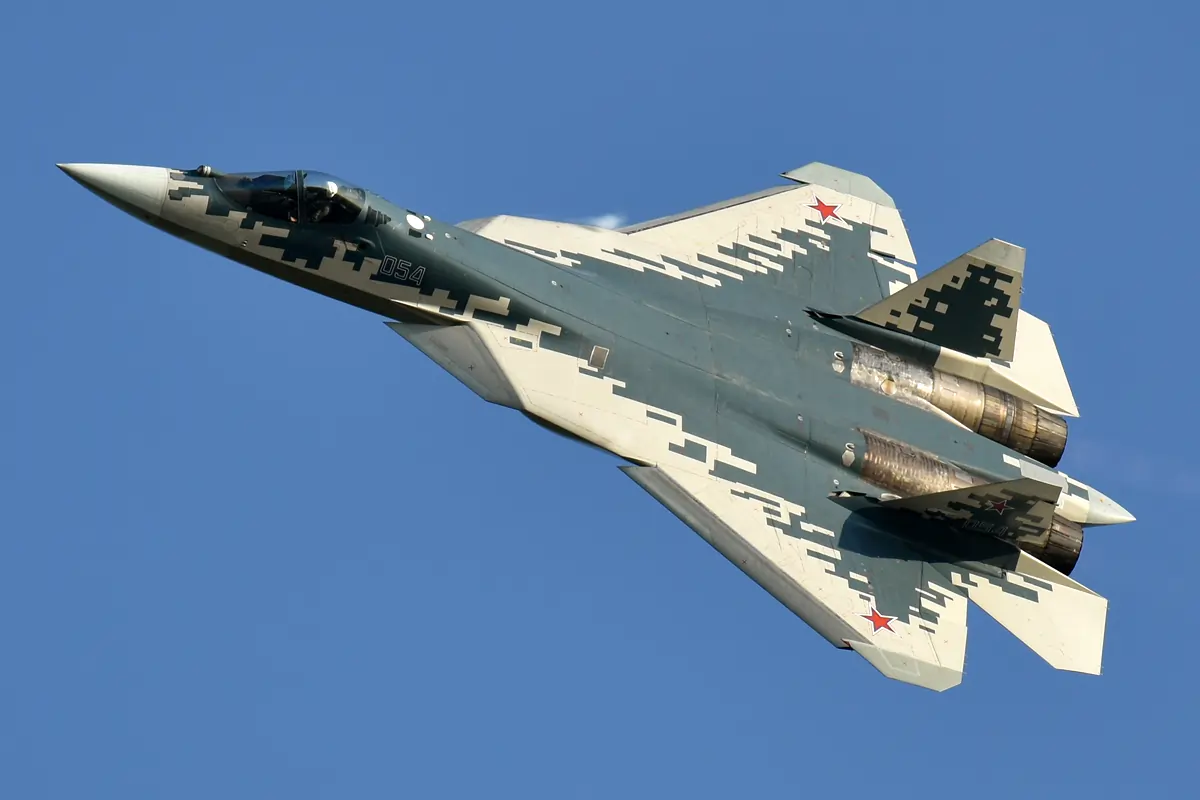
Russia has offered to supply India with up to 40 Su-57 fifth-generation stealth fighter jets as an interim solution to bridge the capability gap until India’s indigenous Advanced Medium Combat Aircraft (AMCA) enters service in the mid-2030s.




The offer includes the delivery of two squadrons of the Sukhoi Su-57, with a potential timeline that could see the first aircraft arriving by 2027–28 and full induction completed by 2030, provided a deal is finalised by the end of 2026.
Bridging India’s Fifth-Generation Gap
The proposal comes at a time when the Indian Air Force (IAF) is facing a capability gap in fifth-generation combat aircraft, as the AMCA programme is still under development.
Russia is positioning the Su-57—NATO codename “Felon”—as a stopgap solution, offering advanced stealth, supercruise capability, and multi-role combat performance.
Production and Delivery Plan
Russia’s United Aircraft Corporation (UAC) is reportedly ramping up production to 16–20 aircraft per year by 2027 to meet both domestic and export commitments.
Moscow is simultaneously working to induct 76 Su-57 jets into its own air force by 2028 while accommodating potential export orders like India’s.
Engine and Upgrade Concerns
Currently, Su-57 aircraft are powered by the AL-41F1 engines, a transitional system derived from the Su-35. The more advanced Izdeliye 177 (AL-51F) engine—considered a true fifth-generation powerplant—is still under development.
Russia has предложed a post-2030 upgrade programme, allowing India to retrofit aircraft with the new engines once they are fully operational.
Make in India and Technology Transfer
India is also exploring the possibility of licensed production under the ‘Make in India’ initiative, with Hindustan Aeronautics Limited (HAL) assessing its infrastructure for potential manufacturing.
However, the deal’s viability will depend heavily on Transfer of Technology (ToT), cost considerations, and long-term maintenance commitments.
Strategic Implications
The offer marks a renewed push by Russia to deepen defence ties with India, especially after New Delhi exited the earlier FGFA programme in 2018.
A final decision is expected to hinge on:
- Financial viability
- Extent of technology sharing
- Alignment with India’s indigenous defence goals
Way Forward
With the Indian Ministry of Defence prioritising self-reliance and technological capability, the Su-57 proposal presents both an opportunity and a strategic dilemma—balancing immediate operational needs with long-term indigenous development.