
In a remarkable display of courage and military professionalism, Colonel Shailendra Singh Negi, VSM, of the Indian Army emerged as one of the key heroes of the Gulmarg Gondola rescue operation after he reportedly climbed nearly 500 feet to save a stranded child during a major cable car emergency in Jammu and Kashmir.





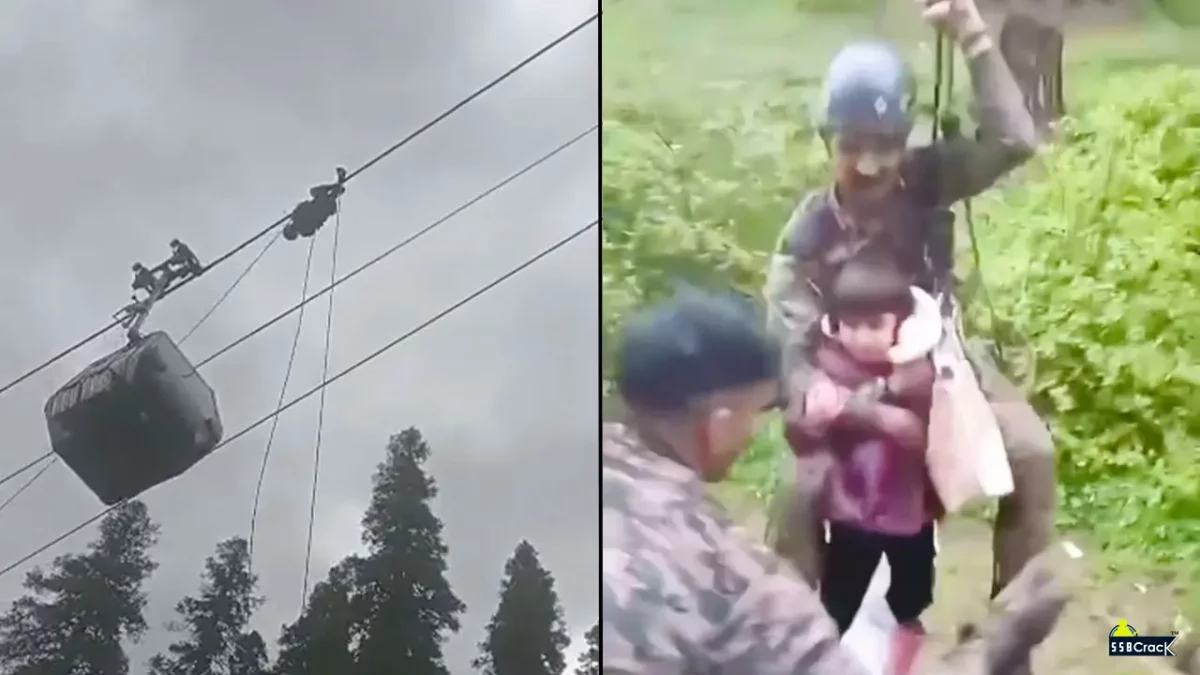
The incident took place on 25 May 2026, when the famous Gulmarg Gondola suffered a serious technical malfunction, leaving dozens of cabins suspended mid-air between the base station and Phase-1 station. The failure, reported to be linked to a gearbox issue, trapped over 300 tourists, including families and children, in extremely difficult conditions. Some cabins were hanging hundreds of feet above steep mountain slopes, turning a routine tourist ride into a high-risk rescue situation.
As panic spread among those trapped inside the cabins, the Indian Army’s Chinar Corps and personnel from the High Altitude Warfare School (HAWS), Gulmarg, joined hands with the State Disaster Response Force, National Disaster Response Force, local police and civil administration to launch a coordinated rescue operation. The difficult mountain terrain, height of the suspended cabins and the fragile nature of the cable system made the operation extremely challenging.
During the rescue effort, Colonel Shailendra Singh Negi, popularly referred to as Col SS Negi, stepped forward for one of the most dangerous tasks. According to reports, one of the cabins had a child stranded at a dangerous height, requiring immediate specialised intervention. Colonel Negi, a trained high-altitude warfare and mountain rescue expert, climbed along the suspended cable system to reach the cabin.
At nearly 500 feet above the ground, every movement required exceptional balance, strength and composure. Colonel Negi’s climb was not only physically demanding but also mentally testing, as even a minor mistake could have led to a tragedy. Despite the risk, he continued the mission with calm determination, reached the stranded child and helped ensure the child’s safe evacuation.
The operation highlighted the critical role of the High Altitude Warfare School, one of the Indian Army’s premier training institutions for mountain warfare, snow craft, ice craft and survival in extreme terrain. HAWS personnel are trained to operate in some of the world’s toughest environments, including high-altitude and glaciated regions. Their expertise proved crucial in turning a potentially disastrous situation into a successful rescue mission.
The entire rescue operation lasted several hours and was completed safely, with all stranded passengers evacuated. No injuries were reported, making the mission a major success for the combined rescue teams. The operation also reflected the importance of civil-military coordination in Jammu and Kashmir, especially in emergencies involving difficult terrain and tourist infrastructure.
Colonel Negi’s act of climbing towards danger to save a child has drawn widespread praise from citizens, veterans and defence observers. His courage symbolised the finest traditions of the Indian Army, where service often goes beyond the battlefield and extends to protecting civilians in moments of crisis.
The Gulmarg Gondola, one of the highest and most popular cable car systems in the world, remained closed after the incident for technical checks and maintenance. Authorities also initiated steps to examine the cause of the malfunction and ensure that such incidents are prevented in the future.
For Colonel Shailendra Singh Negi, VSM, the rescue has added another inspiring chapter to a career already marked by distinguished service. His actions in Gulmarg stand as a reminder that courage is not always displayed in combat alone. Sometimes, it is seen in the quiet resolve of a soldier climbing hundreds of feet above the ground to save a frightened child.
The Gulmarg rescue will be remembered not only as a successful emergency operation but also as a powerful example of bravery, professionalism and humanity in uniform.