
Renowned military scholars John Spencer and Liam Collins are writing a major new book examining the four-day armed conflict between India and Pakistan in May 2025, one of the most consequential military confrontations between the two nuclear-armed neighbours in decades.




Spencer revealed details of the project in a social media post on June 23, saying the authors were spending long days working on the volume. The book will be based extensively on primary-source research rather than relying solely on publicly available reports and battlefield assessments.
According to Spencer, the research includes interviews with senior Indian and Pakistani military officers, operational commanders and other individuals directly connected with the conflict. The authors have also conducted field research at important locations associated with the crisis, including Pahalgam and areas along the Line of Control.
Interviews With India’s Senior Military Leadership
The researchers have received access to some of the most senior officers of the Indian Armed Forces.
Spencer said the people interviewed for the project include Chief of the Army Staff General Upendra Dwivedi, Deputy Chief of the Air Staff Air Marshal Awadhesh Kumar Bharti and Director General Naval Operations Vice Admiral A. N. Pramod.
Air Marshal Bharti was among the senior officers who publicly briefed the media about Indian Air Force operations during Operation Sindoor. Vice Admiral Pramod, meanwhile, headed the Indian Navy’s operational directorate during the period covered by the book.
Spencer emphasised that the research would not be limited to the Indian account. The authors are also consulting Pakistani sources to examine the planning, perceptions and military decisions on both sides of the border.
Such access could allow the book to reconstruct how political directives were translated into operational decisions across the land, air and maritime domains during the rapidly escalating confrontation.
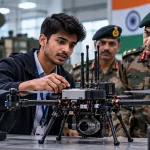
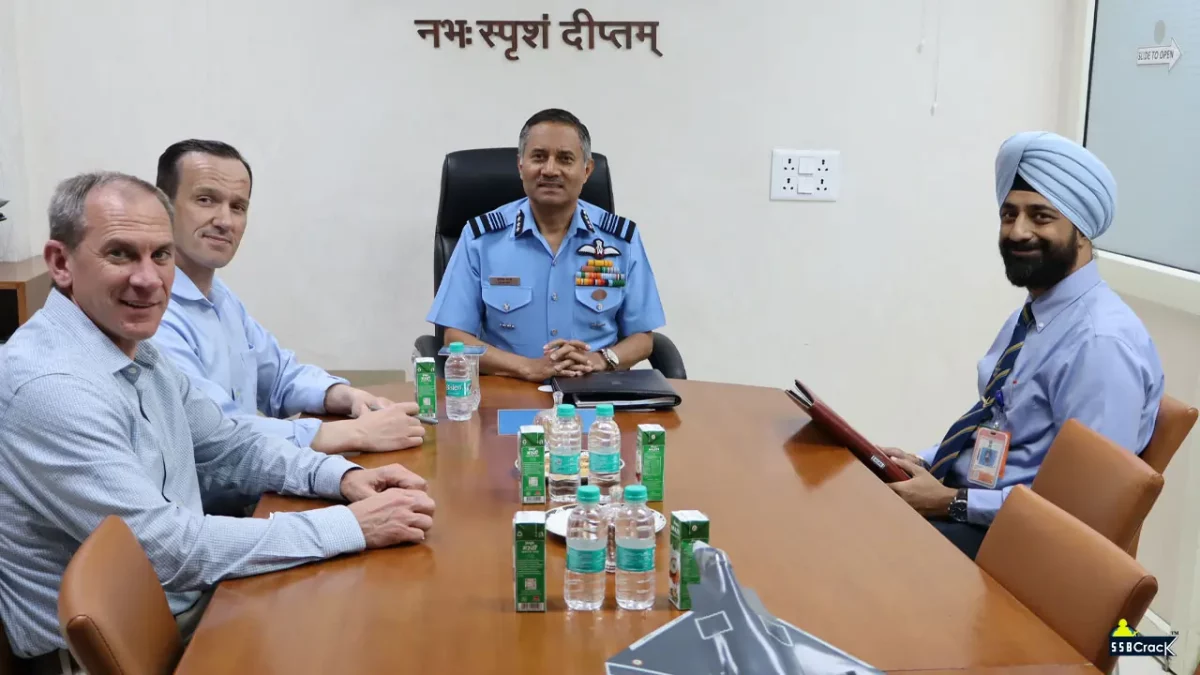
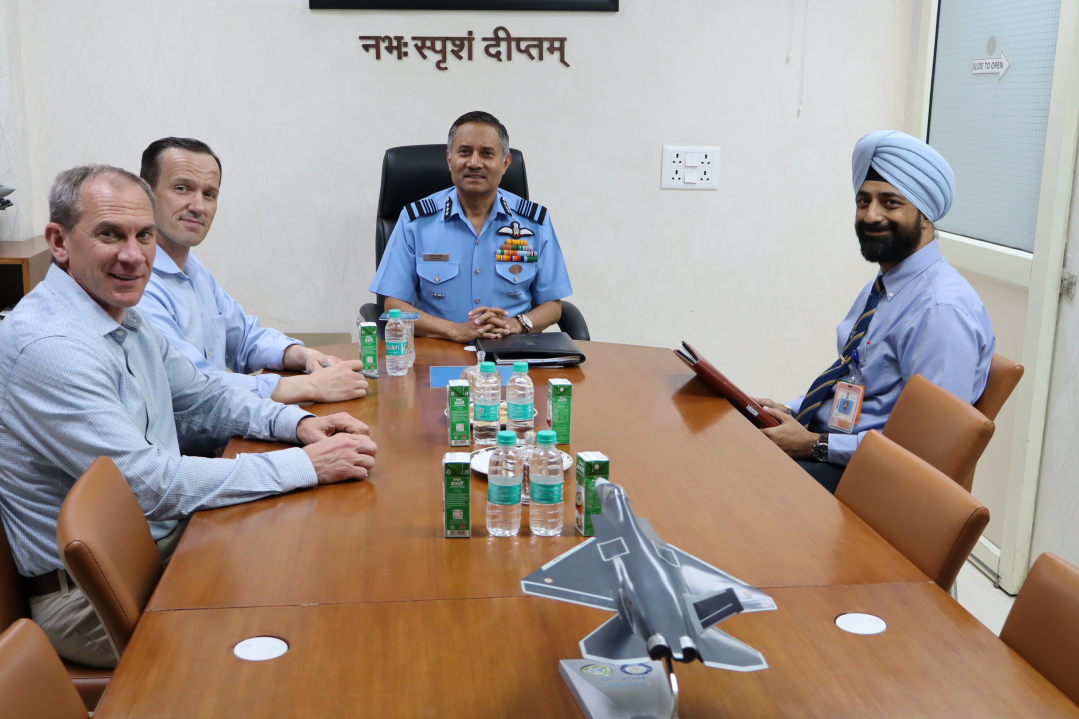
A photograph accompanying Spencer’s announcement showed the researchers meeting senior Indian Air Force officers in a formal military setting, reflecting the high-level access available to the project.
Conflict Followed Pahalgam Terror Attack
The four-day confrontation followed the April 22, 2025, terrorist attack at Baisaran near Pahalgam in Jammu and Kashmir. Twenty-six people, including 25 Indian citizens and one Nepali national, were killed in the attack.
The terrorists reportedly identified victims by their religion before opening fire, an act that India described as an attempt to provoke communal divisions within the country.
The attack triggered a major diplomatic crisis between India and Pakistan. New Delhi accused Pakistan-based terrorist networks of involvement and announced a series of punitive measures. Pakistan rejected the allegations and responded with countermeasures of its own.
Tensions continued to rise during the following two weeks as firing and military activity increased along the Line of Control.
Operation Sindoor Begins
During the intervening night of May 6 and 7, 2025, India launched Operation Sindoor, striking nine locations in Pakistan and Pakistan-occupied Jammu and Kashmir.
The Indian government described the targets as terrorist camps and infrastructure connected with organisations including Lashkar-e-Taiba and Jaish-e-Mohammed. India maintained that the initial operation was focused, measured and designed to avoid Pakistani military installations and civilian areas.
Pakistan condemned the attacks and initiated retaliatory military action. The confrontation subsequently expanded beyond the original strikes, with both countries employing artillery, drones, missiles, loitering munitions, air-defence systems and long-range precision weapons.
Indian forces later struck Pakistani airbases, radar installations, command centres and other military infrastructure after accusing Pakistan of launching repeated attacks against Indian military facilities.
The Indian Navy also deployed major assets in the Arabian Sea, while the Indian Army and Air Force operated an integrated air-defence network to counter drones and missiles approaching Indian territory.
The fighting represented a significant departure from previous India-Pakistan crises because of the scale and variety of advanced systems employed. It also demonstrated how a confrontation could expand rapidly across multiple military domains while remaining below the threshold of a declared full-scale war.
Fighting Ends After Four Days
The most intense phase of the confrontation lasted from May 7 to May 10, 2025.
India announced on May 10 that Pakistan’s Director General of Military Operations had contacted his Indian counterpart and that both sides had agreed to stop military action on land, in the air and at sea.
American officials also engaged the leadership of both countries during the crisis. The precise extent of the United States’ role has remained a subject of differing accounts, with India maintaining that the understanding to halt military action was reached directly through military-to-military communication.
Both India and Pakistan subsequently presented their operations as successful. However, many claims concerning aircraft losses, casualties, interceptions and damage to military installations remained contested.
Independent analysts have warned that misinformation and disinformation from numerous sources complicated efforts to establish a complete account of the confrontation. This uncertainty is one reason why a study based on interviews with commanders and field research could become particularly important.
Examining a New Strategic Paradigm
Spencer has indicated that the authors view Operation Sindoor as much more than an isolated military exchange.
The book is expected to examine how India’s response changed assumptions about geographical restraint, retaliation against cross-border terrorism and the management of military confrontation between nuclear-armed states.
India’s decision to strike targets deeper inside Pakistan, including locations associated with terrorist organisations in Muridke and Bahawalpur, suggested that places previously regarded as protected by distance or escalation risks could no longer be considered immune from Indian retaliation.
The conflict also demonstrated the growing importance of stand-off weapons, integrated air defence, electronic warfare, unmanned systems and real-time command-and-control networks.
Another central subject is likely to be escalation management. Despite intense missile, drone and artillery exchanges, both countries calibrated their actions and eventually brought the fighting to an end without crossing the nuclear threshold.
Lessons Extending Beyond South Asia
The book’s significance may extend beyond India-Pakistan relations.
Pakistan operates several Chinese-origin military platforms, including fighter aircraft, air-to-air missiles and air-defence systems. Their performance during the conflict attracted international attention because of the wider implications for countries assessing Chinese weapons and preparing for potential future confrontations involving the People’s Liberation Army.
Indian capabilities will also receive close examination. Operation Sindoor involved coordinated employment of the Army, Navy and Air Force, along with intelligence agencies and indigenous as well as foreign-origin weapons systems.
The authors are expected to study how India selected its targets, coordinated operations between the services, defended its airspace and communicated its political objectives during the crisis.
Narrative warfare and information operations are also likely to form an important part of the book. Both sides competed to establish their version of events, while misleading photographs, recycled videos and unsupported battlefield claims circulated widely online.
By combining interviews from India and Pakistan with visits to the locations where the crisis began and unfolded, Spencer and Collins could provide a more detailed picture of the decisions taken before, during and immediately after the fighting.
Experienced Authors of Modern-Warfare Studies
John Spencer is the chair of urban warfare studies at the Modern War Institute and co-director of its Urban Warfare Project. A retired United States Army infantry officer, he served for 25 years and completed two combat tours in Iraq.
Liam Collins is a retired US Army Special Forces colonel and the founding director of the Modern War Institute at West Point. His operational experience includes deployments to Iraq, Afghanistan, Bosnia, the Horn of Africa and South America.
Collins currently serves as director of the Madison Policy Forum and has also worked as a military and strategic adviser.
Spencer and Collins previously co-authored Understanding Urban Warfare, a study examining the military, political and humanitarian complexities of combat in cities. Their work has frequently combined battlefield research, interviews with participants and analysis of contemporary military operations.
Release Details Yet to Be Announced
The authors have not yet disclosed the official title, publisher or expected publication date of the India-Pakistan conflict book.
Spencer indicated that additional research, travel and writing remain underway, adding that more information about the project would follow.
Once completed, the volume could become one of the most extensively researched accounts of the 2025 confrontation. Its primary-source approach may help military professionals, policymakers and scholars understand how the four-day conflict reshaped deterrence, precision warfare and strategic signalling in South Asia.
More than a year after the guns fell silent, many questions about the crisis remain unanswered. Spencer and Collins’ forthcoming book is expected to offer important insights into how the confrontation began, how it was fought and how two nuclear-armed countries ultimately stepped back from further escalation.