
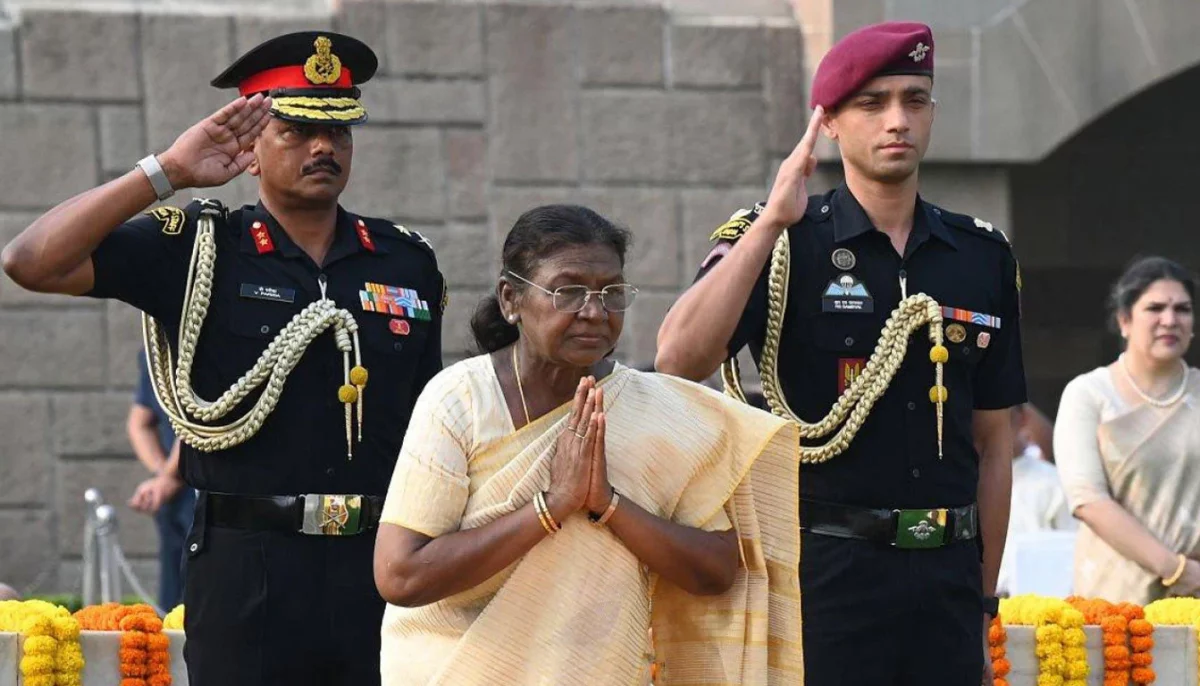
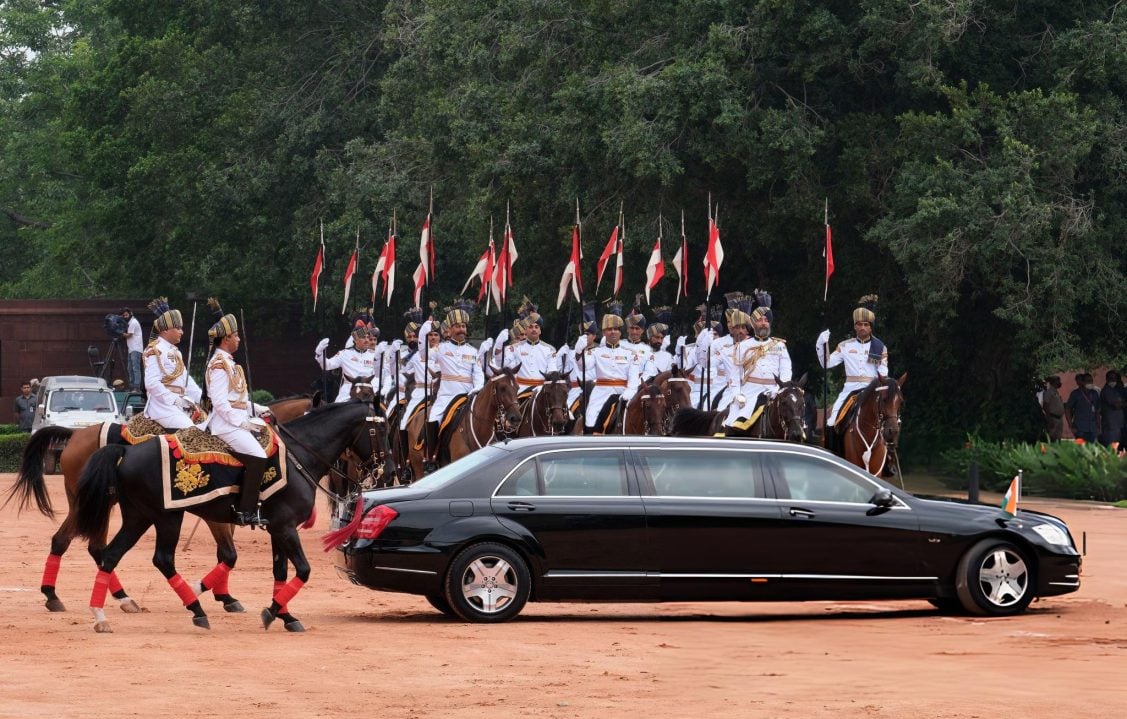
The President’s Bodyguard, popularly known as the PBG, is one of the most prestigious and visually striking units of the Indian Army. Stationed at Rashtrapati Bhavan, it performs ceremonial duties for the President of India and also functions as a trained operational military unit. The regiment is widely known for its mounted escorts, shining uniforms, tall troopers, disciplined bearing, and its role during national events such as Republic Day, state visits, and ceremonial functions at the President’s Estate.
But one question often creates debate: why are only Jats, Rajputs, and Jat Sikhs recruited as troopers in the President’s Bodyguard?
The answer lies in a combination of history, regimental tradition, ceremonial requirements, and military policy. While modern India follows constitutional principles of equality, the Indian Army has maintained that the PBG’s fixed-class composition is linked to the unique functional and ceremonial role of the unit, not merely to social identity.
The President’s Bodyguard is the oldest regiment of the Indian Army. It was raised in 1773 as the Governor-General’s Bodyguard and was later renamed the President’s Bodyguard on January 27, 1950, after India became a republic.
What Is the President’s Bodyguard?
The President’s Bodyguard is the senior-most regiment of the Indian Army. It is the personal ceremonial escort of the President of India, who is also the Supreme Commander of the Indian Armed Forces.
The unit is best known for escorting the President during important national and diplomatic events. Its troopers are seen on horseback during ceremonial occasions, wearing traditional uniforms and carrying lances. Their presence at Rashtrapati Bhavan represents military discipline, heritage, and state honour.
However, the PBG is not merely a ceremonial showpiece. It is also a combat-trained unit of the Indian Army. The soldiers of the PBG are trained in military skills, armoured warfare, and airborne operations. The regiment has also contributed to operational duties in difficult areas and has a history beyond ceremonial parades.
Which Communities Are Recruited in the PBG?
Recruitment of troopers in the President’s Bodyguard is traditionally restricted to three communities:
- Jats
- Rajputs
- Jat Sikhs
The regiment follows what is known as a “fixed class” composition. This means that the soldier-level recruitment is limited to specified classes or communities.
The structure is generally maintained in equal proportion among the three communities, with roughly one-third representation each from Jats, Rajputs, and Jat Sikhs.
It is important to understand that this restriction applies mainly to troopers or soldiers of the regiment. Officers who command the unit are commissioned through the regular officer selection system of the Indian Army and may come from any region, religion, caste, or community. Similarly, certain administrative and support staff may also be drawn from outside these three groups.
Why Does the PBG Follow a Fixed-Class System?
The Indian Army has historically had different types of regimental compositions. Some regiments are “All India, All Class,” meaning soldiers can be recruited from anywhere in the country. Others follow class-based, region-based, or community-based traditions, especially older infantry and cavalry regiments.
The PBG belongs to the older tradition of fixed-class regiments. The Army’s argument has generally been that such a structure preserves regimental identity, cohesion, discipline, and continuity.
In the case of the President’s Bodyguard, there is also a ceremonial requirement. Since the unit represents the President of India during high-profile state functions, uniformity of appearance is considered important. The troopers are expected to have a tall, impressive, and similar physical bearing.
The PBG is known for having very strict physical standards. A minimum height of around 6 feet has often been associated with recruitment to the unit. The Army’s position has been that the traditional recruiting communities have historically supplied candidates matching the required height, build, riding ability, and ceremonial bearing.
The Ceremonial Argument
The PBG is one of the most visible military units in India. It appears before foreign dignitaries, heads of state, ambassadors, military leaders, and the public during important ceremonies.
For this reason, visual uniformity is considered a key requirement. The troopers are expected to look similar in height, body structure, posture, and parade bearing. On ceremonial occasions, even small differences in alignment, height, and movement become noticeable.
The Army has argued that the PBG is a “show window” of military tradition. Its duty is not only to protect and escort the President but also to reflect the dignity of the Indian state. The tall mounted troopers, polished ceremonial dress, horses, lances, and disciplined formation are part of this visual tradition.
This is one of the main reasons given for continuing the fixed-class system.
The Historical Reason Behind the Tradition
The origin of the PBG goes back to the colonial era. It was raised in 1773 during the time of Warren Hastings. At that time, military recruitment was influenced by the British theory of “martial races,” under which certain communities were considered more suitable for military service.
This idea was a colonial classification and is not accepted as a modern social principle. However, many regimental structures created during that era continued in some form after Independence, especially where they were linked to long-standing traditions and operational cohesion.
Before Partition, the composition of the bodyguard included communities such as Punjabi Muslims, Sikhs, and Rajputs. After Partition in 1947, Muslim troopers went to Pakistan, where they became part of the Governor General’s Bodyguard. The Indian unit retained Sikhs, Jats, and Rajputs, and over time the current composition became formalised.
After India became a republic, the unit was renamed the President’s Bodyguard on January 27, 1950. Since then, it has remained attached to Rashtrapati Bhavan and has continued its ceremonial role under the President of India.
Is the PBG Only a Ceremonial Unit?
No. This is a common misconception.
Although the PBG is famous for its ceremonial role, it is also a trained military unit. Its soldiers are not selected only for appearance. They are trained in soldiering, weapons, riding, military discipline, and operational duties.
The PBG has served in difficult operational areas and has been associated with deployments such as Siachen, Sri Lanka, and United Nations peacekeeping missions. The unit has also maintained its armoured and airborne traditions.
This makes the PBG unique. It combines three identities:
- A ceremonial guard of the President
- A cavalry heritage unit
- A combat-trained military formation
The President’s Bodyguard is therefore not just about horses, uniforms, and parades. Its soldiers are expected to meet high military standards along with ceremonial expectations.
Why Is the Policy Controversial?
The fixed-class recruitment policy has been challenged by candidates and petitioners who argued that physically qualified candidates from other communities should also be allowed to join.
The main objection is based on constitutional equality. Critics argue that restricting recruitment to only three communities may violate the spirit of equal opportunity in public employment. They refer to constitutional principles such as equality before law and non-discrimination.
The argument is simple: if a candidate from another community meets the required height, fitness, riding ability, and military standards, why should he be excluded only because he does not belong to Jat, Rajput, or Jat Sikh communities?
This question has led to legal challenges and public debate.
The Army’s Defence in Court
The Indian Army has defended the policy by saying that the PBG’s recruitment pattern is not ordinary employment recruitment but a matter of military organisation, tradition, and functional requirement.
The Army’s stand has been that the PBG has a unique ceremonial role and that the present composition helps maintain uniformity, regimental identity, and ceremonial excellence.
According to reports on earlier court proceedings, the Army has argued that the recruitment pattern is not intended as caste discrimination but is connected to the functional needs of the unit. The matter has been raised before courts, including challenges related to Articles 14, 15, and 16 of the Constitution, which deal with equality and non-discrimination.
Courts have generally been cautious in interfering with military recruitment policies, especially where the armed forces cite operational or functional requirements. However, the debate continues in public discussion because the issue involves both military tradition and constitutional equality.
Tradition Versus Equality
The PBG debate represents a larger question in the Indian Army: how should historic regimental traditions be balanced with the modern idea of equal opportunity?
The Army has many regiments with traditional compositions. Some are based on region, some on class, and others on an all-India system. These traditions are often defended on the grounds of esprit de corps, morale, regimental history, and cohesion.
At the same time, India is a democratic republic where public institutions are expected to reflect fairness and equal access. This is why the PBG’s recruitment policy attracts criticism.
Supporters of the policy argue that the PBG is a very small and highly specialised unit with unique ceremonial duties. They say that its fixed-class composition should be seen as a regimental tradition rather than a general recruitment rule.
Critics argue that tradition alone should not override constitutional values, especially when the armed forces belong to the entire nation.
Why the Debate Is Sensitive
The subject becomes sensitive because it involves caste, military pride, constitutional values, and national symbolism.
The President’s Bodyguard is attached to the office of the President of India, the highest constitutional office in the country. Therefore, any perception of exclusion becomes a matter of public concern.
At the same time, the PBG is an old military regiment with a carefully preserved identity. For the Army, regimental traditions are not merely symbolic. They are considered important for discipline, loyalty, and continuity.
This is why the issue cannot be understood only through one lens. It is not just a caste issue, nor is it only a ceremonial issue. It is a combination of history, military policy, legal interpretation, and changing social expectations.
The Present Position
As of now, the President’s Bodyguard continues to follow its traditional fixed-class composition for troopers. Jats, Rajputs, and Jat Sikhs remain the primary recruiting communities for soldier-level positions in the regiment.
The Army continues to maintain that the policy is based on historical and functional considerations. Critics continue to question whether such a system should exist in modern India.
The debate is likely to remain relevant because it touches upon a larger question: should the armed forces preserve old regimental traditions exactly as they are, or should they gradually open all such units to wider participation?
Conclusion
The President’s Bodyguard is one of India’s most elite and historic military units. Its restricted recruitment pattern is rooted in colonial-era military traditions, post-Partition reorganisation, ceremonial requirements, and the Army’s fixed-class regimental system.
The reason only Jats, Rajputs, and Jat Sikhs are recruited as troopers is not simply a matter of social preference. The Army’s position is that these communities have historically supplied candidates who meet the unit’s physical, ceremonial, and regimental requirements. The unit’s role at Rashtrapati Bhavan demands exceptional height, bearing, discipline, and visual uniformity.
However, the policy remains controversial because it appears to limit equal opportunity for candidates from other communities who may also meet the same physical and military standards.
In the end, the PBG stands at the intersection of tradition and modern constitutional values. It is a symbol of India’s military heritage, but it also raises an important question for the future: how should a modern republic balance historic military customs with the promise of equal opportunity for all citizens?