
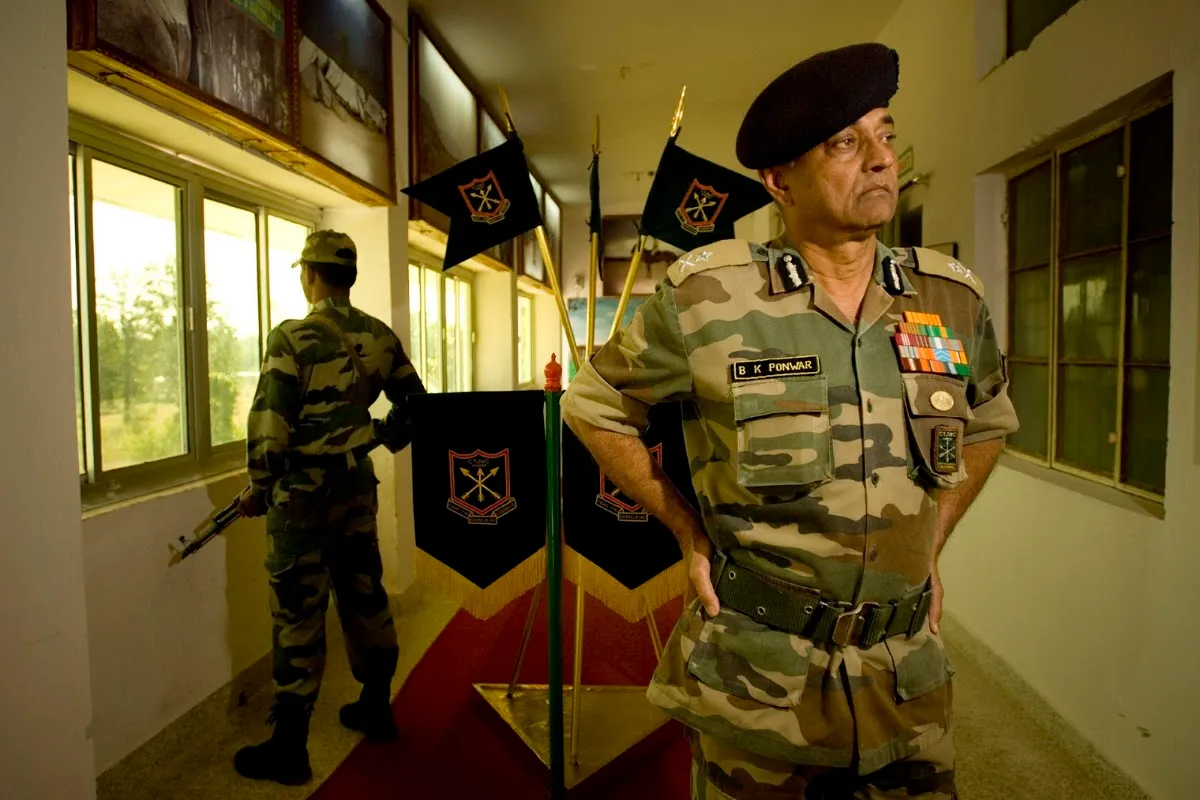
Mhow/Indore (Madhya Pradesh), July 29–30, 2026: Brigadier Basant Kumar Ponwar (Retd), a decorated veteran of the 1971 Indo-Pak War and the pioneering force behind India’s modern jungle warfare doctrine against Left Wing Extremism, passed away at the age of 77 at his parental home in Mhow, Indore district, Madhya Pradesh. His family confirmed the news on Wednesday.





Ponwar, widely regarded as the architect of contemporary counter-guerrilla training that transformed the fight against Maoist insurgency in the forests of Bastar and beyond, is survived by his mother, Devika Ponwar, and two sons, both serving officers in the Indian Army.
Born on March 3, 1949, in Indore, Ponwar was commissioned into the 1st Battalion of the Maratha Light Infantry (1 MLI) in December 1969. Within two years, the young officer found himself in the thick of the 1971 Bangladesh Liberation War. Serving under the 95 Mountain Brigade, he took part in cross-border operations, led ambushes alongside Mukti Bahini fighters, and conducted raids against Pakistani positions in Kamalpur and Bakshiganj. He later served as a key link officer during the historic Tangail paradrop and played a vital role in the rapid advance toward Dhaka.
Over a distinguished 36-year career in the Indian Army, Ponwar commanded 1 MLI and later served as Commandant of the Counter Insurgency and Jungle Warfare School (CIJWS) at Vairengte in Mizoram. During his tenure at the premier institution, he oversaw the inaugural Indo-US joint exercise Yudh Abhyas in 2004. For his exceptional service, he was awarded the Ati Vishisht Seva Medal (AVSM) and the Vishisht Seva Medal (VSM). His operational experience spanned multiple counter-insurgency theatres, including Nagaland, Punjab, Tripura, and the Bastar region of Chhattisgarh.
After retiring from the Army, Ponwar was appointed Inspector General of Police by the Chhattisgarh government to apply his specialised knowledge against the escalating Maoist threat. In August 2005, he founded the Counter Terrorism and Jungle Warfare College (CTJWC) in Kanker, North Bastar. What began with a small team of nine Army-experienced officers and NCOs, and was built in just four-and-a-half months using earthmovers for firing ranges and endurance tracks, grew into one of the most consequential training institutions in India’s internal security apparatus.
Guided by his signature motto — “Fight the guerrilla like a guerrilla” — Ponwar directed the college for 18 years. Under his leadership, the institution trained more than 37,000 personnel drawn from state police forces of Maoist-affected states and central paramilitary organisations including the CRPF, BSF, ITBP, and SSB. The training emphasised realistic jungle craft, small-team tactics, endurance, and the ability to take the fight into the dense forests that had long been Maoist strongholds.
The impact was transformative. Security forces that had earlier been vulnerable or reluctant to operate deep in Naxal-dominated terrain began establishing company operating bases in a grid pattern, pushing into previously inaccessible areas, and steadily reclaiming space. The approach helped shift the campaign from containment to progressive dismantling of Left Wing Extremism’s influence, contributing to a sharp reduction in affected districts over the years.
Former Chhattisgarh Chief Minister Raman Singh paid tribute, stating that Ponwar’s “historic contribution in making our soldiers proficient in jungle warfare and thereby strengthening the security forces will forever remain unforgettable. His departure is an irreparable loss for the state and the country.” Chhattisgarh Police described his courage, leadership, and service in the struggle against Naxalism as an enduring inspiration, noting that his contribution to strengthening the state’s security system remains unforgettable. Condolences also came from Chief Minister Vishnu Deo Sai and across security and veteran circles.
Ponwar’s life bridged conventional war and the long, grinding campaigns of internal security. From the battlefields of 1971 to the dense forests of Bastar, he combined battlefield experience with institutional vision. The Counter Terrorism and Jungle Warfare College in Kanker stands as his most tangible legacy — an institution that professionalised police and paramilitary responses to guerrilla warfare and helped tilt the balance against one of India’s most persistent internal security challenges.
India has lost a soldier-scholar and institution-builder whose quiet, determined work over five decades left a lasting imprint on the nation’s ability to fight in the jungles.