
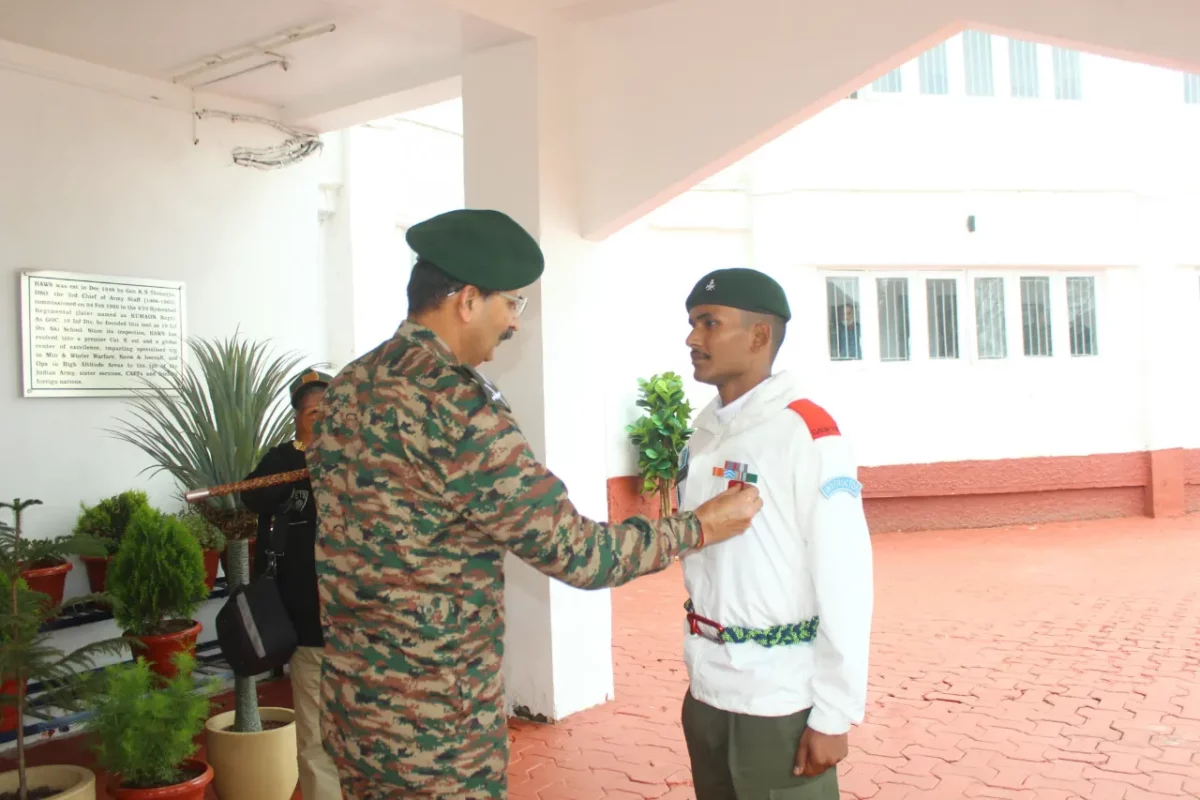
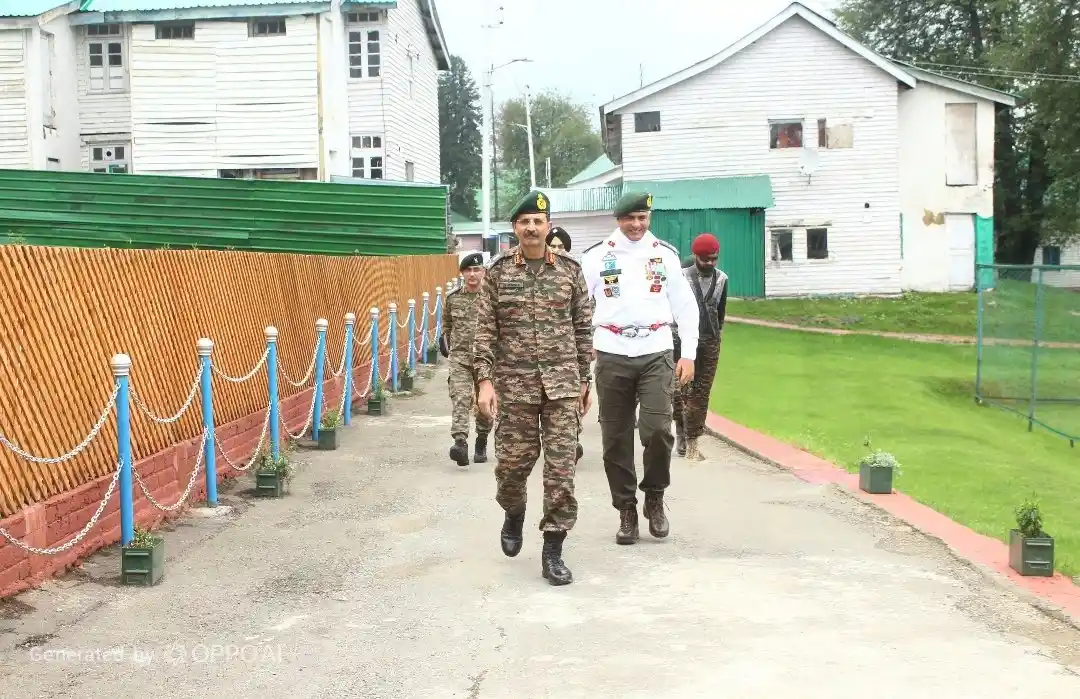
Lieutenant General Devendra Sharma, PVSM, AVSM, SM, General Officer Commanding-in-Chief (GOC-in-C), Army Training Command (ARTRAC), visited the High Altitude Warfare School (HAWS) at Gulmarg on 29 July 2026 to review the institution’s training standards, operational preparedness and ongoing efforts to modernise high-altitude warfare training. During the visit, the Army Commander praised the school’s continued pursuit of excellence in military training and recognised its significant contribution to operational readiness and emergency rescue operations in challenging mountainous terrain.




The High Altitude Warfare School, widely regarded as one of the world’s premier institutions for mountain and high-altitude warfare training, plays a critical role in preparing Indian Army personnel to operate effectively in some of the most inhospitable environments. Located in the Kashmir Valley, HAWS has earned an international reputation for imparting specialised training in mountain warfare, snowcraft, avalanche survival, winter operations and specialised rescue techniques to Indian and friendly foreign military personnel.
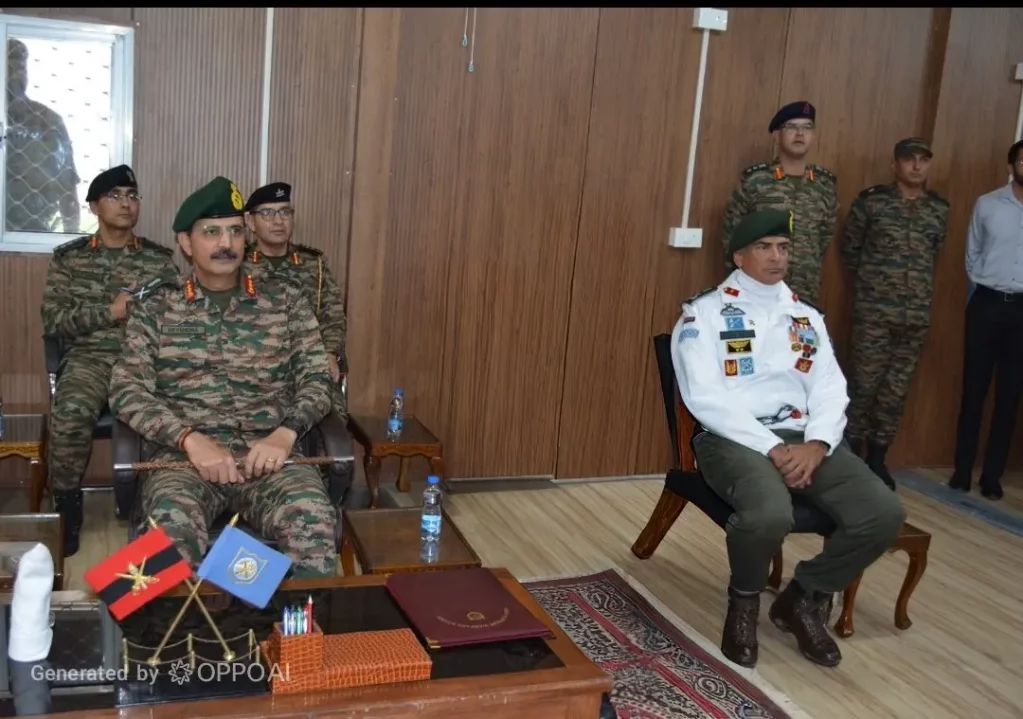
During his visit, Lt Gen Devendra Sharma received a comprehensive briefing on the progressive training methodologies that have been incorporated into the institution’s curriculum. Senior officers apprised the Army Commander of the initiatives undertaken to continuously update training modules in line with emerging operational requirements, evolving battlefield technologies and the changing character of warfare in high-altitude regions.
The briefing also highlighted the school’s focus on integrating modern operational concepts, advanced instructional techniques and realistic field exercises into its training framework. By continually refining its curriculum, HAWS seeks to ensure that soldiers remain prepared to tackle both conventional military operations and complex contingencies in mountainous terrain under extreme weather conditions.
Reviewing the institution’s operational preparedness, the Army Commander appreciated the sustained efforts being made to align training with the evolving operational environment. He noted that future conflicts are likely to demand greater adaptability, technological proficiency and rapid decision-making, particularly in difficult terrain where logistics, weather and geography significantly influence military operations.
Lt Gen Devendra Sharma commended the High Altitude Warfare School for proactively integrating contemporary operational concepts into its training programmes, ensuring that officers and soldiers are equipped with the knowledge and skills necessary to meet future battlefield challenges. He observed that realistic, mission-oriented training remains essential for maintaining the Indian Army’s operational edge in high-altitude environments.
The Army Commander also reviewed the ongoing infrastructure development projects aimed at further enhancing the institution’s training capabilities. The modernisation initiatives are intended to provide improved facilities for trainees and instructors while supporting increasingly sophisticated training methodologies. Strengthening infrastructure at HAWS is expected to further reinforce its position as a globally recognised centre of excellence in mountain warfare training.
A significant highlight of the visit was Lt Gen Devendra Sharma’s appreciation of the school’s exceptional response during the recent Gondola crisis. He commended the instructors and personnel of HAWS for executing swift, coordinated and safe rescue operations under extremely challenging circumstances, reflecting the institution’s high standards of professionalism, preparedness and operational capability.
The successful rescue efforts during the Gondola incident demonstrated the practical value of the specialised training imparted at the school. Operating in rugged mountainous terrain demands exceptional physical endurance, technical expertise and precise coordination, qualities that have long defined the High Altitude Warfare School and its instructors.
Recognising acts of individual courage and professionalism, the Army Commander felicitated one of the instructors for his commendable role during Operation MANDU. The honour acknowledged the instructor’s outstanding contribution during the operation and reflected the Indian Army’s tradition of recognising personnel who display exceptional dedication, leadership and operational excellence in the execution of their duties.
The felicitation underscored the importance of individual initiative and professionalism in military operations, particularly in high-risk environments where specialised skills and timely decision-making can prove decisive. Such recognition also serves as an inspiration for instructors and trainees alike, reinforcing the values of courage, commitment and selfless service.
The visit reaffirmed the Indian Army’s continued emphasis on maintaining world-class standards in specialised military training. As the Army adapts to emerging security challenges and evolving operational scenarios, institutions such as the High Altitude Warfare School remain central to developing highly skilled personnel capable of operating effectively in extreme environments.
By combining advanced training methodologies, modern infrastructure and real-world operational experience, HAWS continues to play a vital role in strengthening the Indian Army’s capability to conduct operations across mountainous and high-altitude regions. The Army Commander’s visit highlighted both the institution’s legacy of excellence and its ongoing transformation to meet the demands of future warfare, ensuring that Indian soldiers remain among the best-trained mountain warriors in the world.