

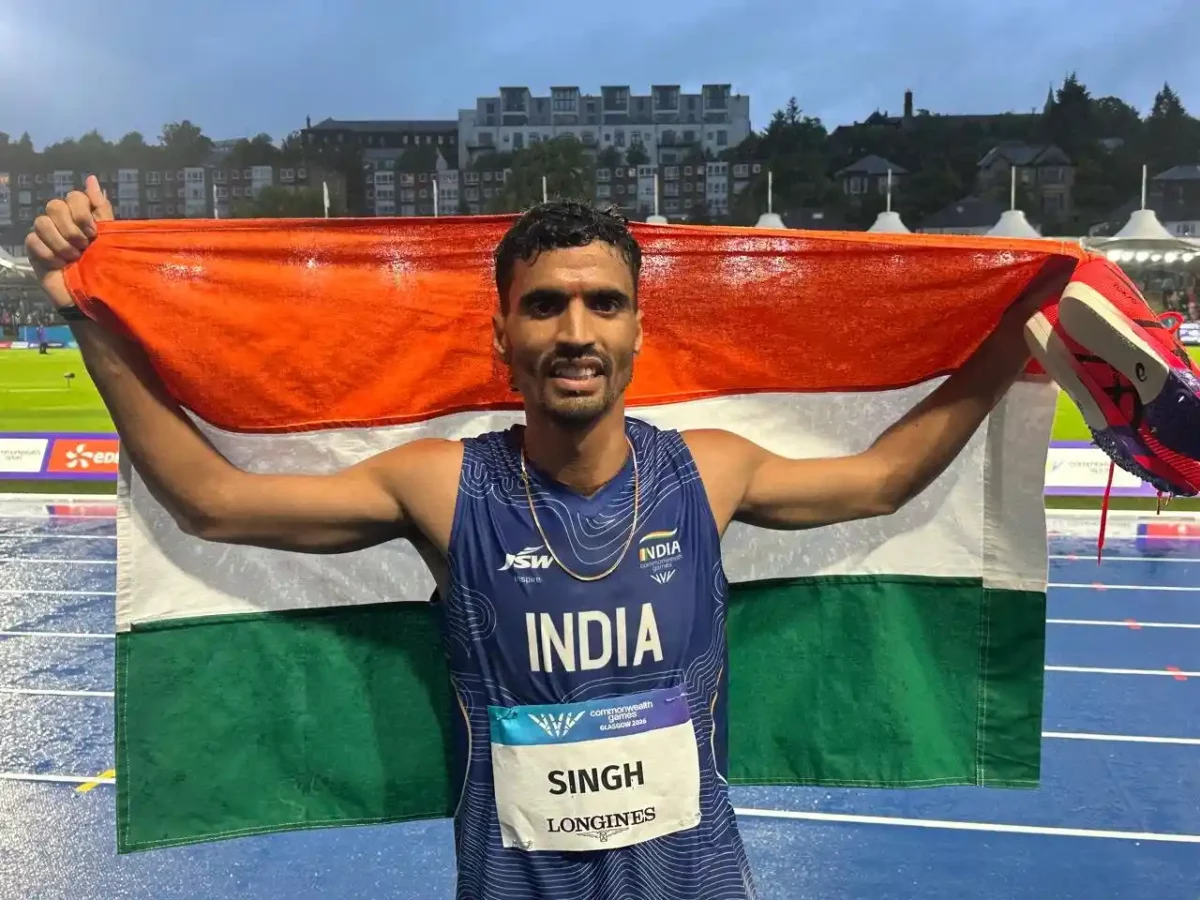
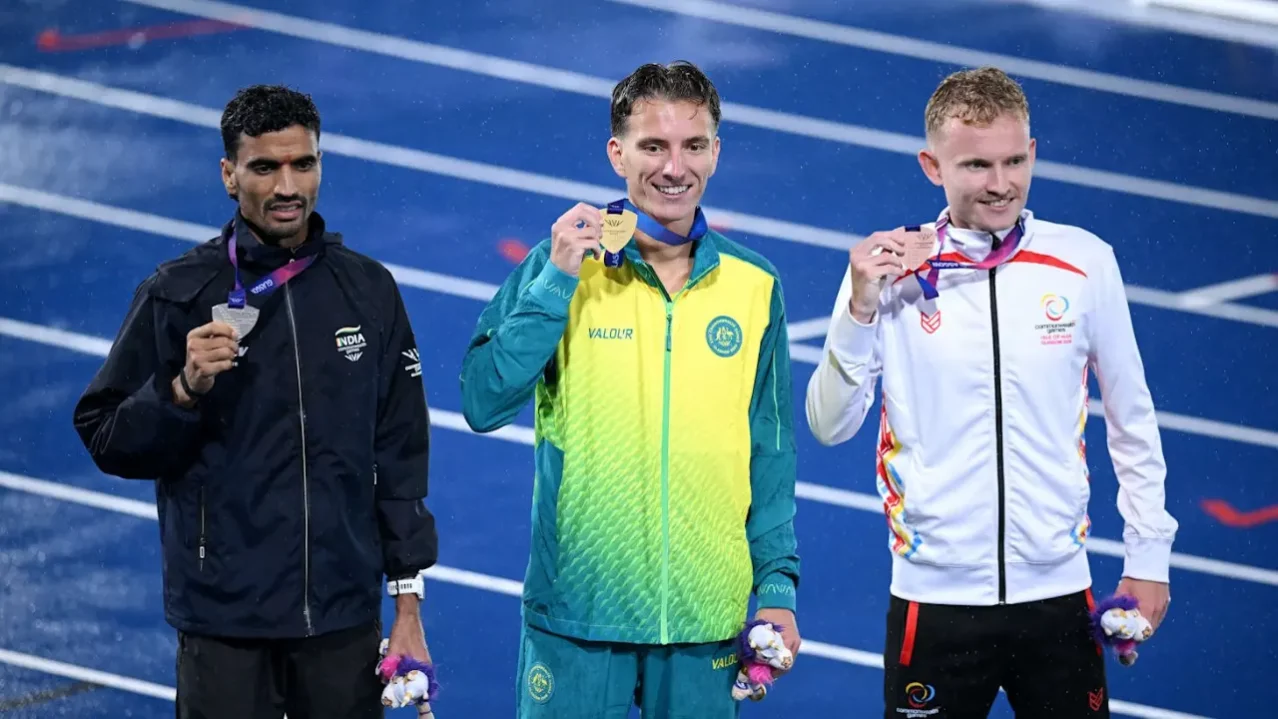
Naib Subedar Gulveer Singh etched his name into the history books by becoming the first Indian athlete to win a medal in the men’s 10,000m event at the Commonwealth Games. Representing India at the 2026 Commonwealth Games in Glasgow, Scotland, the Indian Army athlete secured the silver medal after producing a remarkable performance that underlined his emergence as one of Asia’s finest distance runners.





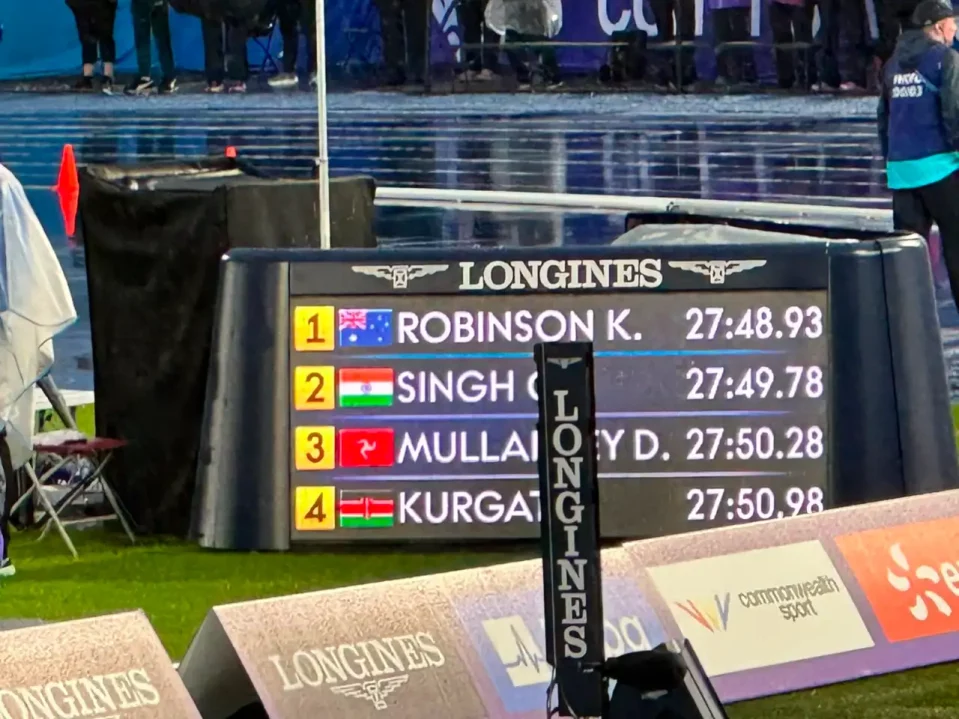
The 28-year-old clocked an impressive time of 27 minutes 49.78 seconds to finish second in a highly competitive field. Australia’s Ky Robinson claimed the gold medal with a timing of 27:44.07, while Gulveer’s historic silver ensured that India earned its maiden Commonwealth Games medal in the men’s 10,000m event.
The achievement marks another milestone in Gulveer Singh’s inspiring journey from rural Uttar Pradesh to becoming one of the country’s most accomplished long-distance runners. His success also highlights the significant role played by the Indian Army in nurturing sporting talent through its structured training programmes and world-class sporting infrastructure.
Born on June 1, 1998, in Atrauli, Aligarh district of Uttar Pradesh, Naib Subedar Gulveer Singh comes from a humble farming family. Growing up in rural India, he had little exposure to international sporting events such as the Commonwealth Games or the Asian Games. He has often recalled that during his childhood, very few people in his village were aware of such prestigious international competitions, making his rise to the global athletics stage even more extraordinary.
His life took a decisive turn in 2018 when he joined the Indian Army through the sports quota. He was inducted into The Grenadiers Regiment of the Indian Army under the Panther Division, where his natural endurance and athletic talent were nurtured through structured military training and world-class sports infrastructure. The Army provided him with the platform to transform his potential into elite competitive performance while serving the nation in uniform.
Speaking about his early years in athletics, Gulveer has acknowledged that he truly understood competitive distance running only after joining the Army. He underwent specialised training at the Army Sports Institute before moving to the Sports Authority of India (SAI) National Camp, where he received advanced coaching and exposure to elite competition.
The disciplined environment of the Indian Army played a pivotal role in shaping Gulveer into an international athlete. Alongside fulfilling his military responsibilities, he steadily developed into one of India’s leading long-distance runners and was subsequently promoted to the rank of Naib Subedar in recognition of his outstanding sporting achievements and dedicated service.
Gulveer’s breakthrough at the senior level came in 2022 during the Federation Cup in Calicut, where he won the bronze medal in the men’s 10,000m. The podium finish marked the beginning of a rapid rise through India’s athletics ranks and established him as a serious contender in international competitions.
In 2023, he announced himself on the continental stage by winning bronze in the men’s 5,000m at the Asian Athletics Championships in Bangkok. Later that year, he added another major international medal by securing bronze in the men’s 10,000m at the Hangzhou Asian Games, further cementing his reputation as India’s leading distance runner.
Seeking to compete with the world’s best, Gulveer shifted his training base to Colorado Springs in the United States in 2024 under renowned American coach Scott Simmons. The move proved transformational, helping him improve both technically and physically while consistently competing against elite international athletes.
His performances soon began rewriting Indian athletics history. In March 2024, Gulveer broke the 16-year-old national record in the men’s 10,000m at The TEN meet in California, clocking 27:41.81 to surpass the previous benchmark set by former national record-holder Surender Singh. Later that year, he bettered his own national record in Japan by recording an outstanding time of 27:14.88, placing him among Asia’s all-time top distance runners.
The 2025 season turned out to be the finest of his career. At the Asian Athletics Championships in Gumi, South Korea, Gulveer completed a memorable distance double by winning gold medals in both the men’s 5,000m and 10,000m events. His victory in the 5,000m came with a championship record, underlining his growing dominance in Asian athletics.
He also represented India at the 2025 World Athletics Championships in Tokyo, narrowly missing qualification for the 5,000m final after finishing just 0.19 seconds outside the qualifying mark. Despite missing the final, his performance demonstrated that he could compete with the world’s elite runners.
In 2026, Gulveer continued his upward trajectory by becoming the first Indian athlete to complete a half-marathon in under one hour, finishing third at the New York City Half Marathon with a remarkable timing of 59 minutes and 42 seconds. The achievement earned him global recognition and propelled him into the top ten of the World Athletics men’s 10,000m rankings.
His historic Commonwealth Games silver in Glasgow represents the culmination of years of relentless hard work, disciplined military life and world-class training. By becoming the first Indian to win a Commonwealth Games medal in the men’s 10,000m, Naib Subedar Gulveer Singh has opened a new chapter for Indian long-distance running and inspired a generation of aspiring athletes.
The achievement is equally significant for the Indian Army and The Grenadiers Regiment of the Panther Division, which has a proud tradition of producing outstanding soldiers and sportspersons. Naib Subedar Gulveer Singh’s journey from a young recruit in The Grenadiers Regiment to a Commonwealth Games medallist reflects the Army’s enduring commitment to nurturing sporting excellence alongside military professionalism.
As India continues to emerge as a force in global athletics, Naib Subedar Gulveer Singh’s remarkable rise stands as a testament to perseverance, disciplined training and unwavering determination. His historic silver medal is not only a personal triumph but also a landmark achievement for Indian athletics—one that is expected to inspire countless young runners and aspiring soldiers to pursue excellence on the international stage while serving the nation with pride.