Dras, Ladakh, July 26, 2026: Defence Minister Rajnath Singh asserted that the success of Operation Sindoor has demonstrated India’s capability to respond to Pakistan’s every misadventure with overwhelming force, reiterating that any future dialogue with Pakistan would focus solely on Pakistan-occupied Kashmir (PoK), which he described as an integral part of India under illegal occupation.





Addressing the nation during the 27th Kargil Vijay Diwas commemorations at the Kargil War Memorial in Dras, the Defence Minister said every attempt to undermine India’s sovereignty would be met with the same decisive response that the Indian Armed Forces delivered during Operation Sindoor.
“The success of Operation Sindoor is proof that India possesses the capability to respond to Pakistan’s every misadventure with a severity far beyond its imagination,” Rajnath Singh said, adding that India no longer distinguishes between terrorists and the governments that sponsor and protect them.
He accused Pakistan of making terrorism an instrument of state policy, stating that the country’s military not only shelters terrorist organisations but also works alongside them. Referring to Operation Sindoor, he said India had made it clear that terrorists and their state sponsors would be treated alike.
Drawing a sharp contrast between the developmental trajectories of the two nations over the past 27 years since the Kargil War, the Defence Minister said India is advancing through innovation and technology while Pakistan continues to promote terrorism and infiltration.
He remarked that while India is designing semiconductor chips, Pakistan is designing terror; while India is building a thriving start-up ecosystem, Pakistan is nurturing a terror ecosystem. He added that India is manufacturing semiconductors, launching satellites, developing data centres and expanding digital payment systems through UPI, whereas Pakistan continues to invest in proxy warfare, sleeper cells, radicalisation networks and cross-border terrorism.
Rajnath Singh reaffirmed that the Government has given the Armed Forces complete operational freedom to respond decisively to any threat, expressing confidence that no adversary would dare cast an aggressive eye on India while its soldiers remain vigilant along the nation’s borders.
Paying tribute to the brave soldiers who laid down their lives during the 1999 Kargil War, the Defence Minister remembered heroes including Captain Vikram Batra, PVC, and Captain Manoj Kumar Pandey, PVC, describing Kargil Vijay Diwas as a source of inspiration for India’s youth. He said the occasion reminds every citizen that sacrifice and service form the foundation of a strong nation.
Highlighting the symbolism of the Kargil War Memorial, Rajnath Singh noted that the names inscribed on its walls represent every region of India, making it a powerful reminder of the country’s unity despite its diversity.
Referring to ongoing global conflicts, including those in West Asia and between Russia and Ukraine, he said modern wars test not only military capabilities but also the resilience and determination of entire nations. He urged every Indian citizen to cultivate a “soldier-like consciousness”, emphasising that while not everyone needs to wear a uniform, every citizen should remain mentally, morally and physically prepared to contribute to national defence whenever required.
The Defence Minister also underlined that the vision of Viksit Bharat@2047 extends far beyond economic growth. According to him, it represents a commitment to strategic strength, cultural pride, social harmony and national security, all of which require the same spirit of dedication displayed by the heroes of the Kargil War.
Reaffirming the Government’s commitment to national security, Rajnath Singh said border infrastructure is being continuously strengthened while the Armed Forces are being modernised to meet future operational requirements. He noted that the lessons of the Kargil War continue to guide India’s defence preparedness.
Invoking Captain Vikram Batra’s iconic slogan, “Yeh Dil Maange More,” the Defence Minister said the phrase now reflects India’s determination to achieve complete self-reliance in defence manufacturing. He highlighted that when the present government assumed office, nearly 65 to 70 per cent of India’s defence equipment was imported, whereas today approximately 65 per cent of defence equipment is manufactured domestically.
He listed several indigenous defence platforms strengthening the Armed Forces, including the Akash-Teer air defence control system, Akash missile, INS Vikrant, LCA Tejas, LCH Prachand, ALH Dhruv, Arjun Main Battle Tank, Pinaka multi-barrel rocket launcher, Astra air-to-air missile, and advanced drone and counter-drone systems. However, he stressed that India must continue developing next-generation fighter aircraft, submarines, missiles and other advanced defence technologies within the country.
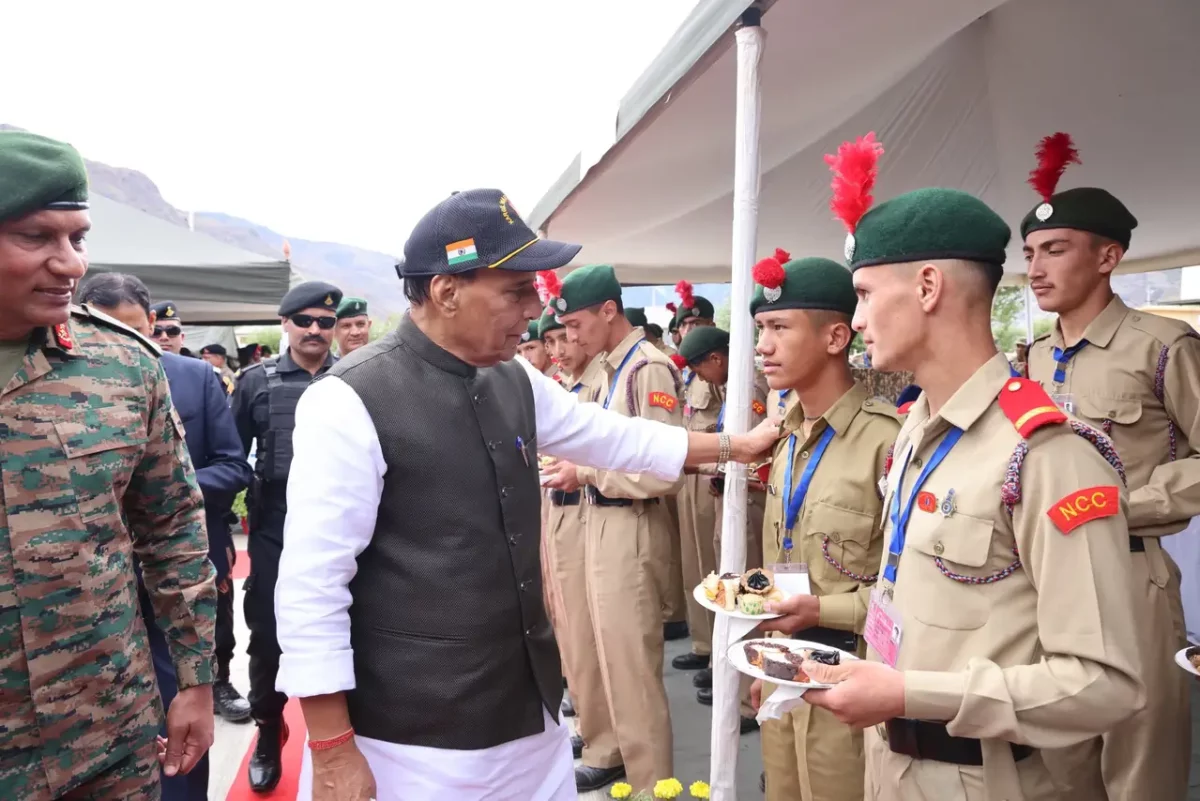
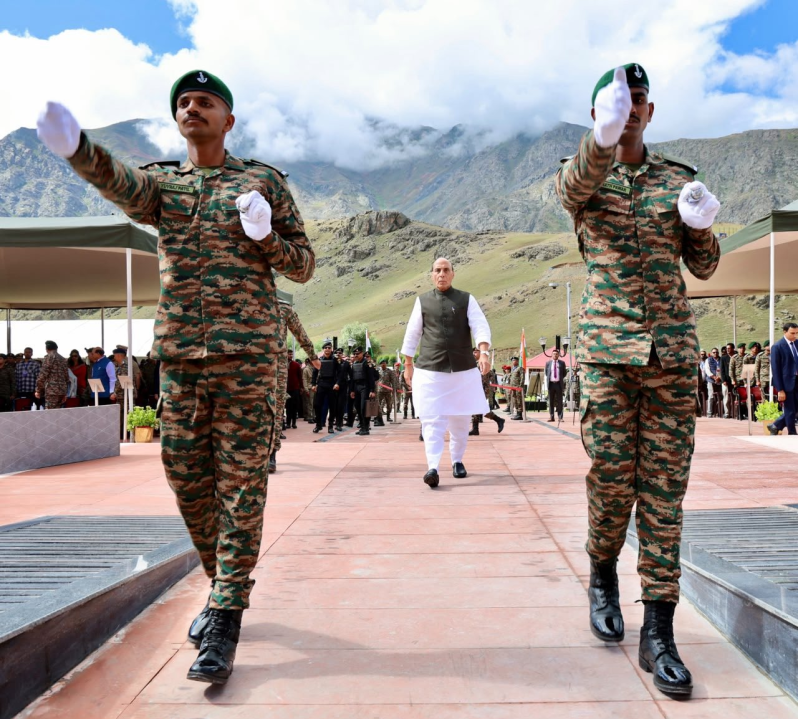
Earlier in the day, Rajnath Singh laid a wreath at the Kargil War Memorial and observed a moment of silence in honour of the soldiers who made the supreme sacrifice during Operation Vijay in 1999. He was joined by Lieutenant Governor of Ladakh Vinai Kumar Saxena, Chief of the Army Staff General Dhiraj Seth, General Officer Commanding-in-Chief Northern Command Lieutenant General Pratik Sharma, GOC 14 Corps Lieutenant General Madanraj Pande, and GOC 8 Mountain Division Major General A.P. Singh, along with senior military commanders, veterans, gallantry awardees, Veer Naris, next of kin of fallen soldiers and civil dignitaries.
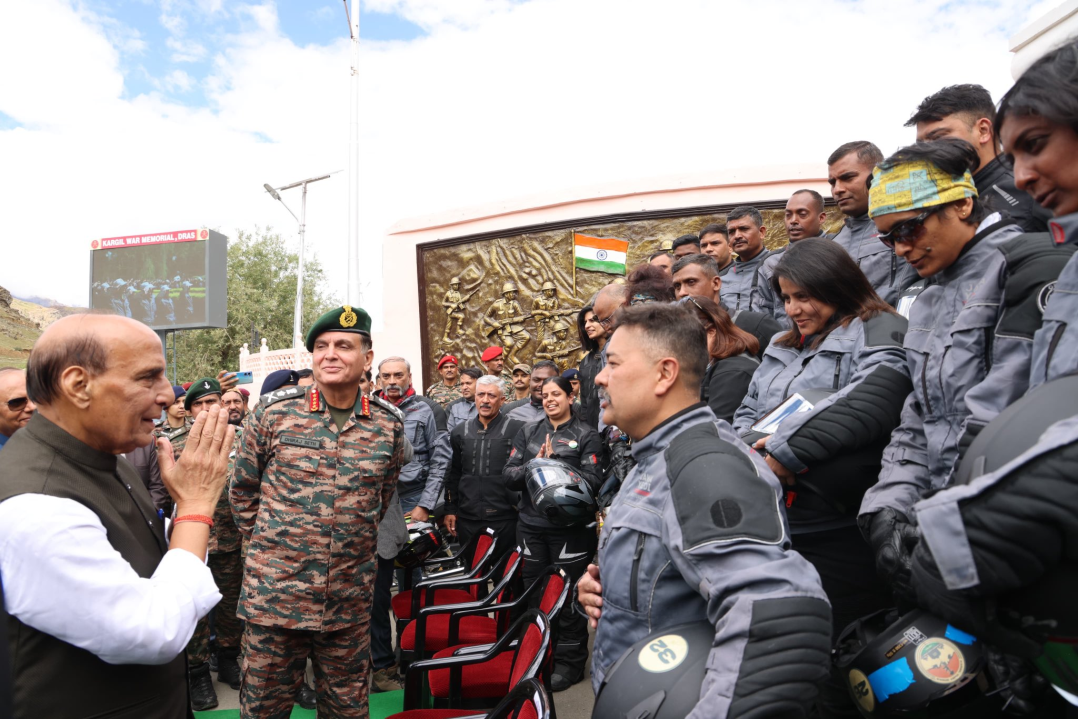
As part of the commemorative events, the Defence Minister signed the Visitors’ Book, witnessed “Gaurav Gatha”, a presentation recounting the courage and determination of Indian soldiers during Operation Vijay, inaugurated a Virtual Walkthrough Portal to provide wider public access to the history of the Kargil War, and paid homage at the Hut of Remembrance and Veer Bhoomi. He also interacted with soldiers, veterans and families before flagging in the Shaurya Vijay Yatra, a motorcycle rally organised to mark Kargil Vijay Diwas that had commenced from the National War Memorial in New Delhi on July 14, 2026.
Meanwhile, in New Delhi, Minister of State for Defence Sanjay Seth laid a wreath at the National War Memorial. He was joined by Chief of Defence Staff General N.S. Raja Subramani, Chief of the Air Staff Air Chief Marshal A.P. Singh, Chief of the Naval Staff Admiral Krishna Swaminathan, Defence Secretary Rajesh Kumar Singh, and Vice Chief of the Army Staff Lieutenant General Sandeep Jain, who also paid tribute to the brave soldiers who sacrificed their lives in the service of the nation.