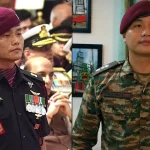

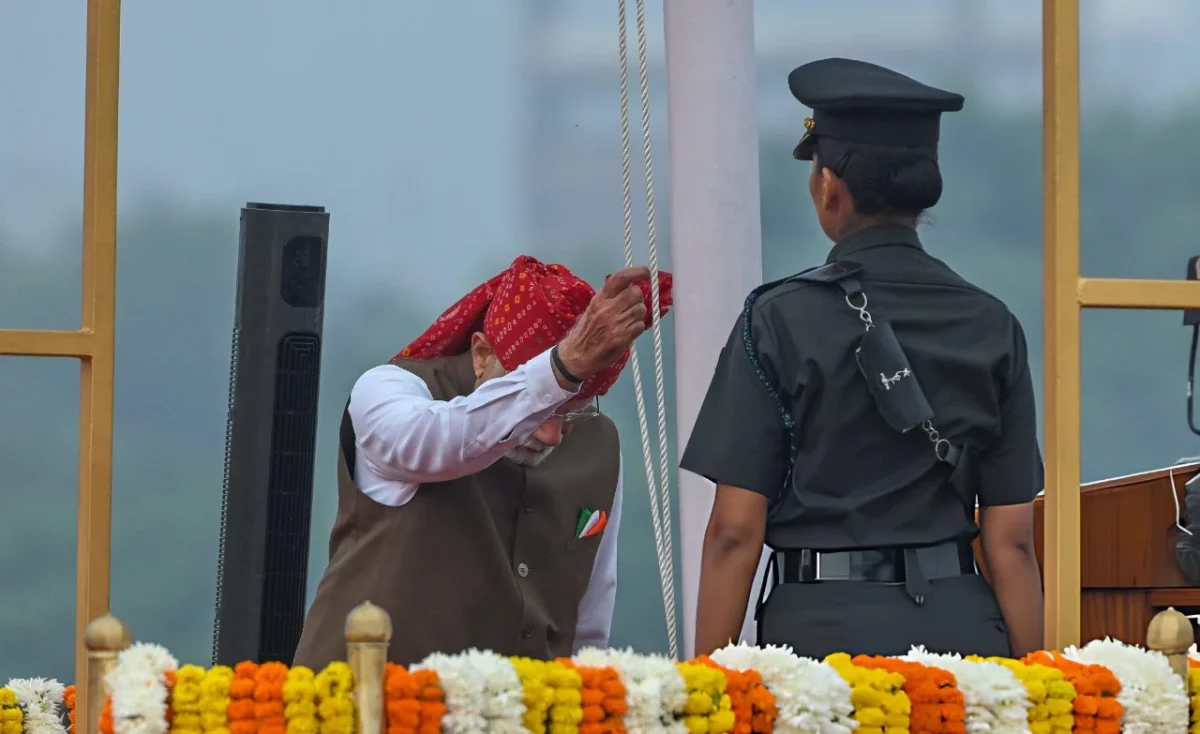
Captain Ritika Khareta of the Indian Army’s Corps of Signals came into the national spotlight on 15 August 2026 after assisting Prime Minister Narendra Modi during the ceremonial hoisting of the National Flag at the Red Fort on India’s 80th Independence Day.
Standing beside the Prime Minister on the historic ramparts, Captain Khareta carried out the ceremonial responsibility with precision and composure as the Tricolour was unfurled before thousands of guests and millions watching across the country. The flag-hoisting was synchronised with the traditional 21-gun salute using indigenous 105 mm Light Field Guns.
There was some initial confusion over the identity of the officer performing the duty. The Ministry of Defence’s official pre-event briefing had named Captain Sonia Singh Chauhan as the officer who would assist the Prime Minister, and several early media reports consequently identified her as the officer seen during the ceremony.
However, subsequent reporting identified the officer who actually performed the ceremonial role alongside Prime Minister Modi as Captain Ritika Khareta. Aaj Tak, which had initially referred to Captain Sonia Singh Chauhan, later corrected its report and specifically noted that fresh information confirmed Captain Khareta as the officer involved in the flag-hoisting ceremony.
Captain Ritika Khareta is already a familiar name to followers of the Indian Army. She first attracted nationwide attention during the 76th Republic Day Parade in January 2025, when she commanded the Corps of Signals marching contingent on Kartavya Path.
Born and raised in Delhi, Captain Khareta is the daughter of a Delhi Police Sub-Inspector and a school teacher. She studied at Amity International School, Pushp Vihar, and belongs to its 2016 batch. Her upbringing in a family associated with public service played an important role in shaping her interest in uniformed services.
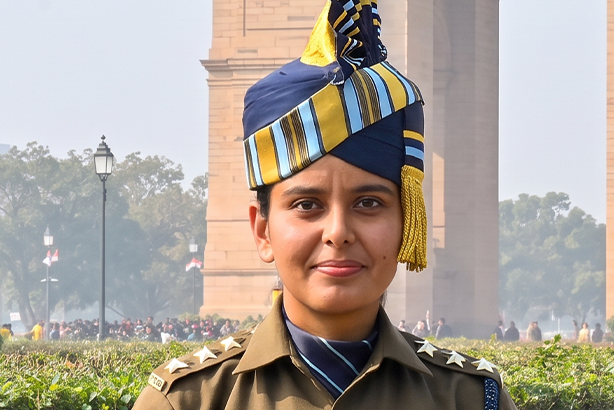
Standing approximately 180 cm tall, Captain Khareta was selected from among 12 shortlisted officers at the Signal Training Centre in Jabalpur to command the Corps of Signals contingent for the 2025 Republic Day Parade. The contingent consisted of 146 personnel, including two Junior Commissioned Officers, and she emerged as the lone woman officer commanding an Indian Army marching contingent that year.
Her selection was particularly significant because she was entrusted with leading an all-male contingent of one of the Indian Army’s most technologically important arms. The Corps of Signals is responsible for military communications, information systems and increasingly complex battlefield networks that connect formations and commanders during operations.
Speaking ahead of the 2025 Republic Day Parade, Captain Khareta described the opportunity as something she had never imagined earlier in her career. She said that the Indian Army not only welcomes women but empowers them, provided they perform to the best of their abilities.
The Republic Day experience was also deeply personal for the Delhi-born officer. Marching through the heart of the national capital carried special significance because she had grown up watching members of the police and armed forces perform ceremonial and operational duties across the same city.
Just around eighteen months later, Captain Khareta returned to another of Delhi’s most important national landmarks, this time not as the commander of a marching contingent but as an officer entrusted with a highly visible ceremonial responsibility beside the Prime Minister of India.
The 2026 Independence Day celebrations themselves were historic. The event commemorated 150 years of Vande Mataram, and for the first time the national song was formally rendered as part of the Independence Day celebrations at the Red Fort. The Ministry of Defence had announced the special addition ahead of the ceremony.
After the National Flag was hoisted, the National Flag Guard presented the Rashtriya Salute. The ceremony also included the 21-gun salute by the 1721 Field Battery (Ceremonial), while the wider celebrations highlighted the themes of “150 Years of Vande Mataram” and “Yuva Shakti for Viksit Bharat@2047”.
Captain Khareta’s appearance alongside the Prime Minister once again placed a young woman officer of the Indian Army at the centre of one of the country’s most watched national ceremonies.
Her journey is particularly inspirational for young defence aspirants because she does not come from a conventional multi-generation military background. As the daughter of a Delhi Police officer and a teacher, her career demonstrates how candidates from ordinary families can rise to highly visible positions of responsibility through merit, training and professional performance.
Her achievements also reflect the expanding responsibilities being entrusted to women officers in the Indian Army. From commanding troops on Kartavya Path to performing ceremonial responsibilities at the Red Fort, women officers are increasingly being seen in leadership and representative roles across the service.
For candidates preparing for examinations such as NDA, CDS and other entries into the Armed Forces, Captain Khareta’s career offers a powerful example of what military service can demand. Ceremonial assignments of this nature require meticulous preparation, confidence and the ability to perform flawlessly despite the enormous public attention surrounding the occasion.
The last-minute nature of the 2026 assignment makes the moment even more noteworthy. While Captain Sonia Singh Chauhan had been named in the original official programme, Captain Ritika Khareta ultimately carried out the duty during the ceremony, demonstrating the ability expected from military officers to step into an important responsibility and execute it professionally when circumstances change.
From commanding 146 soldiers of the Corps of Signals on Kartavya Path in 2025 to standing beside the Prime Minister during the National Flag ceremony at the Red Fort in 2026, Captain Ritika Khareta has already accumulated two remarkable moments in a still-young Army career.
For many young Indians watching the Independence Day ceremony, the image of Captain Ritika Khareta standing beside the Prime Minister beneath the rising Tricolour represented more than ceremonial protocol. It was also a visible reminder of a new generation of Indian Army officers being entrusted with responsibility, leadership and the honour of representing the Armed Forces on the nation’s biggest stage.