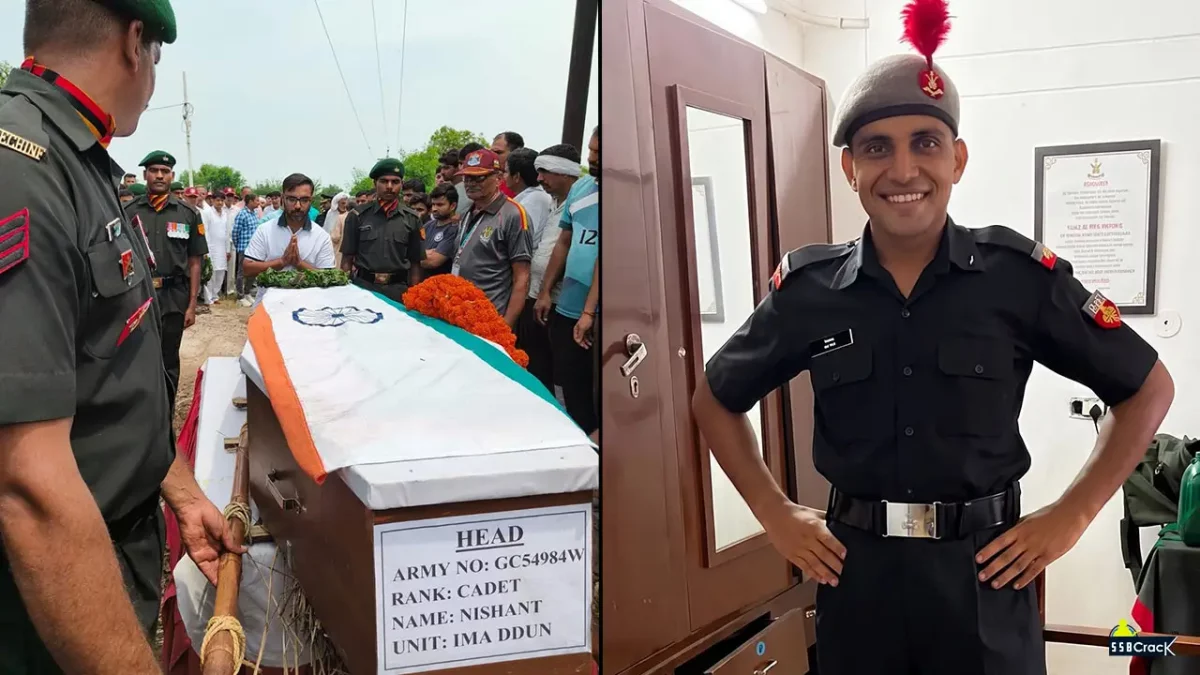
A 21-year-old Gentleman Cadet of the Indian Military Academy (IMA), Dehradun, died on August 15, 2026, days after collapsing during a physical training exercise, bringing immense grief to his family and his native Kasni village in Haryana’s Jhajjar district.





Cadet Nishant Dhankhar had joined the prestigious Indian Military Academy only about a month before the incident. He belonged to a family with a long tradition of service in the Indian Armed Forces and had himself dreamed of becoming an Army officer.
According to reports, Nishant joined the IMA as a regular entry cadet on July 10, 2026. His selection had brought immense pride to his family and village, where several members of his extended family have served or continue to serve in the Army and Indian Air Force.
The incident occurred on August 9, when Nishant was participating in a routine running exercise as part of jungle camp training. During the exercise, Nishant suddenly collapsed and became unconscious.
He was immediately taken to the Military Hospital in Dehradun for medical attention. As his condition deteriorated, he was shifted for specialised treatment to the Army Hospital Research and Referral in New Delhi. Some local reports also mentioned medical movement involving Chandigarh during the course of his treatment.
Despite intensive medical efforts, Nishant could not be saved. He died on Saturday, August 15, reportedly after suffering multiple organ failure. Available reports have cited multiple organ failure as the medical cause of death. No external injury or trauma associated with a fall has been publicly reported.
Nishant was the only son of his family. His father, Birendra Dhankhar, also known locally as Billu, had worked as a postman with the postal department. Nishant’s elder sister is serving as a Flying Officer in the Indian Air Force. One report stated that she was posted in Srinagar at the time of the incident. She travelled to be with the family following Nishant’s hospitalisation.
Military service runs deeply through the Dhankhar family. His grandfather Ram Singh had served in the Indian Army. His uncle Sunil Dhankhar is reported to be a Colonel, while another senior family member, Narendra Dhankhar, served in the Indian Air Force and retired as a Flying Officer. The family is widely regarded in the area as having maintained a military tradition spanning several generations.
Relatives and villagers recalled Nishant as a young man who had wanted to serve the country from an early age. His successful selection for officer training at the Indian Military Academy was therefore regarded as the continuation of the family’s long association with the Armed Forces.
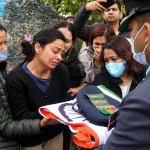
According to a family statement attributed to his uncle Satyendra Dhankhar, Nishant had been selected for the path leading to commissioning as a Lieutenant around four months before he joined the academy. After Nishant’s death, his mortal remains were brought back to Kasni village in Jhajjar district. His last rites were performed on Sunday, August 16, with full military honours.
A Guard of Honour was accorded to the young Gentleman Cadet as family members, military personnel, administrative officials and large numbers of villagers gathered to pay their final respects.
Among those reported to have attended the funeral were Badli MLA Kuldeep Vats, Naib Tehsildar Anshul, Subedar Rajesh from the District Sainik Board and senior Army personnel. People from Kasni and surrounding areas offered floral tributes and joined the grieving family during the final rites.
The death of the 21-year-old cadet has left the village in mourning, particularly because Nishant had only recently begun his journey at one of India’s premier military training institutions and was preparing for a future as a commissioned Army officer.
Nishant Dhankhar’s death has nevertheless drawn particular attention because of his young age, his brief time at the academy and the extraordinary military legacy of his family. For Kasni village, the loss is not only that of a promising young man but of an aspiring officer who had set out to carry forward a three-generation tradition of service to the nation.