

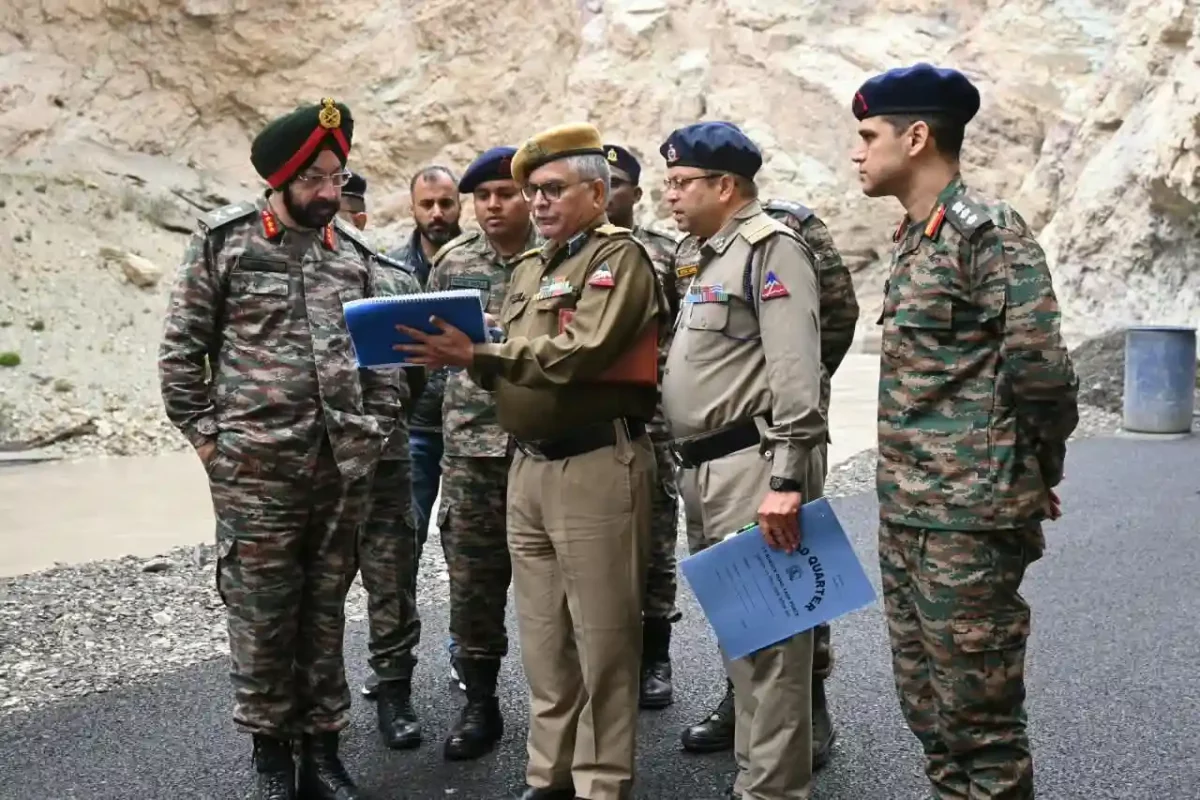
Lieutenant General Harpal Singh, AVSM, VSM, Director General Border Roads (DGBR), visited Border Roads Organisation’s Project Yojak from 18 to 20 August 2026 to review the progress of critical strategic infrastructure projects being developed in the challenging Himalayan region.





During the three-day visit, Lt Gen Harpal Singh carried out a detailed assessment of ongoing infrastructure development under Project Yojak, with particular emphasis on the strategically important Nimmu-Padam-Darcha Road and the construction of the Shinkun La Tunnel.
The visit focused on the progress of works being undertaken to improve strategic connectivity across some of the most difficult mountainous terrain in the country. These infrastructure projects are expected to significantly strengthen connectivity between Ladakh, the Zanskar region and Himachal Pradesh while providing an important alternative axis for movement towards Ladakh.
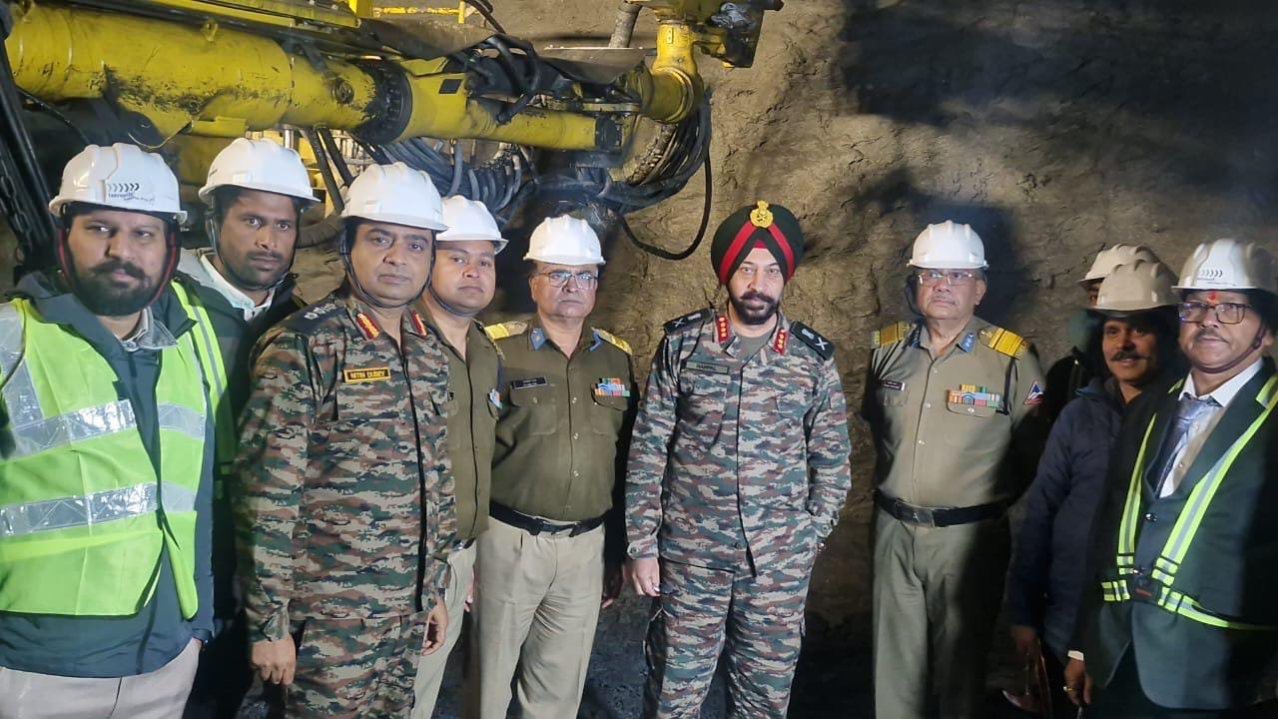
The Nimmu-Padam-Darcha Road is considered an important strategic road project connecting Nimmu in Ladakh with Padam in the Zanskar Valley and Darcha in Himachal Pradesh. The route has considerable significance because it provides another connectivity option between Ladakh and the rest of the country.
Development of the road is particularly important from the perspective of strategic mobility. Improved connectivity can facilitate faster movement of personnel, equipment and essential supplies while also strengthening the logistics network supporting formations deployed in the high-altitude region.
The road also has considerable importance for the civilian population of remote areas along the route. Better road connectivity can improve access to healthcare, education, markets and essential services while supporting tourism and economic opportunities in regions that have historically remained isolated for significant periods because of difficult terrain and severe weather.
Another major focus of the DGBR’s visit was the Shinkun La Tunnel, one of the most ambitious high-altitude infrastructure projects being undertaken in the region. The tunnel forms an important component of efforts to establish reliable connectivity along the Nimmu-Padam-Darcha axis.
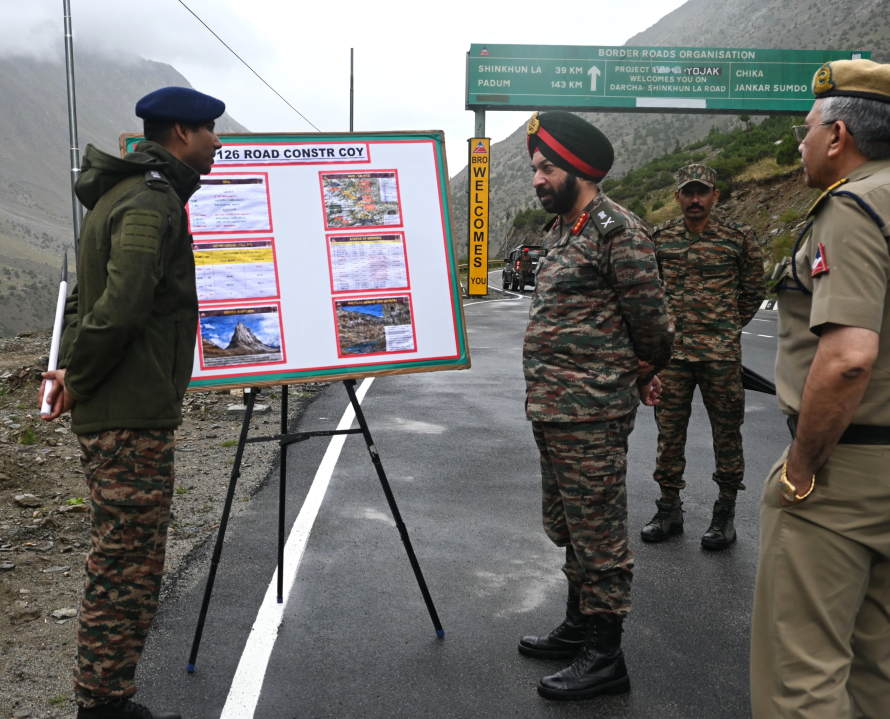
The Shinkun La area experiences extremely challenging climatic conditions, including heavy snowfall and prolonged winters that can restrict surface movement. The tunnel is intended to overcome these limitations and improve the reliability of connectivity through the strategically important route.
Construction at such extreme altitude presents significant engineering and logistical challenges. Personnel and machinery have to operate in an environment characterised by low oxygen levels, freezing temperatures, difficult geological conditions and limited working seasons. Transporting heavy construction equipment and materials to remote project sites itself requires extensive planning and logistical coordination.
During the visit, Lt Gen Harpal Singh reviewed the progress achieved by Project Yojak and assessed the efforts being undertaken to overcome these operational and engineering challenges.
The Director General Border Roads also interacted with BRO Karmayogis working on the projects. He appreciated their commitment, dedication and sustained efforts towards strengthening strategic connectivity despite operating in some of the country’s most demanding terrain and weather conditions.
BRO personnel deployed on such projects frequently work in remote areas where construction activities have to continue under difficult climatic and geographical conditions. Their work includes road construction and maintenance, tunnelling, bridge construction, snow clearance and development of other infrastructure essential for maintaining connectivity in border regions.
The Nimmu-Padam-Darcha axis has assumed considerable strategic importance as India continues to expand and strengthen its border infrastructure. Unlike some of the traditional approaches to Ladakh, the route provides an additional connectivity corridor and contributes to greater redundancy in the overall transportation network.
Multiple approach routes are important from a strategic perspective because they provide greater flexibility for the movement of military logistics and reduce dependence on individual transportation corridors. This becomes particularly significant during emergencies, natural disasters or operational contingencies.
The development of the Shinkun La Tunnel is expected to further enhance the utility of this axis by addressing one of the major geographical obstacles along the route. Reliable connectivity through the pass would considerably improve movement between the regions connected by the Nimmu-Padam-Darcha Road.
Project Yojak has been entrusted with developing strategically important infrastructure in this difficult region. Its activities form part of the broader effort by the Border Roads Organisation to accelerate infrastructure development across India’s northern and northeastern border areas.
Over the years, the BRO has played a critical role in constructing and maintaining roads, bridges, tunnels and airfields in remote and strategically sensitive areas. Many of these projects are located at extreme altitudes where civilian construction agencies would face significant logistical and environmental challenges.
The organisation’s infrastructure projects serve a dual purpose. While they provide strategically important connectivity for the Armed Forces, they also contribute to the socio-economic development of remote border communities by reducing travel times and improving access to essential services.
Lt Gen Harpal Singh’s visit to Project Yojak from 18 to 20 August reflects the continuing emphasis being placed on timely completion and effective execution of major strategic infrastructure projects.
His review of the Nimmu-Padam-Darcha Road and the Shinkun La Tunnel also highlights the importance of these projects within India’s expanding border connectivity network. Once fully developed, the infrastructure is expected to strengthen mobility and logistical resilience while improving connectivity for remote communities across the region.
The DGBR’s interaction with BRO Karmayogis and appreciation of their efforts recognised the personnel working behind these projects under exceptionally demanding conditions. Their sustained work remains central to the BRO’s mission of providing dependable connectivity across India’s most challenging and strategically important terrain.