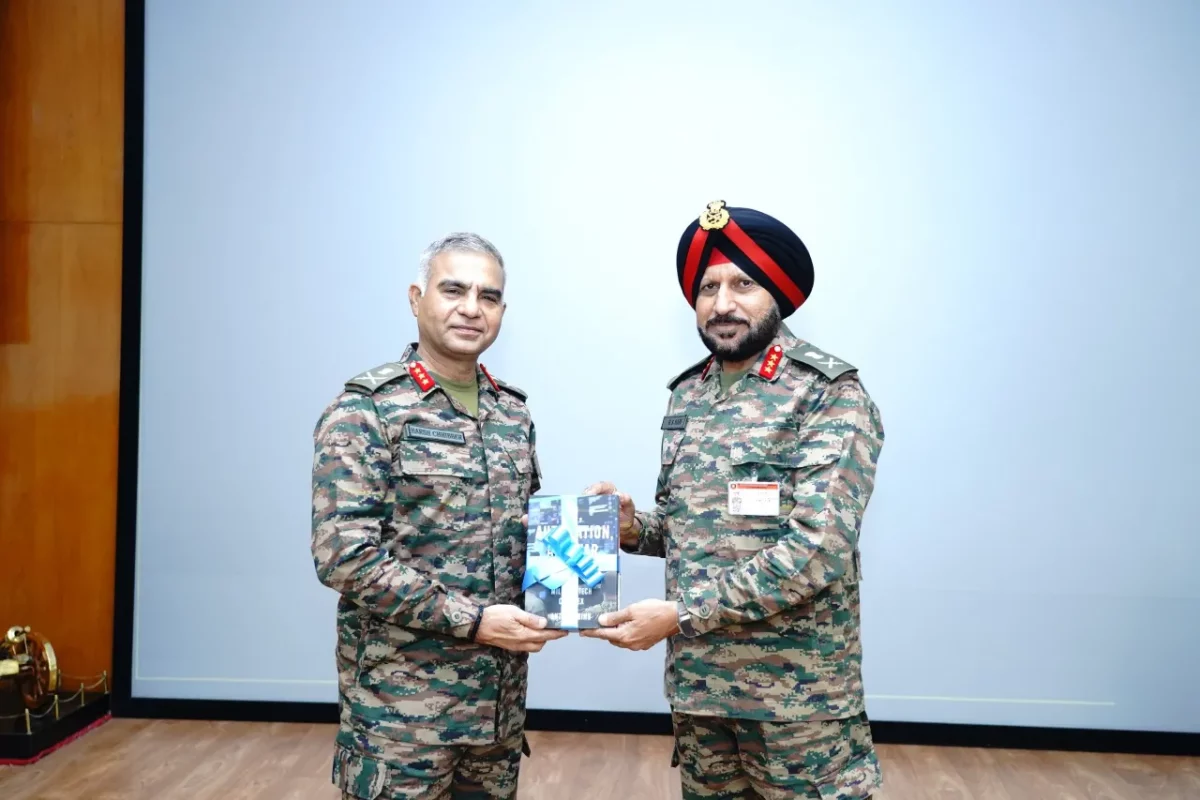
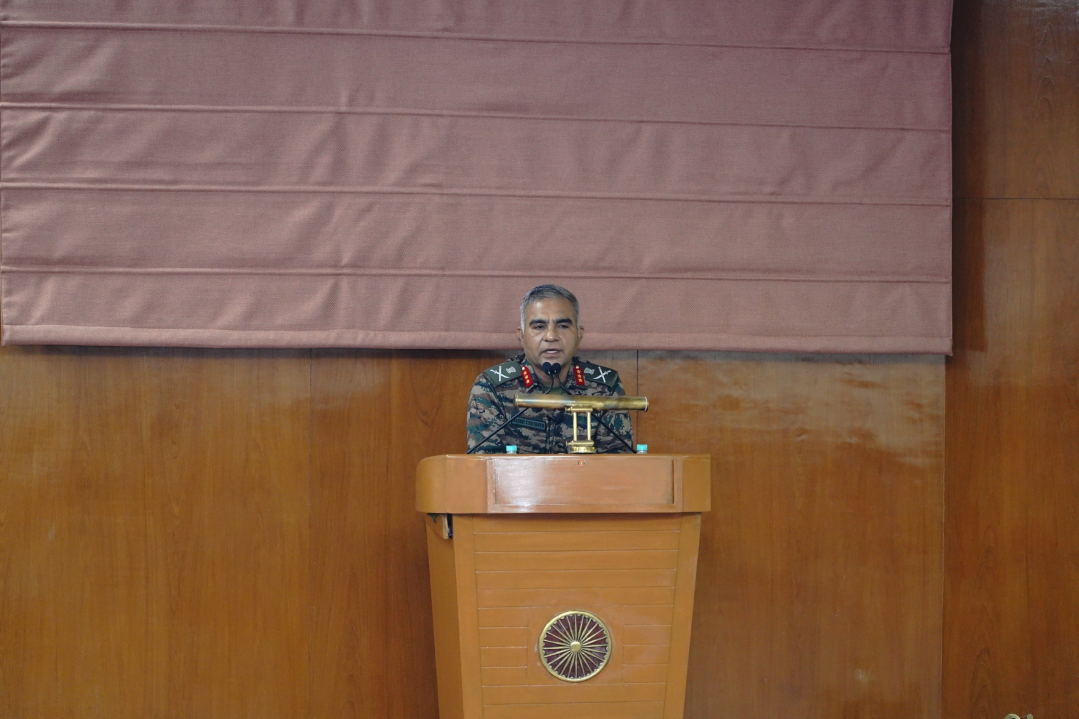
Lieutenant General Harsh Chhibber, AVSM, VSM, PhD, Director General Information Systems, delivered a lecture at the Indian Army’s Western Command on Digital and Artificial Intelligence Transformation in the Indian Army, highlighting ongoing efforts to build a technologically advanced and future-ready force.





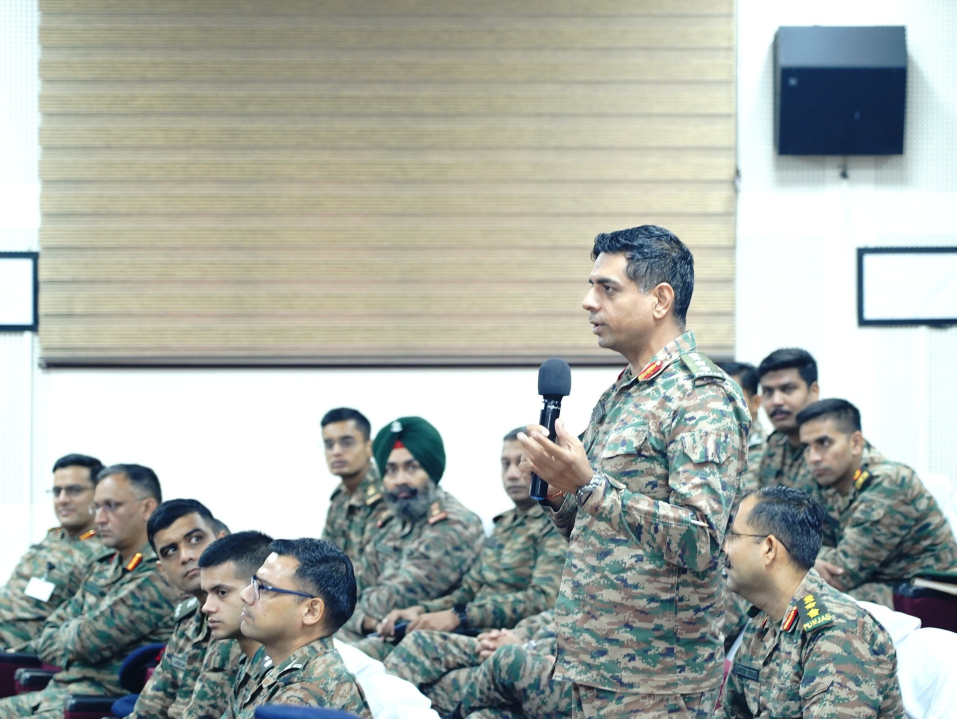
The session brought Lt Gen Chhibber together with future military leaders for a professional interaction focused on emerging technologies, artificial intelligence and their growing role in improving the operational effectiveness of the Indian Army.
Lieutenant General H S Sahi, PVSM, UYSM, AVSM, YSM, SM, Chief of Staff, Western Command, chaired the session.
During the lecture, Lt Gen Harsh Chhibber discussed the potential of digital technologies and artificial intelligence to transform military operations, decision-making and organisational processes. He also highlighted ongoing initiatives aimed at embedding AI across different facets of the Indian Army.
The interaction comes at a time when artificial intelligence, automation, advanced data analytics, autonomous systems and digital networks are increasingly influencing the character of warfare. Armed forces around the world are examining how these technologies can improve situational awareness, accelerate decision-making and enhance the effectiveness of military operations.
For the Indian Army, digital transformation has implications extending from the battlefield to headquarters, logistics, training and administrative functions. Effective integration of digital systems can enable faster movement of information and help commanders develop a more comprehensive understanding of rapidly changing operational situations.
Artificial intelligence has the potential to assist military personnel in processing large quantities of information generated by surveillance platforms, sensors, communication networks and other sources. When effectively integrated with existing systems, such capabilities can support commanders and staff in identifying relevant information and making timely decisions.
The emphasis on embedding AI across the Army indicates a broader approach in which artificial intelligence is viewed not simply as an isolated technological capability but as an enabling technology capable of supporting multiple military functions.
Potential applications of AI-enabled systems within modern armed forces include intelligence analysis, surveillance, logistics optimisation, predictive maintenance, training, administrative automation, decision support and the management of complex information environments.
However, successful digital transformation also requires more than acquiring new software and equipment. Military personnel must understand how emerging technologies can be effectively integrated into established operational structures and procedures.
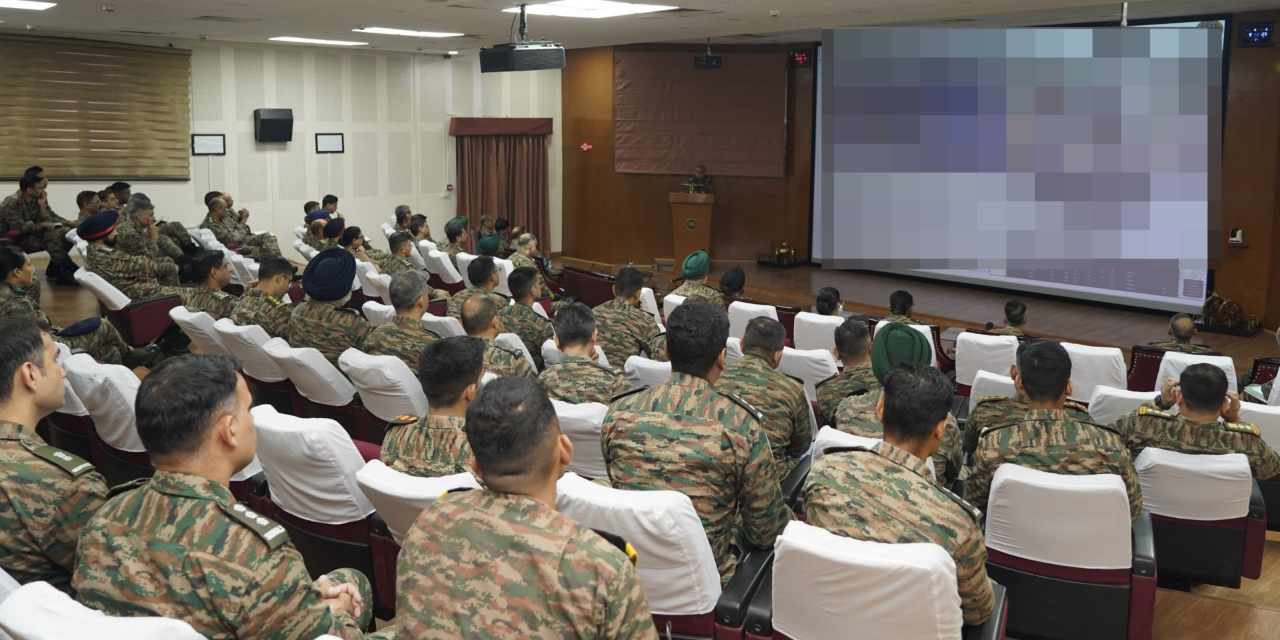
Interactions with future military leaders are therefore particularly important because officers assuming higher command and staff responsibilities will increasingly be required to make decisions involving technology-driven capabilities.
The session at Western Command provided an opportunity to familiarise officers with the broader direction of the Indian Army’s digital transformation while encouraging greater understanding of how emerging technologies can contribute to operational effectiveness.
The rapid development of artificial intelligence has also increased the importance of institutional adaptability. Technologies and their potential applications are evolving quickly, requiring military organisations to continuously update training, doctrines and organisational processes.
Digital transformation can also contribute to greater integration across different military capabilities. Modern operations generate large volumes of information from multiple sources, and the ability to connect, analyse and distribute that information can significantly improve battlefield awareness.
For commanders, access to timely and relevant information can support faster decision cycles and enable more effective employment of available resources.
Lt Gen Chhibber’s interaction also reinforced the importance of innovation-led capability development within the Indian Army. Developing a future-ready force requires a combination of technology absorption, organisational reforms, professional education and a culture that encourages experimentation and innovation.
The Indian Army has increasingly emphasised the adoption of emerging technologies as it prepares for future conflicts that are expected to involve conventional operations alongside cyber, electronic warfare, unmanned systems, information operations and other technology-intensive capabilities.
Artificial intelligence is expected to become an important enabling component within this evolving operational environment, particularly where large volumes of data must be processed and interpreted rapidly.
The lecture at Western Command therefore provided future military leaders with an opportunity to understand the potential impact of digital and AI technologies on the Army’s operational and organisational functioning.
The interaction between Lt Gen Harsh Chhibber and officers at Western Command ultimately reinforced the Indian Army’s commitment to digital transformation and innovation-driven capability development.
By expanding the adoption of artificial intelligence and other emerging technologies across different facets of the organisation, the Army aims to improve operational effectiveness while preparing its personnel, systems and formations for the increasingly technology-driven character of future warfare.