
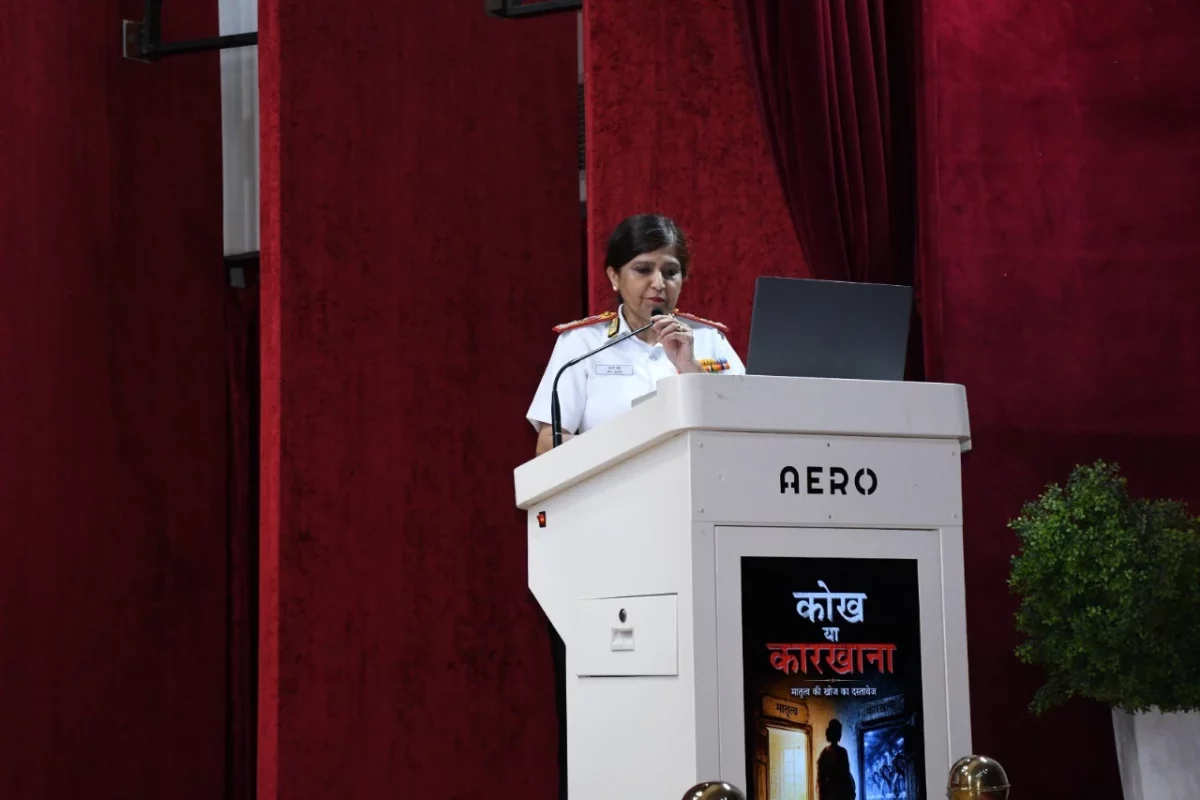
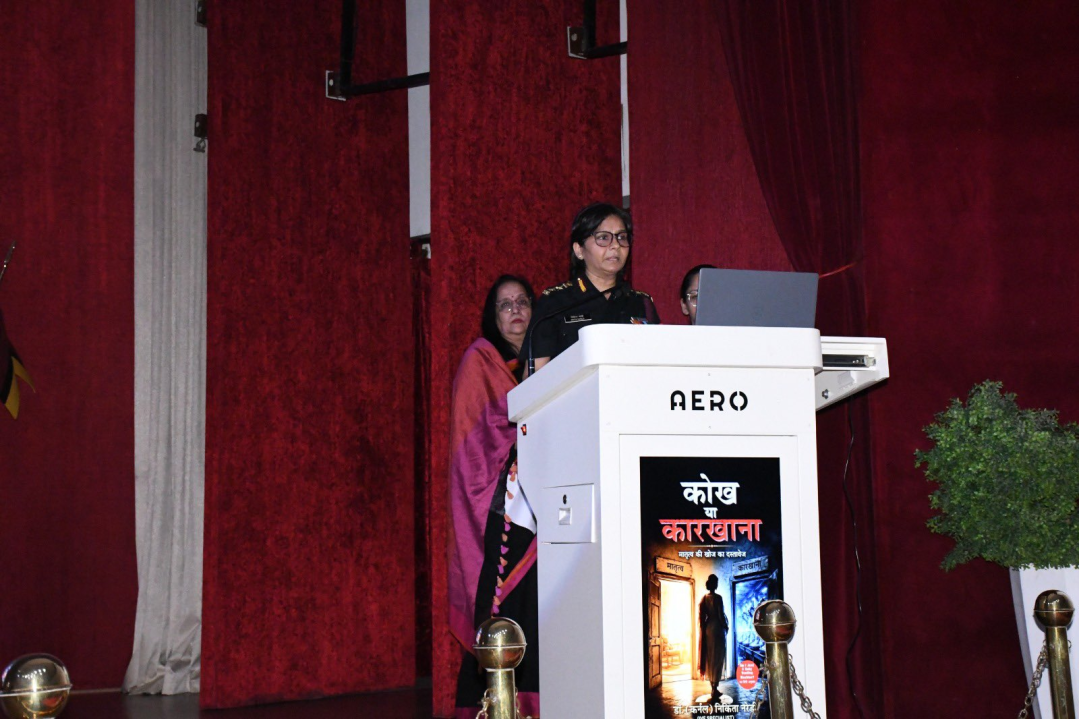
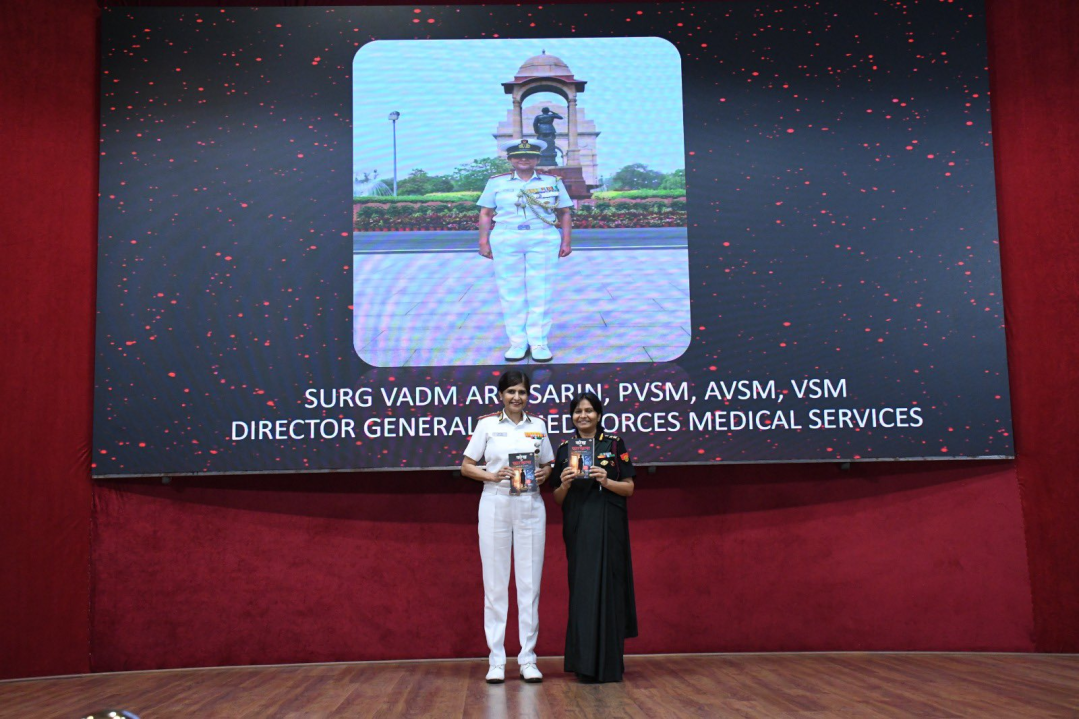
Surgeon Vice Admiral Arti Sarin, Director General Armed Forces Medical Services (DGAFMS), released “Kokh Ya Karkhana”, the Hindi translation of Colonel Nikita Naredi’s book “Am I Just a Baby Vending Machine?”, during an event held at Army Hospital (Research and Referral).


The book release brought together senior representatives of the Armed Forces Medical Services, government officials and other distinguished guests, with the event focusing on womanhood, individual choice and the idea that a woman’s identity and fulfilment should not be defined solely by motherhood.
Among those present was Deepti Uma Shankar, Secretary to the President of India. Senior Armed Forces Medical Services leadership attending the event included the Director General Medical Services (Air), Director and Commandant of the Armed Forces Medical College, Director General Medical Services (Army), Director General Medical Services (Navy), Director General (Organisation and Personnel), Commandant of Army Hospital (R&R) and Director General Dental Services.
Additional Controller General of Defence Accounts Maushami Rudra, Ankit Jhamb and several other dignitaries were also present at the event.
Addressing the gathering, Surg VAdm Arti Sarin emphasised that a woman remains whole and complete irrespective of whether she chooses motherhood or follows a different path in life.
Her remarks highlighted the broader theme of the book and the event: recognising women as individuals whose identities, aspirations and achievements extend beyond conventional expectations surrounding marriage and motherhood.
“Kokh Ya Karkhana” is the Hindi translation of Col Nikita Naredi’s “Am I Just a Baby Vending Machine?” The provocative title raises questions about social expectations that can sometimes reduce a woman’s identity to her reproductive role while overlooking her ambitions, professional accomplishments, personal choices and individuality.
The release of a Hindi edition is also significant in making the book’s central ideas accessible to a wider readership. Discussions surrounding motherhood, reproductive choices and societal expectations are relevant across different sections of Indian society, and availability in Hindi can help the conversation reach readers beyond an English-speaking audience.
The presence of senior women and leaders from the Armed Forces and government added significance to an event centred on recognising women’s autonomy and achievements.
Women today serve across an expanding range of appointments within the Indian Armed Forces, including medical, operational, aviation, technical, administrative and leadership roles. Their increasing participation has also contributed to wider conversations about professional aspirations, family responsibilities and individual life choices.
The message conveyed during the event was that motherhood can be an important and fulfilling part of a woman’s life, but it should not become the sole measure through which her identity or achievements are evaluated.
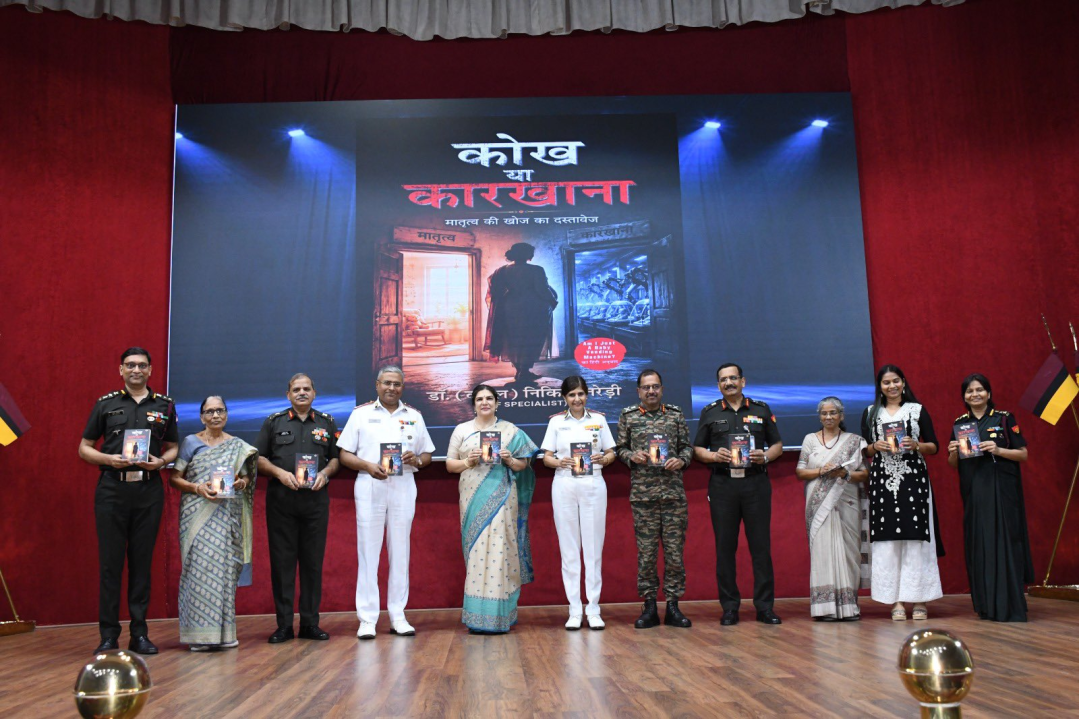
Surg VAdm Arti Sarin’s remarks reinforced the principle that choosing motherhood and choosing another path are both personal decisions deserving of respect. A woman’s sense of completeness, contribution and identity cannot be determined simply by whether she becomes a mother.
The event consequently went beyond a conventional book release and became a platform for celebrating womanhood in its broader dimensions.
It highlighted the importance of creating an environment in which women can pursue their personal and professional aspirations without being confined by predetermined social expectations.
The discussion is particularly relevant as increasing numbers of women pursue demanding careers and leadership positions across the Armed Forces, medicine, government, academia, business and numerous other sectors.
Individual circumstances and aspirations can differ considerably, making respect for personal choice an essential component of equality and dignity.
By releasing “Kokh Ya Karkhana” at Army Hospital (R&R), the gathering brought these issues into focus while celebrating the work of Col Nikita Naredi and the wider conversation generated by her book.
The event ultimately carried a clear message: womanhood extends beyond motherhood, and every woman deserves the freedom and respect to define her own aspirations, priorities and path in life.