The long-pending plan to operationalise integrated theatre commands for the Indian armed forces has entered a decisive phase. The final report on the proposed restructuring is now under consideration by the government, the Defence Ministry informed the Parliamentary Standing Committee on Defence.





According to the committee’s latest report submitted in Parliament, theatrisation remains the only recommendation among 34 for which a final government reply is still awaited. “The final report for operationalisation of theatre commands is under consideration, and further deliberations are ongoing,” the Ministry stated.
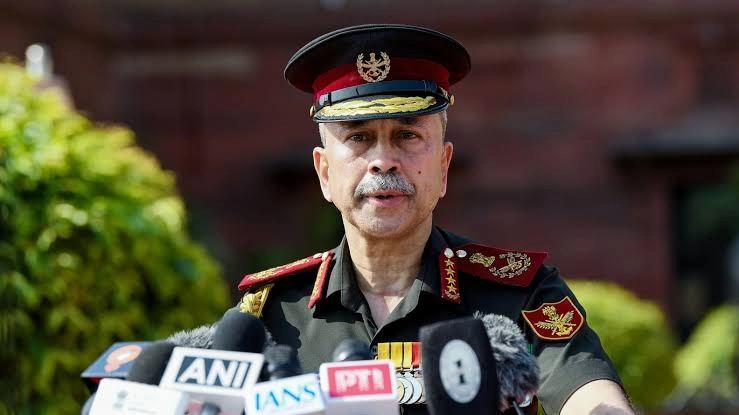
The development assumes added significance following the transition at the top of the military hierarchy. General N.S. Raja Subramani assumed charge as the third Chief of Defence Staff (CDS) after General Anil Chauhan demitted office at the end of May 2026. Chauhan had submitted the final report on Integrated Theatre Commands to the Ministry of Defence before demitting office, marking the culmination of extensive inter-service consultations.
Advanced stage of planning
The Standing Committee noted that the Joint Staff has taken the theatreisation process to an “advanced stage.” A dedicated team of officers from the Army, Navy and Air Force has been constituted under the Chief of Integrated Staff to the Chairman, Chiefs of Staff Committee (CISC), to fast-track the exercise.
These Joint Staff officers are studying global military organisations and holding consultations among the three Services to refine the proposed reorganisation. Issues requiring consensus continue to be discussed in the Chiefs of Staff Committee (COSC) to evolve a common understanding.
Under the proposed architecture, Headquarters Integrated Defence Staff (IDS) will continue to coordinate operational issues involving the theatres with the three Service headquarters during the transition and thereafter. Operational coordination between theatres, as well as between theatres and the individual Services, is envisaged through a Joint Operations Staff under the structures finally approved.
Aim of theatrisation
The theatrisation exercise seeks to create a more integrated war-fighting structure by bringing the capabilities of the Army, Navy and Air Force under unified operational command structures.
India currently operates 17 single-service commands — seven each of the Army and Air Force, and three of the Navy. The reform is intended to replace this siloed arrangement with geographically and threat-oriented theatre commands that enable faster decision-making, optimised resource allocation, and seamless multi-domain operations.
The reform draws its intellectual roots from the Kargil Review Committee (1999-2000) and gained institutional momentum after the creation of the CDS post in 2019. Successive CDS officers have driven the process forward, with significant progress recorded under General Anil Chauhan despite operational interruptions, including those linked to Operation Sindoor.
Proposed structure
The emerging consensus centres on three principal theatre commands:
- Northern Theatre Command: Focused on the China front and the Line of Actual Control. Headquarters likely at Lucknow and expected to be headed by an Army officer.
- Western Theatre Command: Oriented towards the Pakistan front. Headquarters likely at Jaipur and expected to be led by an Air Force officer, reflecting lessons from recent air-centric operations.
- Maritime Theatre Command: Responsible for the Indian Ocean Region, coastal defence and maritime security. Headquarters likely at Thiruvananthapuram (or a southern location), headed by a Navy officer. The existing Andaman and Nicobar Command is proposed to be integrated into this structure.
Each theatre is expected to be commanded by a four-star officer, placing the theatre commanders at parity with the Service Chiefs. The Service Chiefs would retain responsibility for “raise, train and sustain” functions, while theatre commanders would exercise operational control and orchestration of forces allocated to their theatre.
Timeline and next steps
Army Chief General Upendra Dwivedi had earlier indicated that full implementation could take another two to three years after political approval. Former CDS General Chauhan had estimated that operationalisation might require 18–24 months once the government takes a formal decision.
The process now rests largely in the political-bureaucratic domain. After internal examination by the Defence Minister and Defence Secretary, the proposal is expected to move to the Cabinet Committee on Security for final approval. General Raja Subramani has been tasked with carrying the reform forward, including detailed presentations to the political leadership.
Broader implications
Supporters of the reform argue that integrated theatre commands will enhance India’s ability to handle simultaneous or coordinated threats from China and Pakistan, improve jointness in emerging domains such as space, cyber and cognitive warfare, and align the Indian military with the organisational models of major powers that have already transitioned to theatre-based structures.
Challenges remain. These include the precise division of assets and personnel between Services and theatres, the exact chain of command during active crises when operational and administrative authorities may conflict, the phased transition of existing commands without creating readiness gaps, and the need for corresponding changes in logistics, training, doctrine and joint staff culture.
The government has repeatedly described theatre commands as a “trailblazing reform.” With the final military report now under formal consideration and only one pending reply remaining before the parliamentary panel, the theatrisation process has moved from conceptual debate into the realm of governmental decision-making.
The outcome will shape the higher defence organisation of India for decades and determine how the armed forces prepare for and fight future conflicts in an increasingly complex strategic environment.