

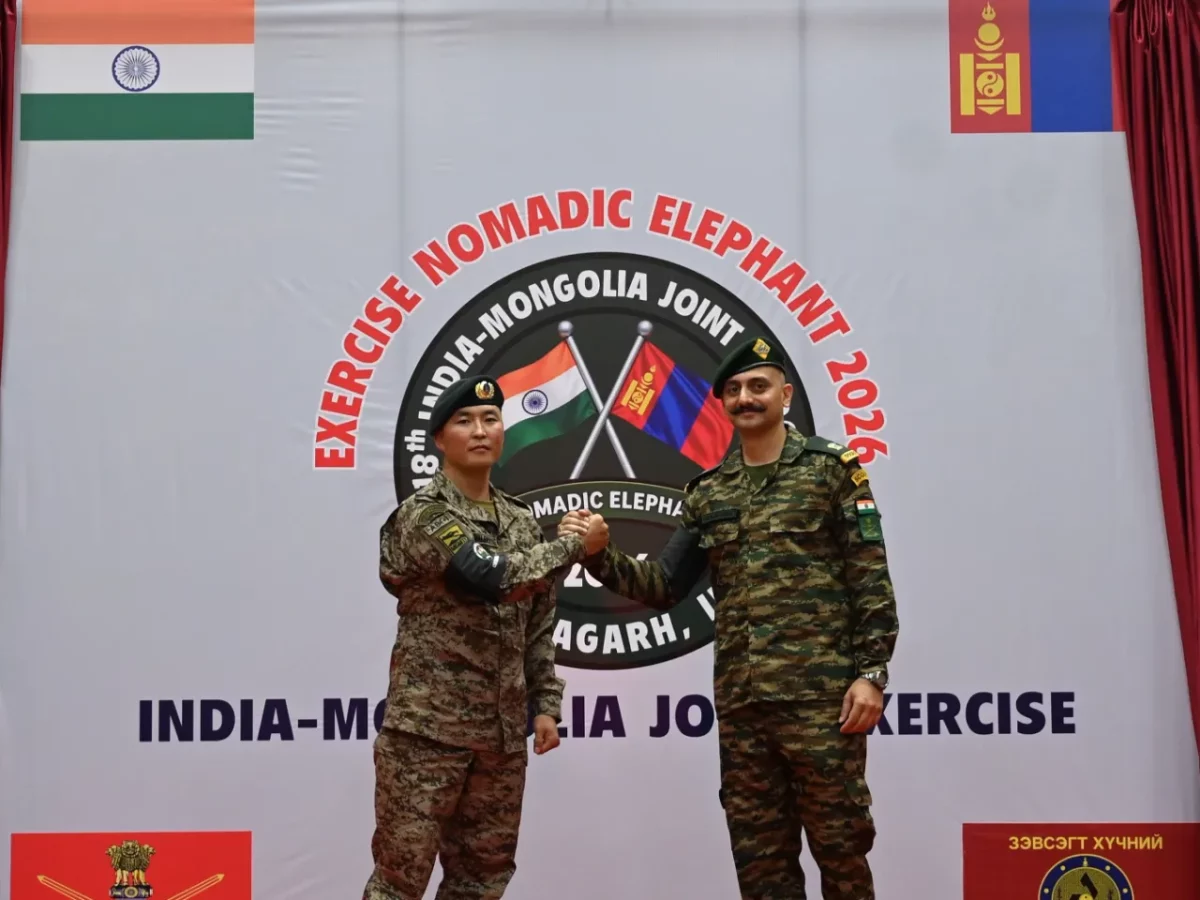
The opening ceremony of the 18th edition of the India-Mongolia Joint Military Exercise Nomadic Elephant 2026 was held at the Foreign Training Node in Pithoragarh, Uttarakhand, marking the commencement of the latest edition of the bilateral military engagement.





The exercise is being conducted from September 21 to October 3, 2026, with troops from India and Mongolia participating in joint training focused on strengthening their ability to undertake counter-insurgency operations in semi-urban and mountainous terrain.
Nomadic Elephant is intended to provide both armies with an opportunity to train together, exchange operational experiences and refine procedures for conducting military operations in challenging environments. The exercise also seeks to enhance interoperability between the participating forces.
A key objective of the 2026 edition is the exchange of best practices and refinement of operational drills. Joint training allows personnel from both sides to familiarise themselves with each other’s procedures while developing a common understanding of tactical requirements during operations.
The exercise will cover a range of specialised operational activities. These include cordon and search operations, room intervention drills and special heliborne operations. The training programme will also incorporate cyber security training and the employment of drones and counter-drone systems.
The inclusion of drones and counter-drone systems reflects the increasing importance of unmanned technologies in contemporary military operations. Training in their employment and countermeasures provides participating troops with exposure to capabilities that are increasingly relevant across different operational environments.
Room intervention and cordon and search drills will focus on coordinated actions in built-up and semi-urban environments. These activities require troops to work closely together and follow established procedures while responding to operational situations.
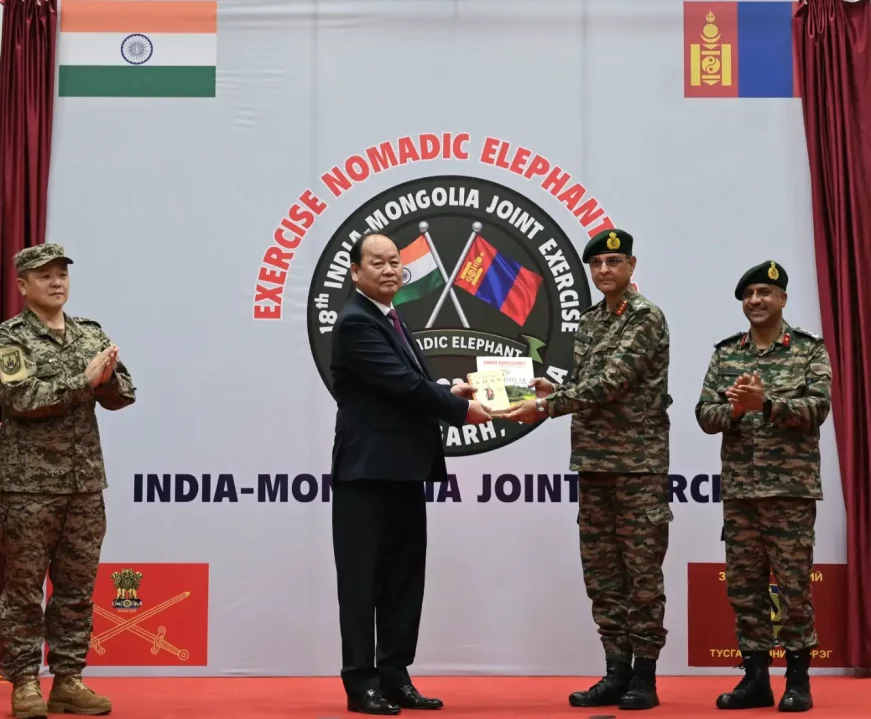
Special heliborne operations will add another dimension to the joint training, allowing participating personnel to practise operations involving the rapid movement and deployment of troops using helicopters.
The mountainous terrain around Pithoragarh also provides a suitable environment for training in conditions requiring physical endurance, coordination and adaptation to difficult terrain. The exercise combines these environmental challenges with tactical scenarios designed to improve operational preparedness.
Cyber security training forms another component of Nomadic Elephant 2026, reflecting the expanding scope of modern military operations. The inclusion of cyber-related training alongside conventional field drills provides participating troops with exposure to multiple dimensions of contemporary warfare.
The exercise is also aimed at strengthening professional relationships between the Indian and Mongolian armies. Joint military exercises provide an avenue for personnel from both countries to interact, exchange experiences and develop mutual understanding through practical training.
The 18th edition of Nomadic Elephant continues the established India-Mongolia defence engagement through a structured programme of field training and professional exchanges. The focus on counter-insurgency operations is complemented by specialised activities involving drones, counter-drone systems, cyber security and heliborne operations.
The exercise will continue until October 3, providing the participating contingents with an extended period of joint training and interaction. The lessons and best practices emerging from the drills are intended to contribute to greater interoperability and improved understanding between the two armies.
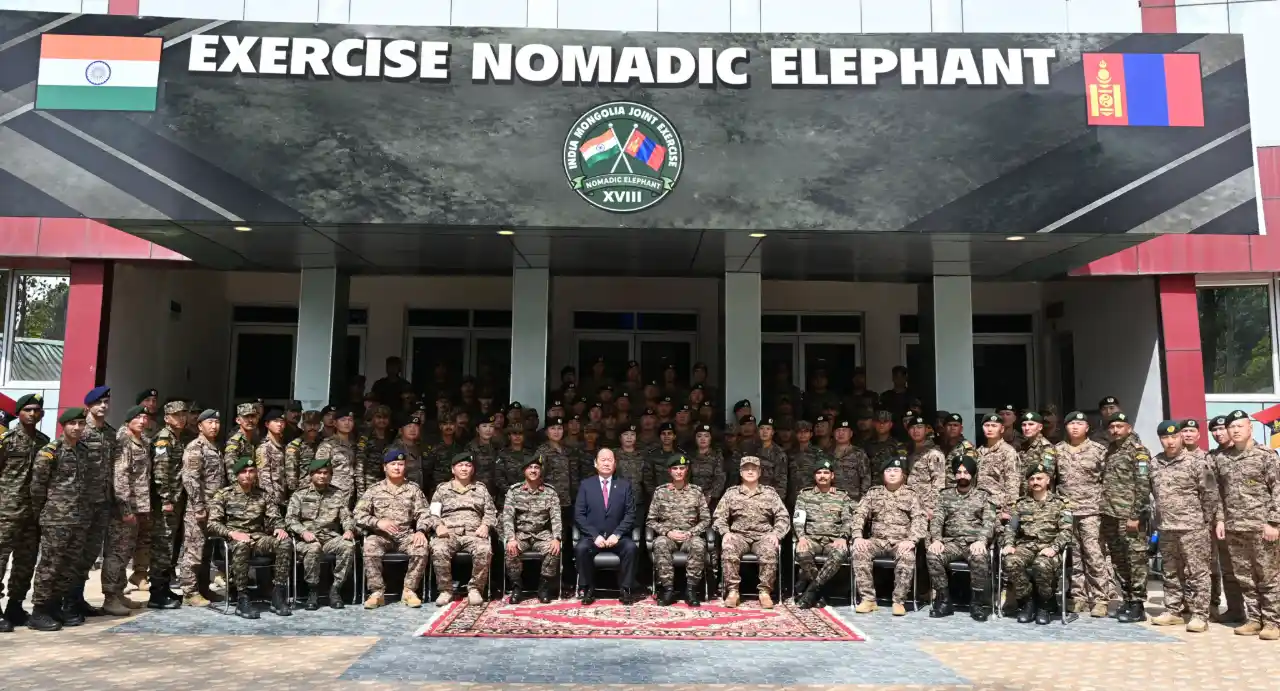
Nomadic Elephant 2026 thus brings together conventional field training and emerging military technologies, with both sides working towards strengthening their joint capabilities for operations in semi-urban and mountainous environments.
The exercise underscores the continuing defence cooperation between India and Mongolia while providing troops from both countries with an opportunity to train together, refine operational procedures and build greater confidence in working alongside each other.