
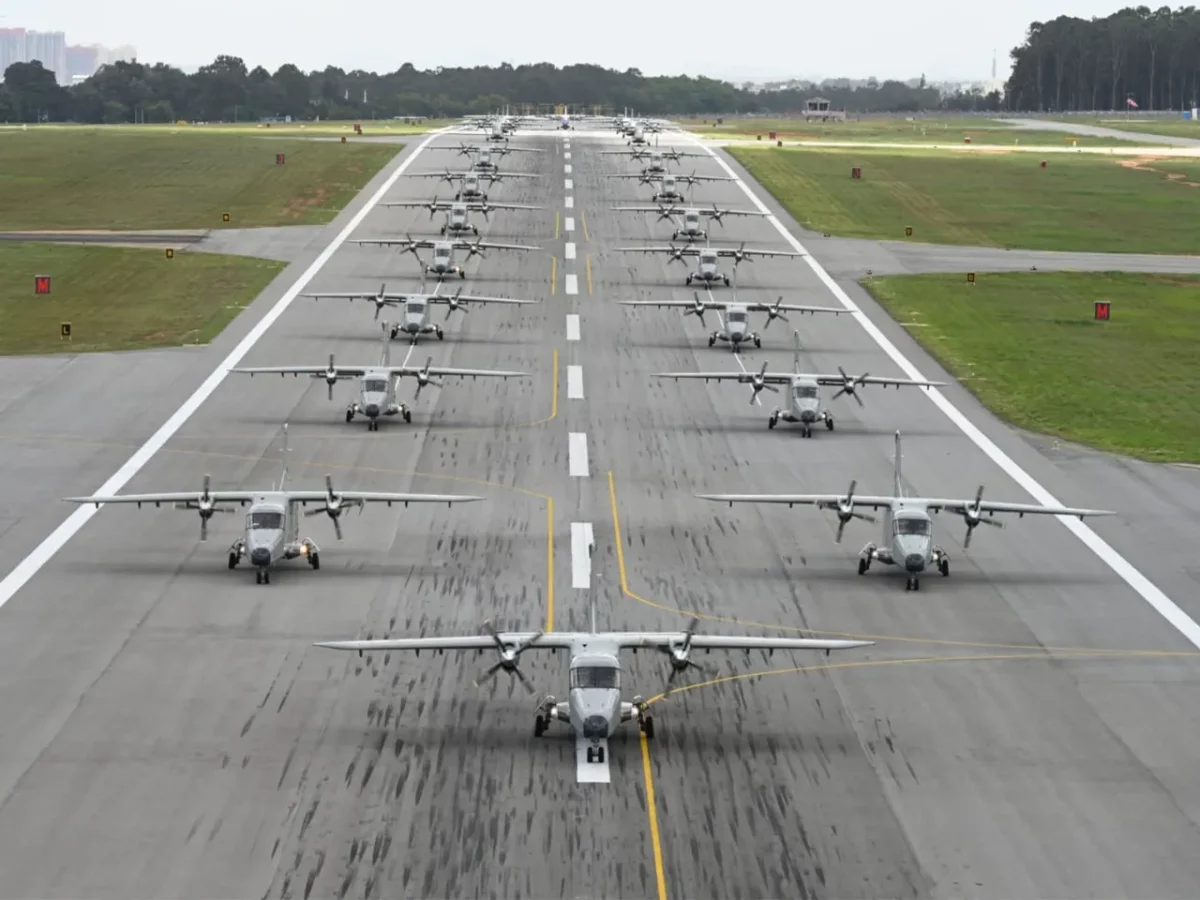
The Indian Air Force (IAF) demonstrated its operational readiness and maintenance capabilities by conducting an Elephant Walk involving its Dornier-228 aircraft fleet at Air Force Station Yelahanka on September 5, 2026.





The coordinated movement of multiple Dornier-228 aircraft on the runway showcased the ability of the IAF unit to prepare and marshal several aircraft for operations in a coordinated manner. The activity highlighted the importance of maintenance preparedness, technical proficiency, crew coordination and rigorous training in sustaining air operations.
An Elephant Walk is a military aviation manoeuvre in which multiple aircraft taxi in close formation on a runway or taxiway before take-off. Such activities are used to demonstrate the ability of an aviation unit to coordinate the movement and launch of multiple aircraft within a limited timeframe.
The IAF Training Command, which shared visuals of the activity, described the formation as a demonstration of operational readiness, maintenance excellence, seamless coordination and high standards of training and crew proficiency. The activity also reflected the importance of synchronisation between aircrew, ground personnel, engineering teams and other elements supporting aircraft operations.
The guiding philosophy associated with the activity was expressed through the phrase “Balamcha Budhischa”, conveying the idea of strength combined with wisdom and training being translated into operational capability. The emphasis reflects the broader requirement for personnel and equipment to work together effectively in generating combat and operational readiness.
The Dornier-228 is a versatile light transport aircraft operated by the IAF and is employed for multiple roles. Its utility extends beyond conventional transport functions, with the aircraft also associated with maritime surveillance and training duties. Its relatively compact design and multi-role character make it useful for a range of operational and support requirements.
The Elephant Walk at Yelahanka therefore provided a visible demonstration of the readiness of the Dornier fleet and the personnel responsible for operating and maintaining it. While the manoeuvre itself takes place on the ground, its significance lies in the ability of an air unit to synchronise several elements of aviation operations before aircraft are committed to a mission.
Aircraft availability depends not only on the number of platforms in an inventory but also on maintenance standards, technical support, trained personnel and the ability to generate sorties efficiently. Activities demonstrating coordinated aircraft generation can consequently provide an indication of the operational discipline and preparedness maintained by an aviation unit.
The exercise also placed emphasis on crew proficiency. Air operations require close coordination between pilots, aircrew, ground handling teams, engineers and maintenance personnel. The successful movement of multiple aircraft in formation requires each component of the ground and flying organisation to function according to established procedures.
The Yelahanka activity comes at a time when the Indian Air Force continues to focus on sustaining operational readiness across its diverse aircraft fleet. The emphasis on maintenance excellence and training remains particularly important as the IAF operates a wide range of platforms performing transport, surveillance, combat and support roles.
The Dornier-228 fleet also forms part of the broader support architecture required for the IAF’s operational commitments. Multi-role transport and surveillance aircraft provide capabilities that complement frontline combat aviation, enabling the force to perform missions beyond conventional fighter operations.
The demonstration at Air Force Station Yelahanka consequently highlighted an important aspect of air power: operational readiness is generated through a combination of aircraft availability, technical expertise, trained crews, disciplined procedures and effective coordination.
The activity also serves as a reminder that maintenance personnel and ground crews are integral to the generation of air power. Even when aircraft are not airborne, the preparation, servicing, inspection, movement and coordination undertaken on the ground determine how quickly and effectively aircraft can be made available for missions.
The IAF Training Command’s emphasis on “Balamcha Budhischa” further underlined this connection between capability and training. Strength alone does not guarantee operational effectiveness; it must be supported by knowledge, professional competence, preparation and the ability to translate training into practical capability.
The Elephant Walk also provided a demonstration of collective readiness rather than the performance of an individual aircraft. The movement of multiple platforms in a coordinated formation requires a high degree of synchronisation and reflects the ability of the unit to function as an integrated organisation.
The activity at Yelahanka thus offered a snapshot of the processes that underpin sustained operational preparedness within the Indian Air Force. From aircraft maintenance and engineering support to crew training and ground coordination, multiple elements contribute to ensuring that an aircraft fleet remains available and mission-ready.
With the Dornier-228 fleet taking part in the coordinated Elephant Walk, the IAF Training Command showcased the professionalism and preparedness of the personnel responsible for maintaining and operating the aircraft. The demonstration reinforced the importance of maintenance excellence, crew proficiency, training and seamless coordination in translating available platforms into usable operational capability.
The Yelahanka activity ultimately highlighted that air power readiness is built long before an aircraft takes off. It is sustained through disciplined maintenance, continuous training, technical expertise and the ability of personnel across different functions to work together seamlessly.