

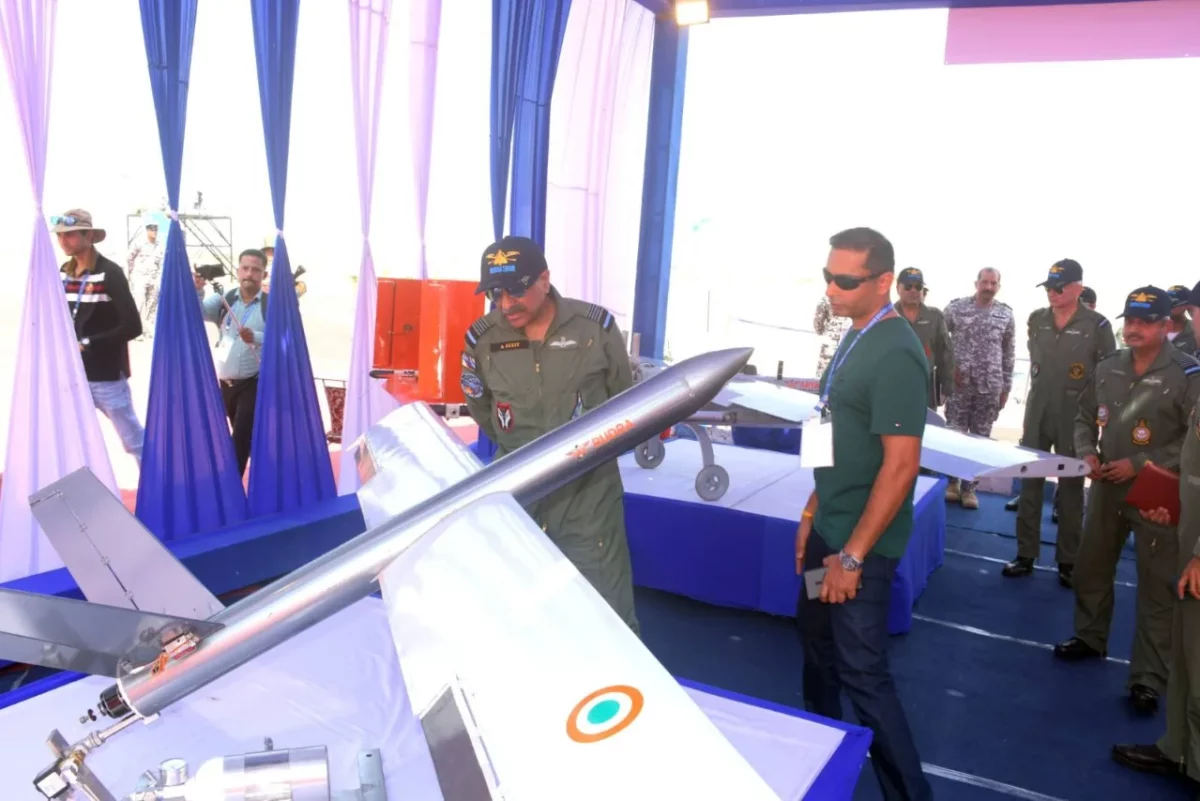
Jaisalmer, 14 September 2026 — The Indian Air Force launched its inaugural Dronathon-2026 on Monday at the Pokhran Field Firing Range in Jaisalmer, Rajasthan, initiating three days of live demonstrations of indigenous unmanned aerial systems and counter-drone technologies in desert operational conditions.





Air Marshal Ashutosh Dixit, Vice Chief of the Air Staff, inaugurated the event. Senior officials from the Ministry of Defence, Headquarters Integrated Defence Staff, the Indian Army and the Border Security Force attended the opening ceremony. During the inauguration, the Vice Chief released the IAF Unmanned and Autonomous Systems Roadmap to give Indian industry clearer guidance on the service’s future capability priorities.
The three-day programme, scheduled from 14 to 16 September 2026, follows an IAF industry outreach exercise and brings together more than 20 leading defence companies, start-ups, micro, small and medium enterprises, defence public sector undertakings and innovators. Participating firms are conducting live trials of their systems at the range so that the Air Force can evaluate performance against identified operational requirements in a demanding desert environment.
Dronathon-2026 is intended to advance the national objective of Atmanirbhar Bharat while strengthening the IAF’s unmanned capabilities. Officials described unmanned systems as a complement to manned aviation that can increase reach, persistence, responsiveness and flexibility for commanders. The central aim of the event is to move beyond laboratory-style technology displays toward assessment of operational effect, reliability and adaptability in contested conditions.
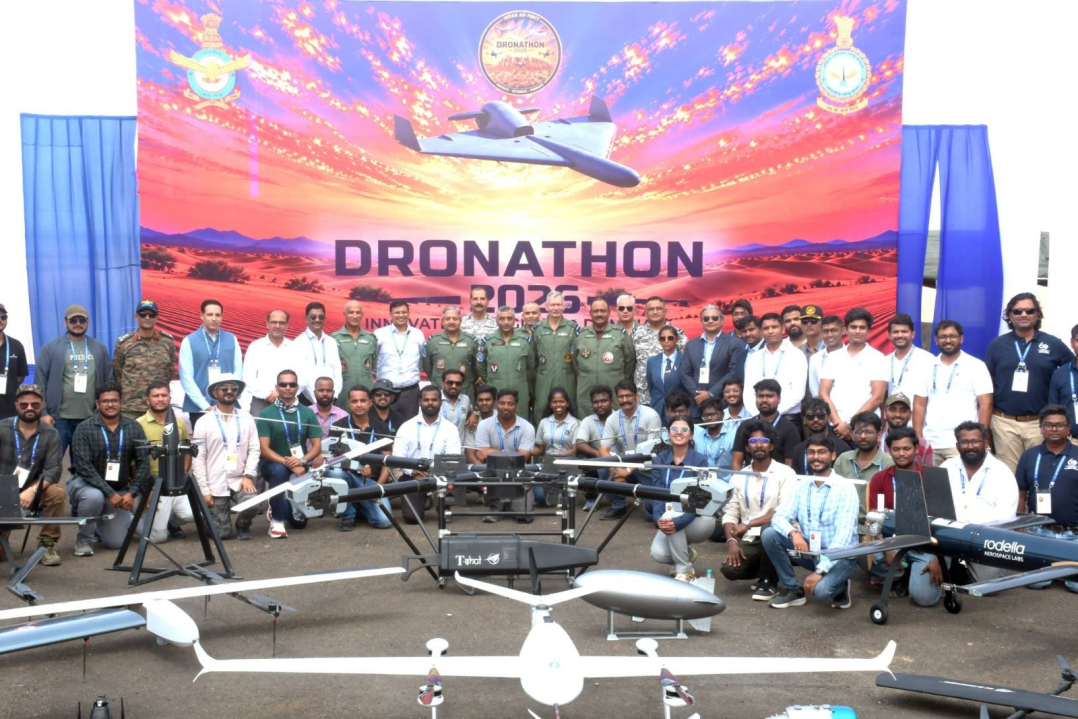
Systems under demonstration include expendable intelligence, surveillance and reconnaissance platforms; loitering munitions; unmanned aircraft with electronic warfare payloads; logistics and delivery drones; mapping and surveying systems; and counter-unmanned aircraft systems. Additional focus areas encompass artificial intelligence, autonomous navigation, real-time data transmission, advanced payloads and swarm technologies.
On the opening day the IAF also demonstrated a key capability of Vayu UTtaM, its indigenously developed multi-mode Unmanned Traffic Management system. In a real-time trial at Pokhran the system detected and tracked both military and civil unmanned aircraft. Officials stated that the capability is designed to support coordinated management of unmanned operations in increasingly congested airspace and to assist in identifying and mitigating unauthorised or rogue drones. Potential applications extend to airspace safety, critical infrastructure protection, civil aviation and public safety.
The IAF has indicated that its approach covers the full unmanned ecosystem, including propulsion, sensors, payloads, communications, autonomy, electronic warfare, countermeasures and airspace management, rather than airframes alone. A second edition of Dronathon is expected within approximately six months to sustain dialogue between users and developers.
The live trials in the Rajasthan desert form part of a broader effort to identify indigenous solutions that can be integrated into future IAF operations and to align industry, academia and research organisations with the service’s evolving requirements.