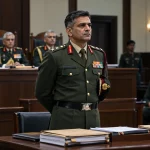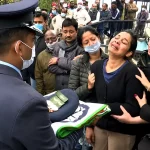

Phagwara / Chandigarh, 30 September 2026 — Punjab Police have identified a group of men seen carrying walkie-talkies and a traditional blade during unrest at Lovely Professional University as serving Indian Army personnel, not “outsiders” or anti-social elements as viral videos and political claims suggested.



The team of five to six personnel, led by a Major and drawn from a Special Forces battalion of the Parachute Regiment, had come from a local Army formation to check on the safety of two girl students who are daughters of general-rank officers. Because National Highway-44 outside the campus was blocked, they proceeded on foot. Students and police noticed the radios and what many initially described as a sickle. Officers detained the group for verification.
Special Director General (Law and Order) Praveen Sinha later clarified that the blade was a khukri, a traditional weapon associated with Parachute Regiment troops, not a farm implement. The Major produced his defence identity card. Police then confirmed the team’s names and identities with a Brigadier. Officers also spoke to the students the team had come to meet and found them safe. The soldiers were allowed to leave.
“They had come to collect the ward of an Army officer, and they were not intruders of any kind,” Jalandhar Range Deputy Inspector General Naveen Singla told Man Aman Singh Chhina of The Indian Express.
Sinha said: “Army officers’ children study here, and obviously any parent would get worried. Students, as well as our teams, saw them with walkie-talkies, and we took them aside to verify their identities. We also verified with the students who they had come to meet… We were also satisfied, and they were, too, and then they went back.”
The videos circulated while LPU was already in turmoil. On the night of 26–27 September, students gathered after unverified social-media claims that a female student in Girls’ Hostel-3 had been sexually assaulted by an outsider, variously described as a plumber or campus worker. The university called the allegation “baseless and fabricated.” Police registered an FIR against an unknown person and formed a Special Investigation Team. No victim or accused has been publicly identified.
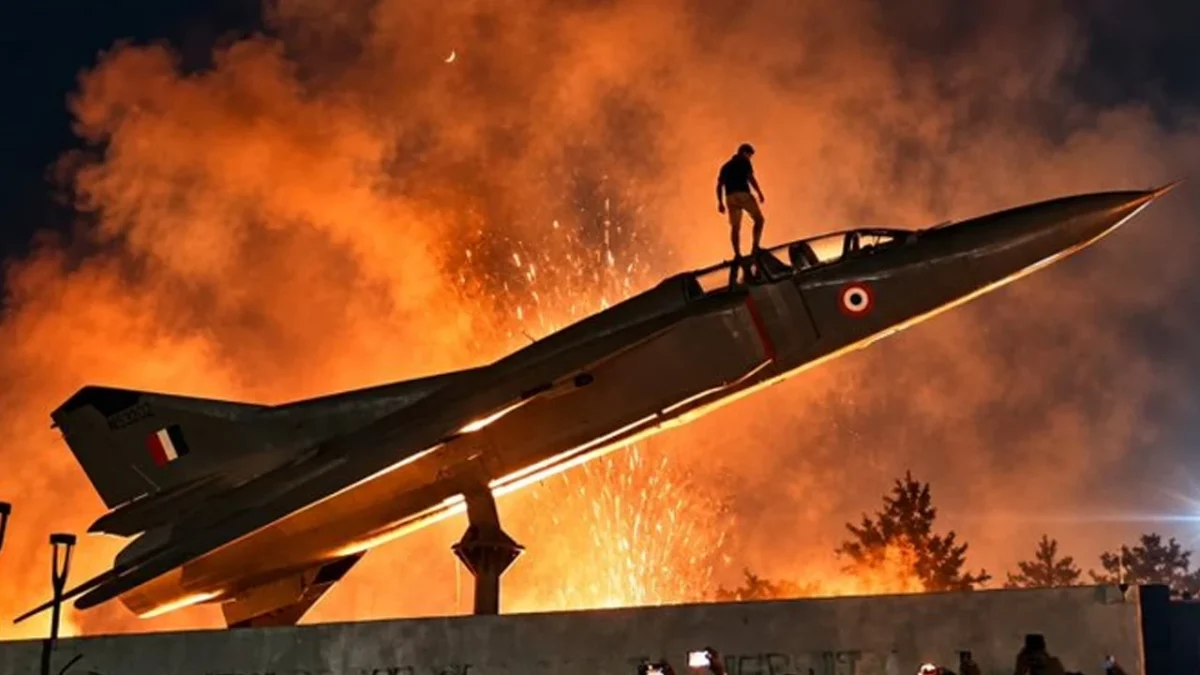
The protest spilled onto NH-44, blocking the Jalandhar–Phagwara stretch for more than 15 hours. Students climbed a decommissioned MiG-23 on display and a campus tank. Property was damaged, part of a gate was set on fire, and a police vehicle was burnt. Classes were suspended for ten days; about 14,000 students left the campus.
Early on 27 September, 27th Battalion Commandant Gurmeet Kaur said five youths had been detained and that a datar (sickle-like implement) and a walkie-talkie had been recovered. That initial account, combined with the videos, led opposition leaders, including Shiromani Akali Dal’s Sukhbir Singh Badal, to accuse the state government of failing to stop outsiders from entering the campus. Police later said the group in those particular videos were the Army team.
A separate investigation continues into who carried out the vandalism. Police have said they are examining CCTV and social-media footage and have identified a larger set of suspects, many of whom they describe as outsiders rather than enrolled students. An SIT headed by officers including Phagwara Superintendent of Police Major Singh is also probing the original assault allegation, campus security lapses, and the sequence of violence.
Punjab Director General of Police Gaurav Yadav, who visited the campus on 28 September, said police had avoided using force against students and would act against those responsible for arson and vandalism. He appealed to the public not to circulate unverified rumours.
The episode illustrates how quickly unverified clips can harden into a political charge. Parents of serving officers, concerned for daughters on a campus in disorder, sent a small team to confirm their safety. That team’s radios and khukri, filmed in a crowd already primed by rumours of “outsiders,” were read as evidence of infiltration. Official verification reversed that reading. The larger questions whether an assault occurred, how campus access was managed, and who organised the damage remain with the SIT.