
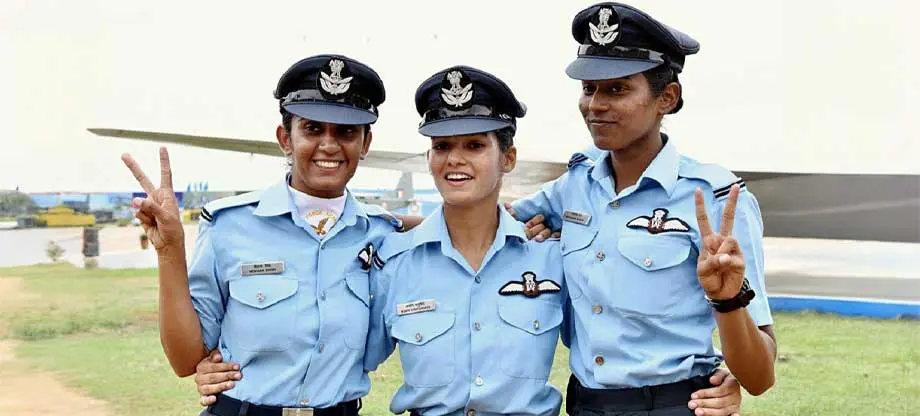
The Chandigarh Bench of the Armed Forces Tribunal (AFT), Chandimandir, has directed that former Indian Air Force officer Wing Commander Namrita Chandi (retd), who served under the Short Service Commission (SSC), be granted pension and other retirement benefits payable to an officer who has completed 20 years of pensionable service. The ruling comes nearly 15 years after her retirement in 2011 and follows a prolonged legal battle over the denial of Permanent Commission.

The Bench, comprising Justice Sudhir Mittal and Lieutenant General (Dr) Ranbir Singh (retd), held that Wing Commander Chandi would be deemed to have completed 20 years of pensionable service. It ordered that she be granted pension and all consequential retirement benefits applicable to an officer completing the prescribed pensionable service.
The Tribunal relied on the Supreme Court’s decisions concerning the grant of Permanent Commission to women Short Service Commission officers in the armed forces. It referred to the cases of Lt Cdr Annie Nagaraja and others, as well as the legal principles emerging from the proceedings concerning women officers who had been denied consideration for Permanent Commission.
The Bench observed that the Supreme Court had made it clear that Short Service Commission officers who had opted for Permanent Commission but were not granted it, and were instead given extensions, were entitled to consideration for Permanent Commission on a par with male SSC officers. The Tribunal also noted that the benefit was intended to cover women officers who had approached the Supreme Court and retired during the intervening period.
Referring to the directions in the case of Lt Cdr Annie Nagaraja and others, the AFT noted that women officers who had been denied consideration for Permanent Commission and were no longer in service were to be deemed to have completed the requisite substantive pensionable service. They were consequently entitled to pensionary benefits, while other consequential benefits were subject to the directions laid down by the Supreme Court.
In its latest order, the Tribunal modified its earlier 2015 judgment and directed that Wing Commander Chandi be granted pension with effect from the day immediately following the date on which she completed 20 years of service. The order also provides for other retirement benefits payable to an officer deemed to have completed the requisite pensionable service.
Wing Commander Chandi was granted a Short Service Commission in the Indian Air Force in 1996, initially for a period of 10 years. Before completing her initial tenure, she applied for Permanent Commission. However, instead of being granted Permanent Commission, she was given a five-year extension. Her request was subsequently rejected on the ground that there was no provision for granting Permanent Commission to SSC officers in the flying branch at that time.
Following the rejection, she retired from service in 2011. She then approached the Delhi High Court through a writ petition, challenging the denial of Permanent Commission. The matter was transferred to the Principal Bench of the Armed Forces Tribunal in 2014.
In 2015, the AFT allowed her petition along with a batch of similar cases, relying on the Delhi High Court judgment in Babita Puniya and Others versus The Secretary and Another. The ruling became part of the wider legal proceedings concerning the service rights and grant of Permanent Commission to women officers in the armed forces.
The defence authorities subsequently challenged the Tribunal’s decision before the Supreme Court. The appeal was dismissed in 2019, upholding the legal position that formed the basis of the relief granted to women SSC officers.
Following the Supreme Court proceedings, Wing Commander Chandi served a legal notice seeking implementation of the directions. In response, the Air Force authorities informed her that the competent authority had decided to consider her suitability for Permanent Commission.
An independent board of officers was thereafter constituted, and she was asked to report for a medical examination on July 22, 2020, if she was willing to accept the offer. However, she objected to being assessed under the parameters prescribed in the policies of 2004 and 2010, particularly after having remained out of service for nine years.
During the latest proceedings, counsel for Wing Commander Chandi, Sandeep Bansal, argued that she was entitled to pension on the basis of 20 years of service, along with the retirement benefits available to officers who had completed the requisite pensionable tenure. He sought modification of the Tribunal’s 2015 judgment, relying on the Supreme Court’s rulings concerning women officers in the Army and Navy, including the Babita Puniya and Annie Nagaraja cases.
The Tribunal also rejected the Union of India’s request for an adjournment on the ground that the paper book was unavailable. It observed that the Supreme Court’s orders were well known and that the legal position established by those judgments left no ambiguity regarding the entitlement of eligible women SSC officers.
The latest ruling provides Wing Commander Chandi relief on her pension entitlement after years of litigation concerning her denial of Permanent Commission. By directing that she be treated as having completed 20 years of pensionable service, the AFT has extended to her the pensionary and retirement benefits applicable under the Supreme Court’s directions.