New Delhi, September 27, 2026 — The Supreme Court of India has directed the Indian Air Force to re-induct former Short Service Commissioned officer Priyanka Saxena, a war widow, as Squadron Leader nearly 13 years after she left the force. The Court invoked its extraordinary powers under Article 142 of the Constitution to secure complete justice in what it described as a case of peculiar facts.





A bench comprising Chief Justice of India Surya Kant and Justices Joymalya Bagchi and V. Mohana allowed Saxena’s appeal against orders of the Armed Forces Tribunal, Principal Bench, New Delhi, dated 18 May 2023 and 2 July 2024. The Court made clear that the relief is confined to her individual circumstances and shall not operate as a precedent.
Background of Service and Loss
Saxena was commissioned in the Indian Air Force in 2003 as a Short Service Commissioned officer in the Logistics Branch. She completed her ten-year tenure and was released in December 2013 after choosing not to seek an extension or Permanent Commission, citing family commitments, including the need to support her husband, a fighter pilot, and to care for their child.
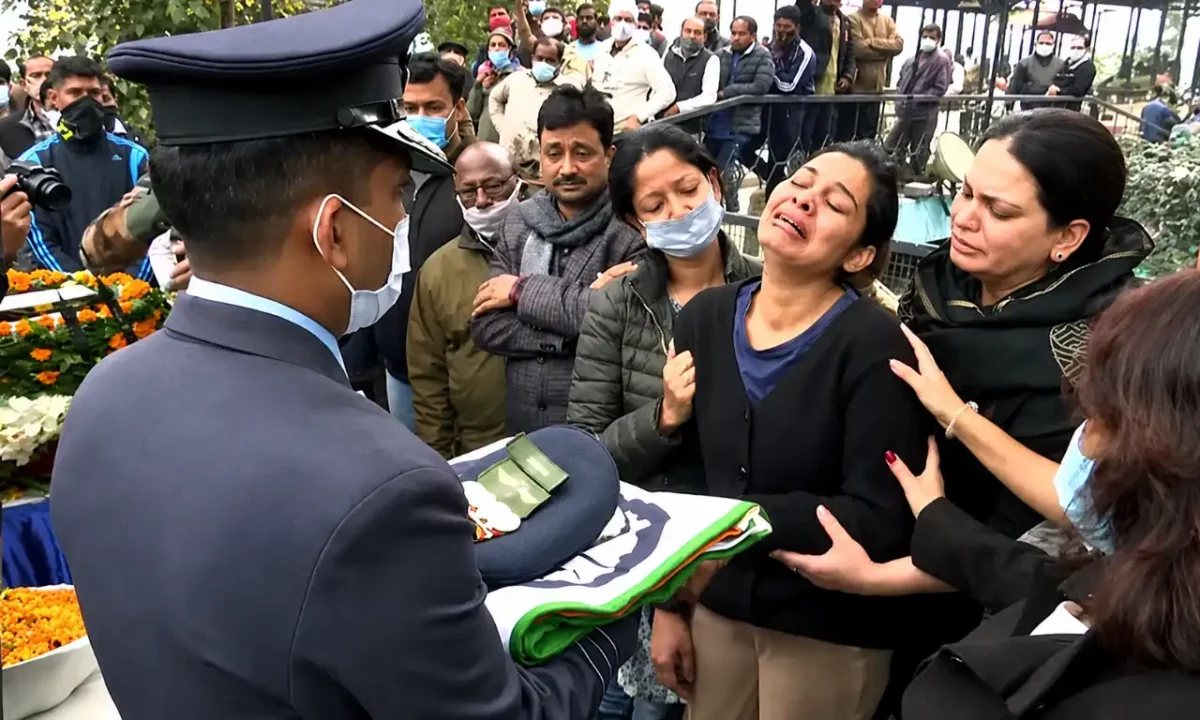
Her husband, Wing Commander Harshit Sinha of 51 Squadron, Srinagar, was killed on 24 December 2021 when a MiG-21 Bison crashed near Jaisalmer Airfield. The couple has two minor daughters. After his death, Saxena applied for reinstatement, relying on her earlier decade of commissioned service. The Air Force rejected the request, including on the ground that she had crossed the maximum age of 35 years prescribed under the applicable policy for induction of war widows.
The Armed Forces Tribunal directed the government to examine whether a policy should be framed for women Short Service Commissioned officers who leave service and later become widows of serving personnel. It did not, however, grant Saxena effective personal relief. The Supreme Court has now set those Tribunal orders aside.
Court’s Reasoning
The bench observed that existing policy for war widows, despite providing concessions such as reservation of seats, did not cover women officers who had themselves served in the armed forces and later became widows. The Court held that Saxena was eligible on two independent counts: as a former Air Force officer and as the widow of an Air Force officer.
During the hearing, the Court remarked that her late husband’s contributions to the nation could not be ignored. In the written order it stated that her past service “ought to have been given weightage” and that she need not undergo fresh pre-commission training of the kind required for other war widows inducted solely on academic qualifications.
Conditions of Reinstatement
The Court imposed the following conditions:
- Saxena shall undergo one year of refresher training in the next applicable course and shall be governed by the rules applicable to trainees during that period.
- She must satisfy the prescribed medical requirements.
- Upon successful completion of training, she shall be reinstated as Squadron Leader in the 11th year of service, with her earlier service counted.
- She shall continue as a Short Service Commissioned officer and receive a four-year extension in accordance with applicable policy.
- Her inter-se seniority shall be fixed with her current peer group.
- She shall be considered for Permanent Commission and promotion in accordance with the policy applicable to that group.
The Court recorded that it was exercising Article 142 powers because of “the peculiarity of the facts of the present case, and the circumstances under which the appellant had to approach the Court for reinstatement,” and directed that the matter be treated as a single case without creating any precedent. Saxena was represented by Advocate Abhishek Ritabh Shukla.
The order closes a legal journey that began after the 2021 crash and ran through the Armed Forces Tribunal before reaching the Supreme Court. Implementation now rests with the Indian Air Force, subject to Saxena completing refresher training and meeting medical standards.