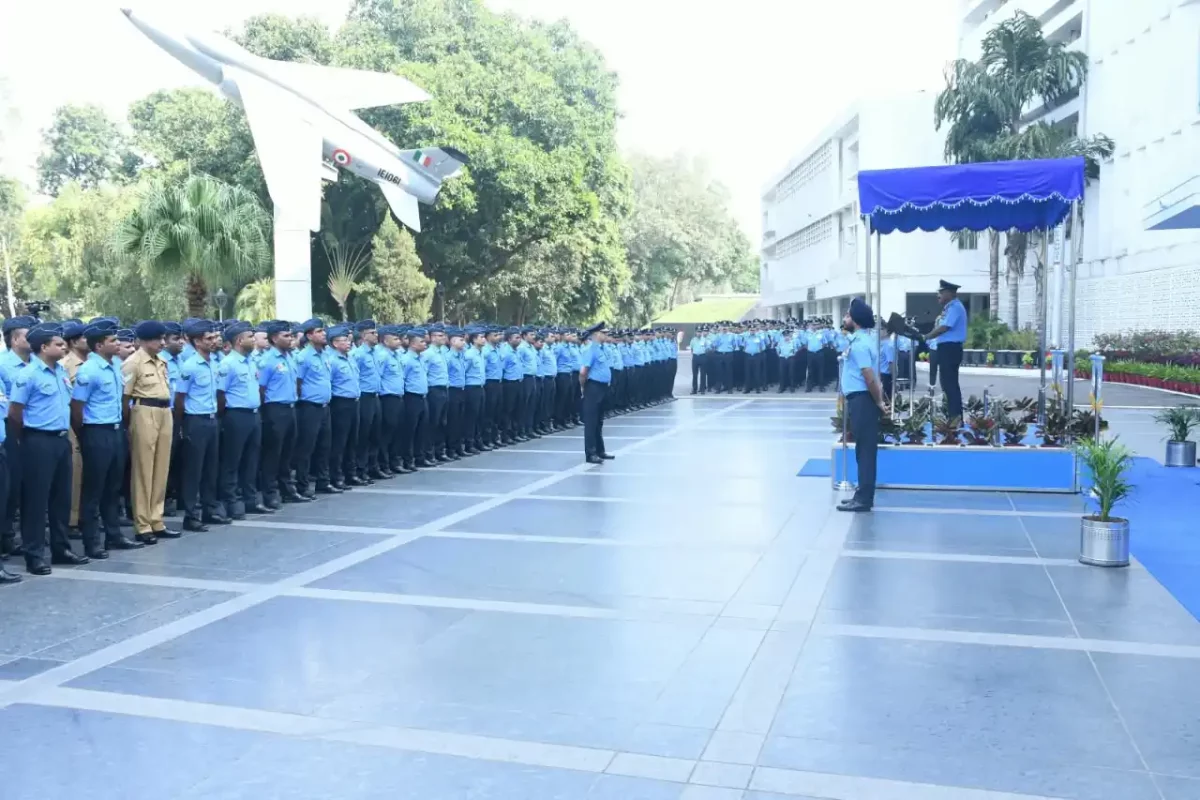
Western Air Command (WAC) organised a seminar commemorating the Indo-Pak War of 1965, paying tribute to the courage, valour and supreme sacrifice of the personnel of India’s Defence Forces while examining the enduring operational lessons of the conflict.





Addressing personnel assembled in a Hollow Square, Air Marshal George Thomas, Air Officer Commanding-in-Chief, Western Air Command, highlighted the Command’s extensive operations during the 1965 conflict under challenging conditions.
The operations covered a diverse range of air-power roles, including air combat, close air support, interdiction and air defence. Despite operating older-generation aircraft, Indian Air Force air warriors demonstrated operational effectiveness during the conflict, achieving local air superiority, disrupting enemy armoured formations and contributing to the defence of Indian airspace.
One of the defining aspects of the IAF’s air combat operations during the war was the performance of the Gnat fighter against Pakistan Air Force F-86 Sabres. The aircraft’s combat record earned it the iconic sobriquet ‘Sabre Slayer’, which subsequently became an enduring part of its legacy in Indian military aviation.
The seminar also featured a guest lecture by Air Marshal D Choudhury, PhD (Retd), who examined the 1965 War and its longer-term impact on the evolution of India’s air-power capabilities and operational preparedness.
The lecture highlighted several post-war transformations that followed the experience of the conflict. These included the fabrication of hardened aircraft shelters to improve the survivability of aircraft and infrastructure, as well as the strengthening of low-level air defence through the introduction of surface-to-air missile systems.
The modernisation of the aircraft fleet was another important area of transformation identified during the discussion. The experience of the war underlined the need for continued development and modernisation of combat aviation capabilities in response to changing operational requirements.
The conflict also contributed to institutional changes in the conduct and coordination of air operations. The seminar highlighted the institutionalisation of Tactical Air Centres and Forward Air Controllers as measures aimed at enhancing situational awareness and improving coordination between air and ground elements.
These developments demonstrated how wartime experience can shape military institutions well beyond the immediate operational requirements of a conflict. Lessons derived from combat can influence infrastructure, equipment, command-and-control arrangements and procedures for subsequent generations of military operations.
The discussion at the seminar placed particular emphasis on the continuing relevance of these lessons to contemporary air operations. While technology and operational environments have evolved considerably since 1965, the experience of the war continues to provide a historical reference point for understanding air combat, air defence, survivability and the integration of air power with ground operations.
The seminar also served as an occasion to remember the personnel who participated in the 1965 War and acknowledge the sacrifices made during the conflict. The commemoration recognised the contribution of Air Warriors who operated in demanding circumstances while undertaking combat and support missions across multiple operational roles.
For Western Air Command, the remembrance carries particular institutional significance given the Command’s role in air operations during the 1965 conflict. The seminar connected the historical experience of the Command with contemporary professional military education and the continuing effort to draw operational lessons from past campaigns.
The Gnat’s performance against the Sabres remains one of the best-known episodes associated with the IAF’s air combat operations during the war. At the same time, the seminar highlighted that the broader lessons of the conflict extended beyond individual aircraft or engagements to encompass air defence, infrastructure protection, fleet modernisation and operational command structures.
The post-war measures discussed during the seminar reflected an effort to address vulnerabilities identified during the conflict and improve the resilience and effectiveness of India’s air-power architecture. Hardened aircraft shelters, improved low-level air defence, modernised aircraft fleets and enhanced tactical coordination represented different dimensions of this transformation.
The commemoration ultimately combined remembrance with professional reflection. By examining the operational experience of 1965 and the changes that followed, the seminar underlined the importance of preserving military history as a source of institutional learning.
The event reaffirmed the enduring relevance of historical lessons to contemporary air operations while paying tribute to the gallantry, dedication and sacrifice of those who served during the 1965 War.
The Western Air Command’s commemoration therefore served both as a tribute to the Air Warriors of the past and as a reminder that the lessons of earlier conflicts continue to inform the preparation, organisation and employment of air power in the present.