

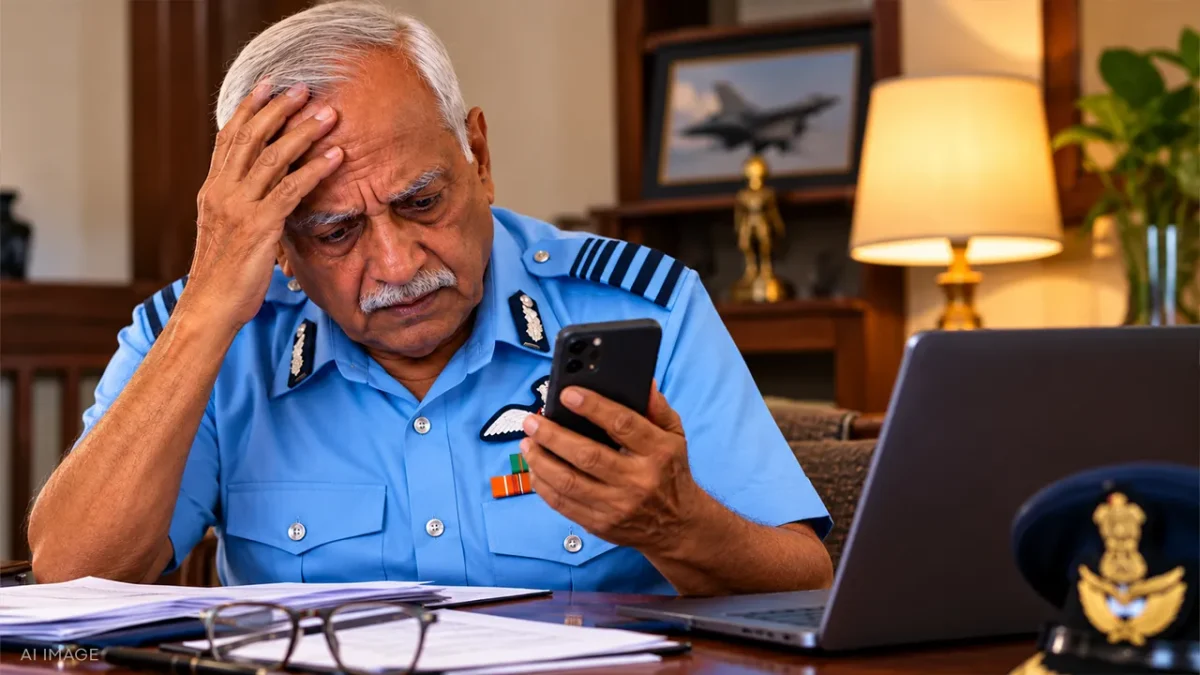
Pune, October 25, 2026: Online fraudsters posing as officials of a public sector bank have cheated an 84-year-old retired Indian Air Force (IAF) officer of ₹4.5 lakh by tricking him into submitting a fake online Life Certificate form, police said.





The incident occurred between October 8 and 9. The complainant, a resident of Kondhwa, is a retired IAF officer. Like other central and state government pensioners, he is required to submit a Life Certificate (also known as Jeevan Pramaan or proof of survival) once a year to continue receiving his pension.
Senior Inspector Santosh Khetmalas stated that the fraudsters made a video call to the officer, claiming they were assisting retired personnel with filling out their Life Certificates. The caller informed him that he could complete the process from home and that the bank would handle the rest.
The suspects then sent an online form through a messaging application. The officer downloaded the form, filled in his personal details, identity card information, and banking details, and submitted it. Police said the form contained a link to remote-access software. By completing and submitting it, the officer inadvertently shared his bank account details with the fraudsters, who subsequently transferred ₹4.5 lakh from his account.
“We are examining the money trail and identifying the bank accounts to which the money was transferred,” Khetmalas said. No arrests have been reported so far.
This case adds to a growing number of cyber frauds targeting pensioners, including defence veterans, through the pretext of Life Certificate updates. Authorities and banks have repeatedly advised that legitimate submissions are made only through official channels such as the Jeevan Pramaan portal (jeevanpramaan.gov.in), the SPARSH system for defence pensioners, authorised bank branches, post offices, or designated centres. Unsolicited calls, video calls, or requests to download forms or applications via messaging apps should be treated as suspicious.
Pensioners are urged not to share bank details, OTPs, or remote access to devices with unknown callers, and to report such attempts immediately to the national cybercrime helpline 1930 or the nearest police station.