
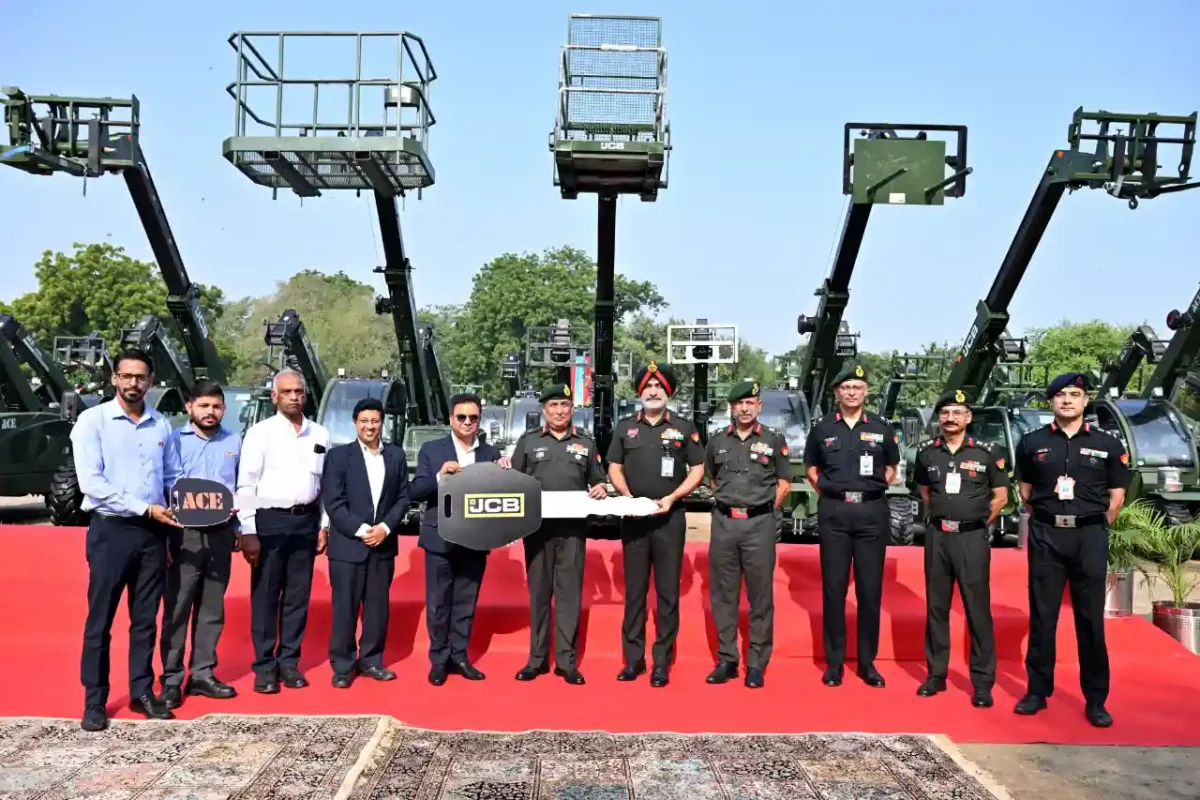
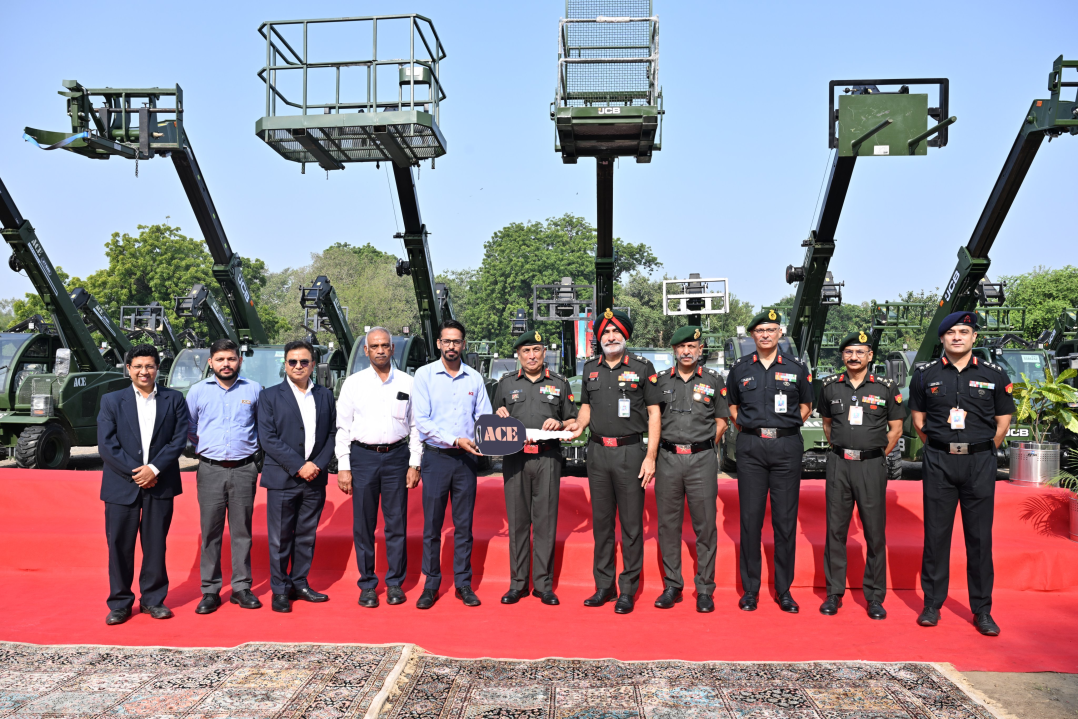
New Delhi, October 14, 2026: In a significant step towards strengthening military logistics and promoting indigenous defence capabilities, the Indian Armed Forces have inducted indigenously developed Rough Terrain Forklift Trucks (RTFLTs) to enhance logistics support across the three services.




Lieutenant General Sandeep Jain, Vice Chief of the Army Staff (VCOAS), presided over the induction ceremony, marking another milestone in the modernisation of India’s military logistics infrastructure.
The induction of the indigenous Rough Terrain Forklift Trucks is aimed at improving material-handling capabilities and operational efficiency across the Indian Army, Indian Navy and Indian Air Force.
Designed to operate in challenging terrain conditions, rough terrain forklift trucks are specialised vehicles used for lifting, transporting and handling heavy equipment, supplies and other logistical materials in environments where conventional forklifts may face operational limitations.
These vehicles can support military logistics operations in difficult terrain, including remote deployment locations, forward operational areas and field logistics installations.
The induction aligns with the Government of India’s Atmanirbhar Bharat initiative, which emphasises domestic manufacturing, technological self-reliance and the development of indigenous defence equipment.
By incorporating locally developed logistics platforms, the Armed Forces aim to strengthen operational preparedness while reducing dependence on imported equipment.
The addition of Rough Terrain Forklift Trucks is also expected to support greater efficiency in logistics operations, enabling faster movement of essential supplies and equipment in demanding operational environments.
The induction reflects the Indian Armed Forces’ continued focus on modernising their logistics capabilities and developing a more resilient, efficient and self-reliant military support infrastructure.
The initiative represents another step towards strengthening tri-service operational effectiveness through indigenous technology and improved logistical preparedness.