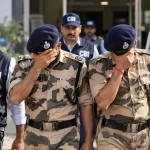


A 31-year-old Indian Navy sailor was arrested in Coimbatore on Saturday after investigators alleged that he had passed sensitive details linked to the Visakhapatnam naval base to a female Pakistani intelligence operative who had contacted him on social media.





The Counter Intelligence (CI) Cell of the Andhra Pradesh Police took Pradeep Mukherjee, a native of West Bengal, into custody on the morning of 3 October 2026 at INS Agrani, Red Fields, Coimbatore. He was attending a Management Development Course at the naval leadership training establishment and had arrived there about a week earlier. Local police were formally informed of the arrest.
Mukherjee joined the Indian Navy as a sailor in 2014 and was posted under the Eastern Naval Command at Visakhapatnam. According to official sources cited by The Times of India, a female Pakistani operative contacted him on social media a few months ago, developed a relationship with him, and extracted information concerning strategic naval assets, fleet movements, and operational arrangements connected with the Visakhapatnam base. Investigators have described the approach as an online honeytrap.
The CI Cell, which handles counter-espionage and high-security cases, placed Mukherjee under surveillance after detecting suspicious digital activity. Once his alleged role in transmitting classified information was confirmed, investigators obtained clearance from naval authorities before making the arrest. A specialised team reached INS Agrani on Saturday morning and took him into custody.
He was produced before a local magistrate for a transit warrant and was taken the same evening to the Counter Intelligence headquarters in Vijayawada for further questioning. The probe is examining the nature and volume of the material allegedly compromised, and whether any payment was made to him through hawala or digital channels.
No official statement from the Indian Navy or the Andhra Pradesh Police has been issued in the public reports so far. The case remains under investigation, and the allegations have not been tested in court.