
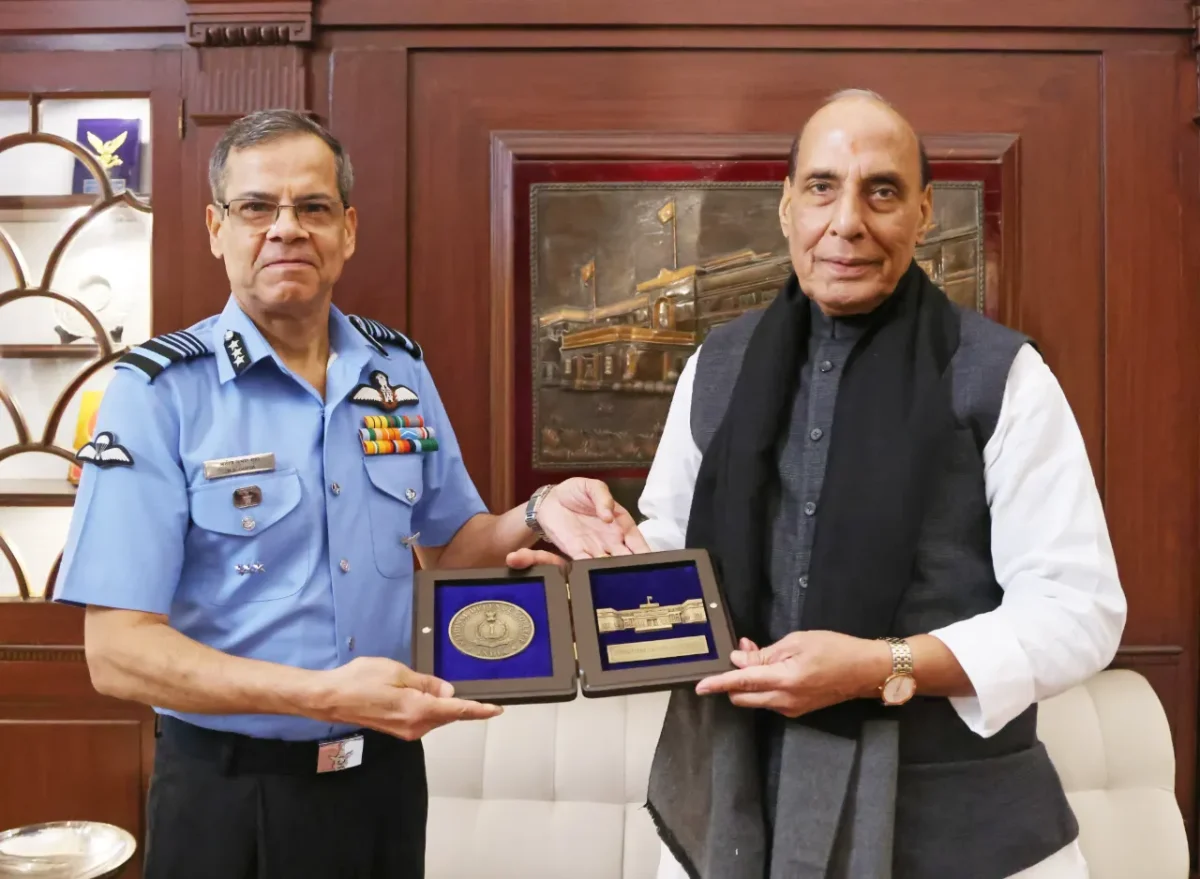
Defence Minister Rajnath Singh has called for a forward-looking approach to national security, emphasising the need to prepare for future challenges while maintaining the ability to respond effectively to immediate threats amid changing geopolitical dynamics and the evolving nature of warfare.





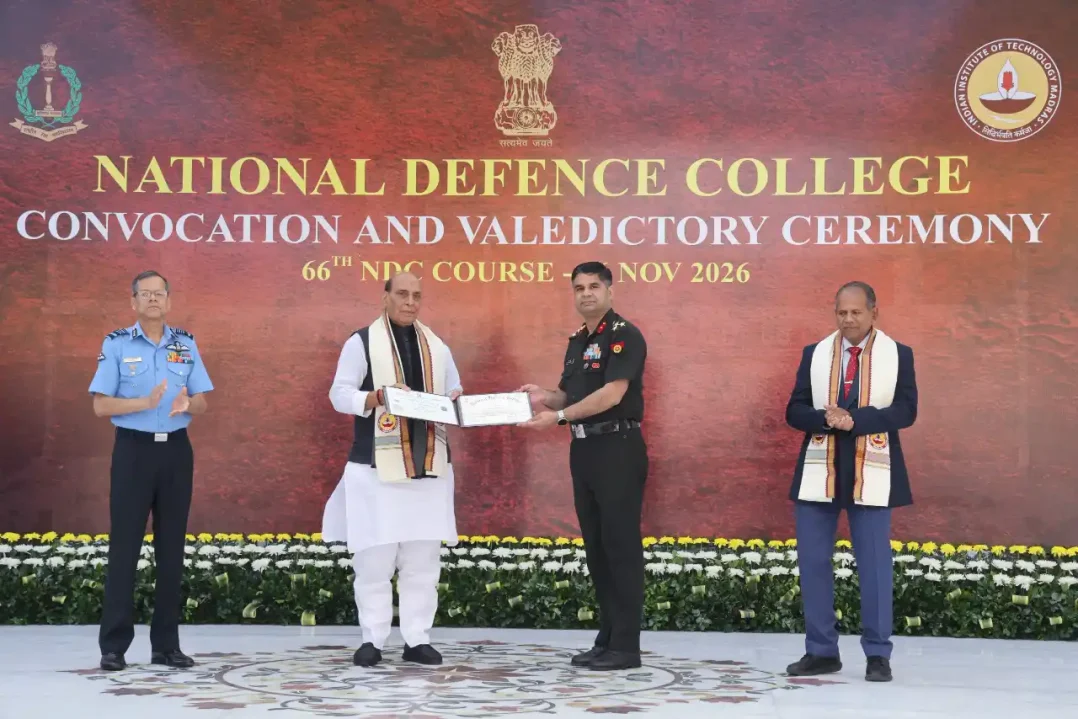
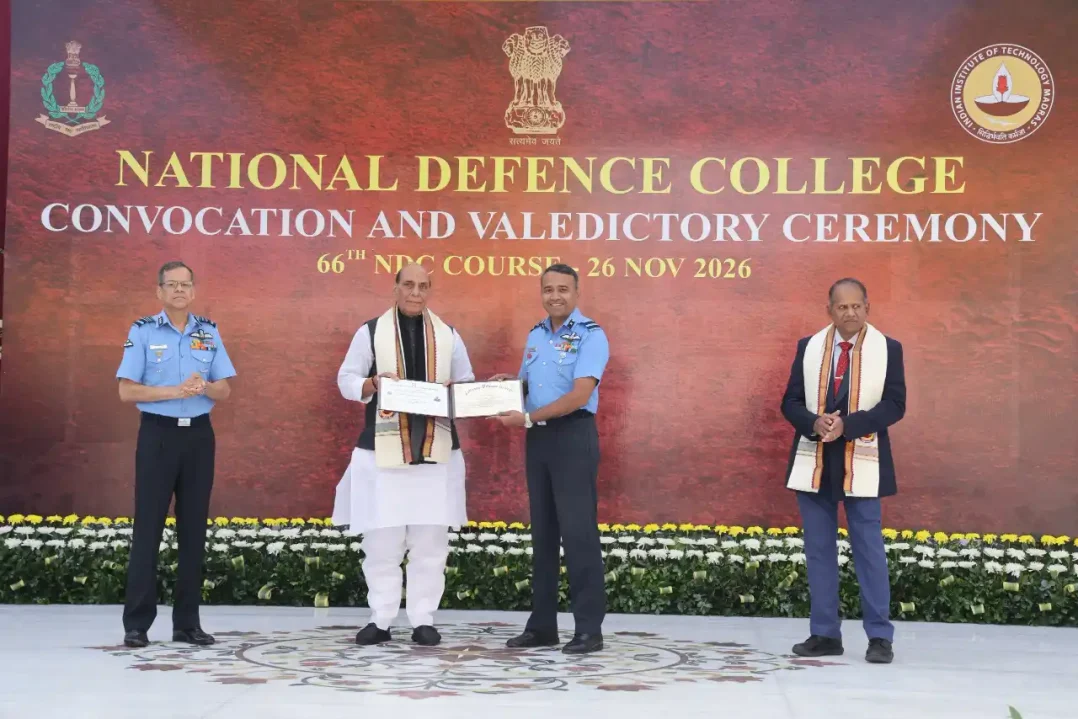
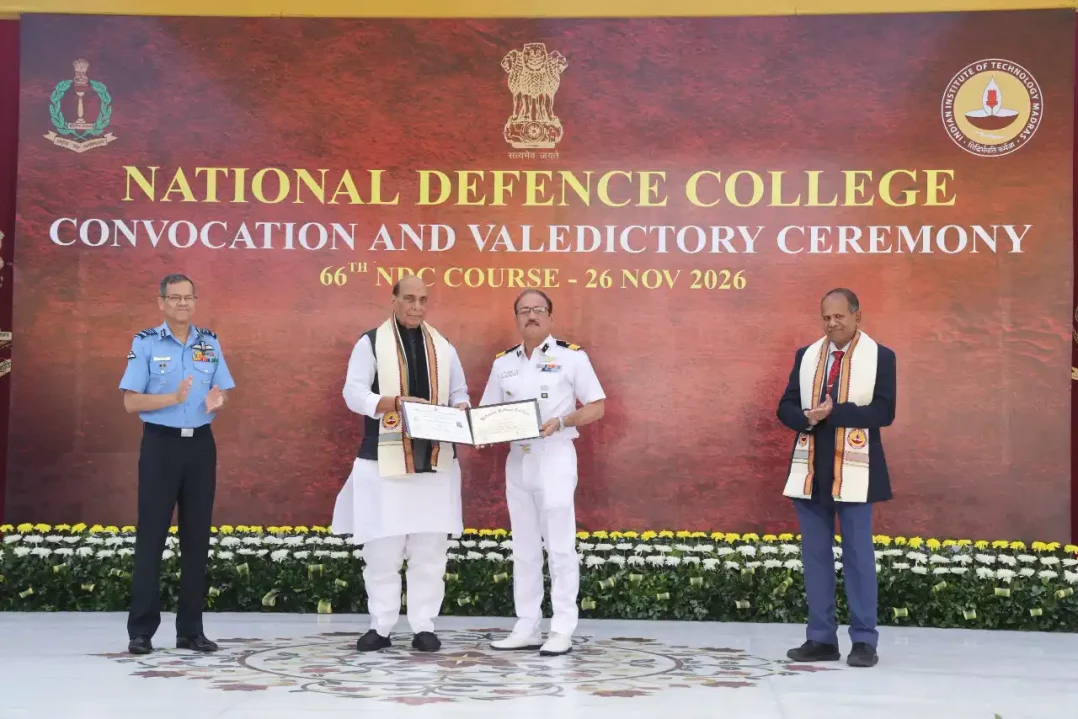
Addressing the Convocation and Valedictory Ceremony of the 66th National Defence College (NDC) Course in New Delhi on November 26, 2026, the Raksha Mantri highlighted the growing complexity of the global security environment. He pointed to the changing balance of power, emergence of new centres of strategic influence, recalibration of traditional alliances and transformation in the character of conflicts.
He observed that conventional military threats are increasingly co-existing with cyber-attacks, disinformation, economic coercion, supply chain disruptions and other forms of hybrid warfare. These developments, he said, are blurring the boundaries between internal and external security, as well as between peace and conflict.
Highlighting India’s strategic circumstances, Rajnath Singh noted that the country’s geographical location, extensive land borders, maritime interests and growing international responsibilities demand a comprehensive and forward-looking national security approach.
NDC urged to strengthen linkages with policymaking
Emphasising the importance of connecting strategic education with national security policymaking, the Defence Minister described the NDC as an important platform that brings together the professional experience and intellectual capabilities of senior officers from the Defence Forces, Civil Services and friendly foreign countries.
He called for greater utilisation of this collective intellectual capital to contribute directly to India’s national security policymaking processes.
Rajnath Singh suggested that the NDC, in consultation with the Ministry of Defence, institutionalise a mechanism to identify significant contemporary national security challenges for detailed examination during every course. These could include issues relating to India’s strategic neighbourhood, border management, maritime security, critical technologies, economic security, protection of critical infrastructure and emerging internal and external threats.
He also proposed that serving senior military officers, civil servants and other relevant authorities be invited to formally present specific operational, strategic, administrative and policy challenges for examination by course participants.
According to the Raksha Mantri, bringing real-world concerns into the academic framework would allow participants to examine national security issues from multiple perspectives and develop a deeper understanding of the challenges confronting different ministries and organisations.
Strategic research and gaming exercises
The Defence Minister stressed that academic research undertaken by NDC participants should translate into practical policy inputs rather than remain limited to papers and classroom discussions.
He called for selected research studies to culminate in comprehensive reports containing specific and actionable recommendations. These reports, he suggested, should be formally submitted to the Ministry of Defence and other concerned ministries and presented before appropriate levels of the Government for consideration.
“Every course at NDC should leave behind not merely a graduating batch of trained strategic leaders, but also a body of research, analysis and policy recommendations that contributes to the nation’s institutional knowledge and national security preparedness,” he said.
Rajnath Singh also highlighted the realities of strategic decision-making, noting that national security leaders rarely have access to complete information or the luxury of examining every possible alternative before taking decisions. He said strategic leadership requires assessing available options while remaining conscious of their wider operational, economic, diplomatic and institutional implications.
He called for further strengthening Strategic Gaming Exercises at the NDC through the incorporation of emerging technologies. Such exercises, he said, should facilitate realistic scenarios, examination of alternative courses of action and assessment of the wider and often unforeseen consequences of strategic decisions.
Focus on emerging technologies and academic transformation
Describing the NDC as India’s premier institution for strategic learning, the Defence Minister highlighted its distinctive role in bringing military officers, civilian officials and international participants together on a common platform.
He appreciated the introduction of specialised sessions on Artificial Intelligence (AI), Machine Learning, Robotics, Unmanned Autonomous Vehicles, Aerospace Technologies, Semiconductors and other emerging technologies.
He also welcomed the introduction of a dedicated AI capsule and the incorporation of closed-loop AI concepts into Strategic Gaming Exercises, noting that such initiatives would help familiarise future strategic leaders with emerging technological developments.
Rajnath Singh acknowledged the academic transformation undertaken by the institution, particularly the introduction of the Executive MBA in Strategic Leadership and Public Policy under the aegis of IIT Madras. He said the association had brought valuable expertise in management, science and technology into the study of national security.
International engagement and strategic partnerships
The Raksha Mantri also underlined the importance of international participation at the NDC in strengthening India’s strategic engagement with friendly countries.
He noted that officers from partner nations studying alongside Indian counterparts gain opportunities for sustained professional interaction, exposure to diverse strategic perspectives and the development of lasting relationships based on mutual trust.
He referred to the International Strategic Engagement Programme (INSTEP), including its recently concluded fourth edition. The two-week programme brought together 25 international participants from 22 countries of the Global South, along with 10 senior officers from the Indian Defence Forces and Civil Services and three officers from defence companies.
Emphasising cooperation in an increasingly interconnected world, Rajnath Singh said India’s approach to addressing shared challenges was based on respect for sovereignty, mutual trust and shared responsibilities. He described the NDC’s international alumni network as an important reservoir of professional experience and strategic understanding that could contribute to stronger bilateral relations and international cooperation.
122 officers complete the 66th NDC Course
The 66th NDC Course runs for 47 weeks, from January to November, and is structured around six studies: Understanding India and Introduction to Strategy; Economic Security; Science and Technology; Global Issues; International Security Environment; India’s Strategic Neighbourhood; and Strategies and Structures for National Security.
A total of 122 officers attended the course, including representatives from India and friendly foreign countries. The participants were drawn from the Indian Defence Forces, Indian Civil Services, Indian Police Services and other government organisations.
The international contingent comprised 40 officers from 25 countries, including Afghanistan, Australia, Bangladesh, Bhutan, Brazil, Egypt, Indonesia, Iran, Japan, Kenya, Kazakhstan, Maldives, Myanmar, Nepal, Nigeria, the Philippines, Russia, Saudi Arabia, South Africa, Sri Lanka, the United Kingdom, the United States, Uzbekistan and Vietnam.
NDC Commandant Air Marshal Manish Kumar Gupta, Dean (Faculty) at IIT Madras Professor K Murali, senior Ministry of Defence officials, faculty members and course participants were present at the ceremony.