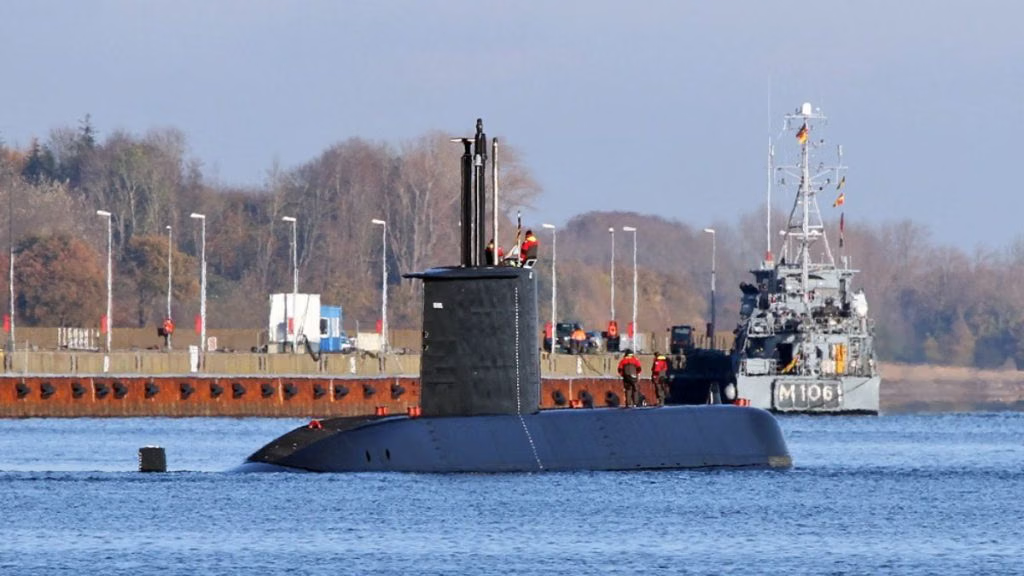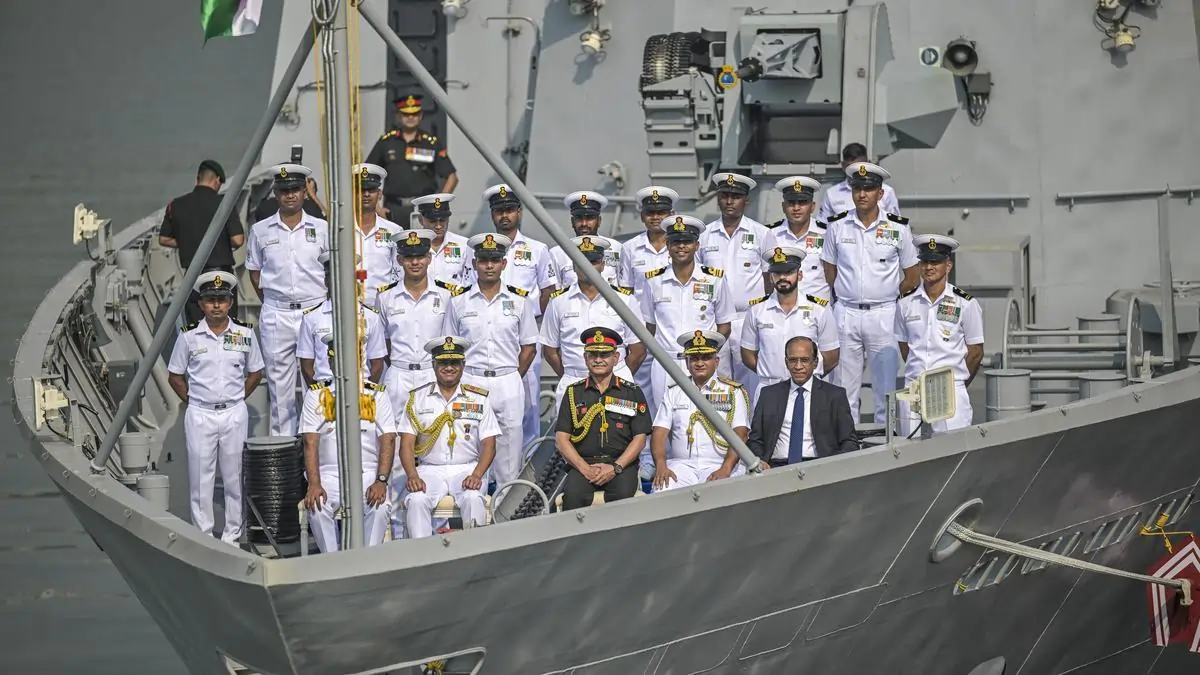
Despite strong enthusiasm among Indian youth to join the armed forces, the Indian Navy continues to face a significant manpower shortage, highlighting a paradox in defence recruitment. While nearly 1.7 million candidates appeared for the NDA and CDS examinations, the Navy is still operating with a shortage of thousands of personnel.





Nearly 11,000 Personnel Shortfall
According to government data, the Indian Navy is currently facing a manpower gap of around 10,900 personnel, including both officers and sailors.
- Officer cadre shortage: about 21%
- Sailor cadre shortage: about 18%
As of October 2023, official figures showed:
- 1,800 officer vacancies out of a sanctioned strength of nearly 12,000
- Over 9,100 sailor vacancies against around 76,650 sanctioned posts
Overall, the Navy faces a 12.3% shortfall in total manpower.
Massive Interest but Limited Selection
The Union Public Service Commission (UPSC) data shows a surge in defence aspirants:
- 2020–21: ~1.04 million candidates appeared for NDA/CDS
- 2021–22: ~1.23 million
- 2022–23: ~1.75 million
However, the selection funnel is extremely narrow.
For example, in CDS Examination (I) 2025:
- 8,516 candidates qualified the written exam
- Only 365 candidates were finally selected after the SSB process
Vacancies for the Navy are also relatively small. In NDA & Naval Academy Examination (I) 2024, the total vacancies were:
- Army: 208
- Air Force: 120
- Navy: 42
- Naval Academy: 30
Platform-Based Recruitment Model
Unlike the Army, which is manpower-intensive due to continuous land deployment, the Navy follows a platform-based manpower model.
Each warship, submarine or aviation unit has a fixed crew requirement, meaning recruitment depends on:
- Commissioning of new ships
- Government approvals for crew strength
- Long-term strategic planning
Recruitment expansion therefore happens only when new platforms are inducted.
STEM Gap Shrinking the Candidate Pool
One of the biggest challenges identified by experts is the lack of strong STEM (Science, Technology, Engineering and Mathematics) education among aspirants.
Many Indian Navy entries require Physics, Chemistry and Mathematics (PCM) at the senior secondary level.
For example, Agniveer SSR eligibility requires:
- 10+2 with Mathematics and Physics, minimum 50% aggregate
- OR engineering diploma
- OR vocational course with Physics and Maths
However, many students drop science after Class 10, either due to academic pressure, cost of coaching, or lack of awareness about defence career requirements.
Lack of Awareness Among Aspirants
Another major issue is late awareness about eligibility criteria.
Many candidates realise too late that their school subject choices restrict defence entry options.
For example, CDS aspirant Saloni Sharma said she always wanted to serve the nation but chose humanities in school, which limited her entry options.
“If I had known earlier about the technical entries, I would have definitely opted for Science and Maths,” she said.
Increasingly Technical Navy
Experts say the Navy has evolved into a highly technical force, operating advanced indigenous platforms under the Aatmanirbhar Bharat initiative.
Modern warships include:
- Integrated combat management systems
- Advanced propulsion systems
- Electronic warfare suites
- Network-centric warfare technologies
Retired naval officers say operating such systems requires strong foundations in mathematics, physics and problem-solving skills, making technical education critical.
Recruitment Numbers Still Falling Short
Despite regular recruitment drives, induction numbers remain limited.
- 2021: 323 officers and 5,547 sailors recruited
- 2022: 386 officers and 5,171 sailors recruited
These numbers have not been enough to close the manpower gap.
The Core Issue
Experts believe the real problem is not a lack of motivation among youth, but rather a mismatch between:
- School education pathways
- Technical requirements of the Navy
- Early awareness of defence careers
Unless students are guided earlier toward STEM education and defence eligibility requirements, the Navy may continue to face shortages despite the huge number of aspirants.