
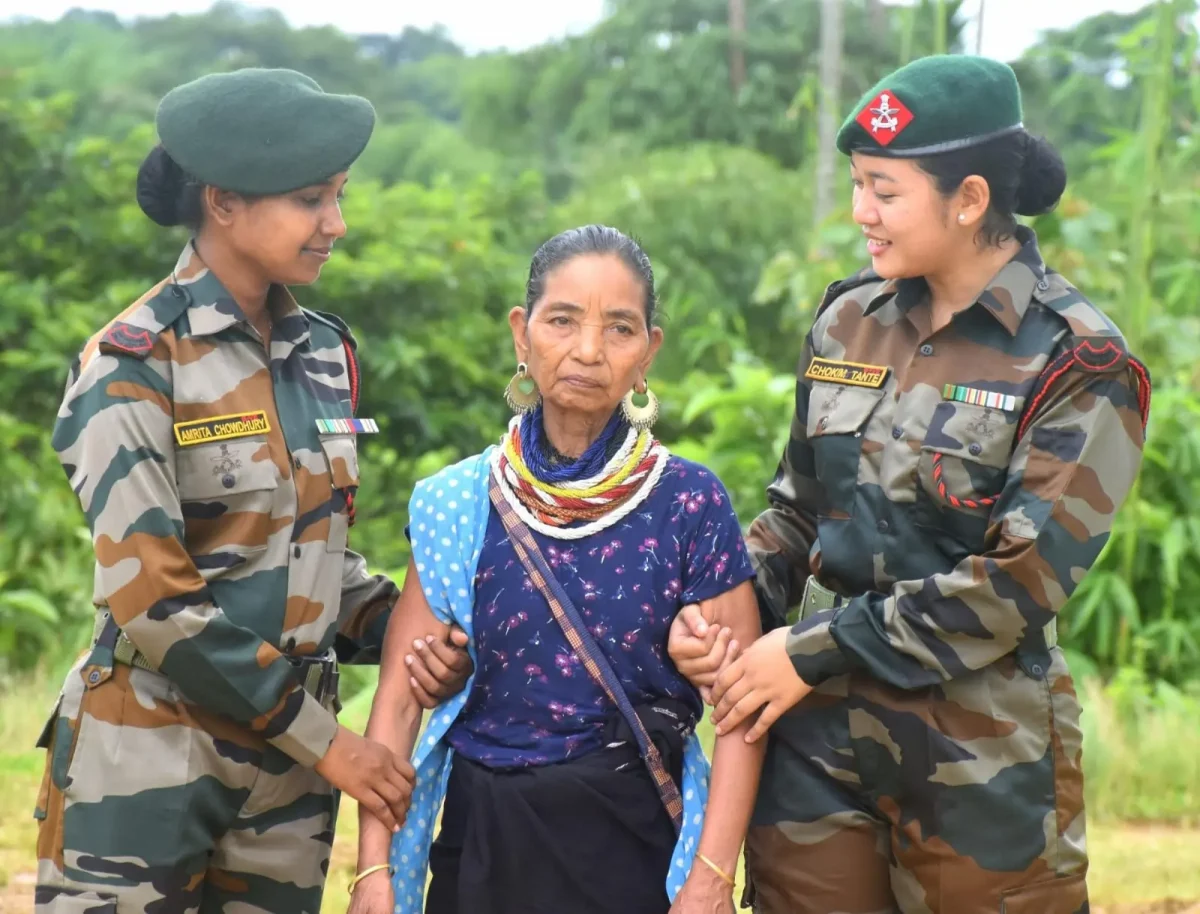
Assam Rifles under Spear Corps organised medical outreach initiatives in Tripura and Assam, extending essential healthcare support to remote communities and promoting awareness on preventive health practices.

As part of the initiative, a free medical camp was conducted at Fatikcherra Village in Tripura. The camp benefited more than 450 villagers, who received medical and eye check-ups, consultations, essential medicines and preventive healthcare support. The outreach aimed to bring quality healthcare closer to people living in remote areas where access to regular medical facilities can often be limited.
The medical camp provided villagers an opportunity to consult healthcare professionals and receive basic treatment and guidance for common health concerns. Eye check-ups were also carried out to identify vision-related issues and provide timely advice to those in need. The distribution of essential medicines further helped address immediate healthcare requirements of the local population.
Alongside the initiative in Tripura, Assam Rifles also extended medical support to NCC cadets attending CATC-38 at Maibang in Assam. The cadets received medical care and took part in an interactive health awareness session focused on hygiene, nutrition, first aid and prevention of seasonal illnesses.
The awareness session encouraged cadets to adopt healthy living habits and remain prepared to handle basic medical situations. By engaging with the youth, the initiative also aimed to strengthen awareness about personal health, community hygiene and preventive care.
The medical outreach activities reflected Assam Rifles’ continued efforts to support communities in the North East through welfare-oriented initiatives. By combining medical assistance with health education, the initiative helped address immediate healthcare needs while also promoting long-term awareness among villagers and young cadets.
Such outreach programmes play an important role in building trust with local communities and ensuring that essential services reach people in remote and underserved areas.